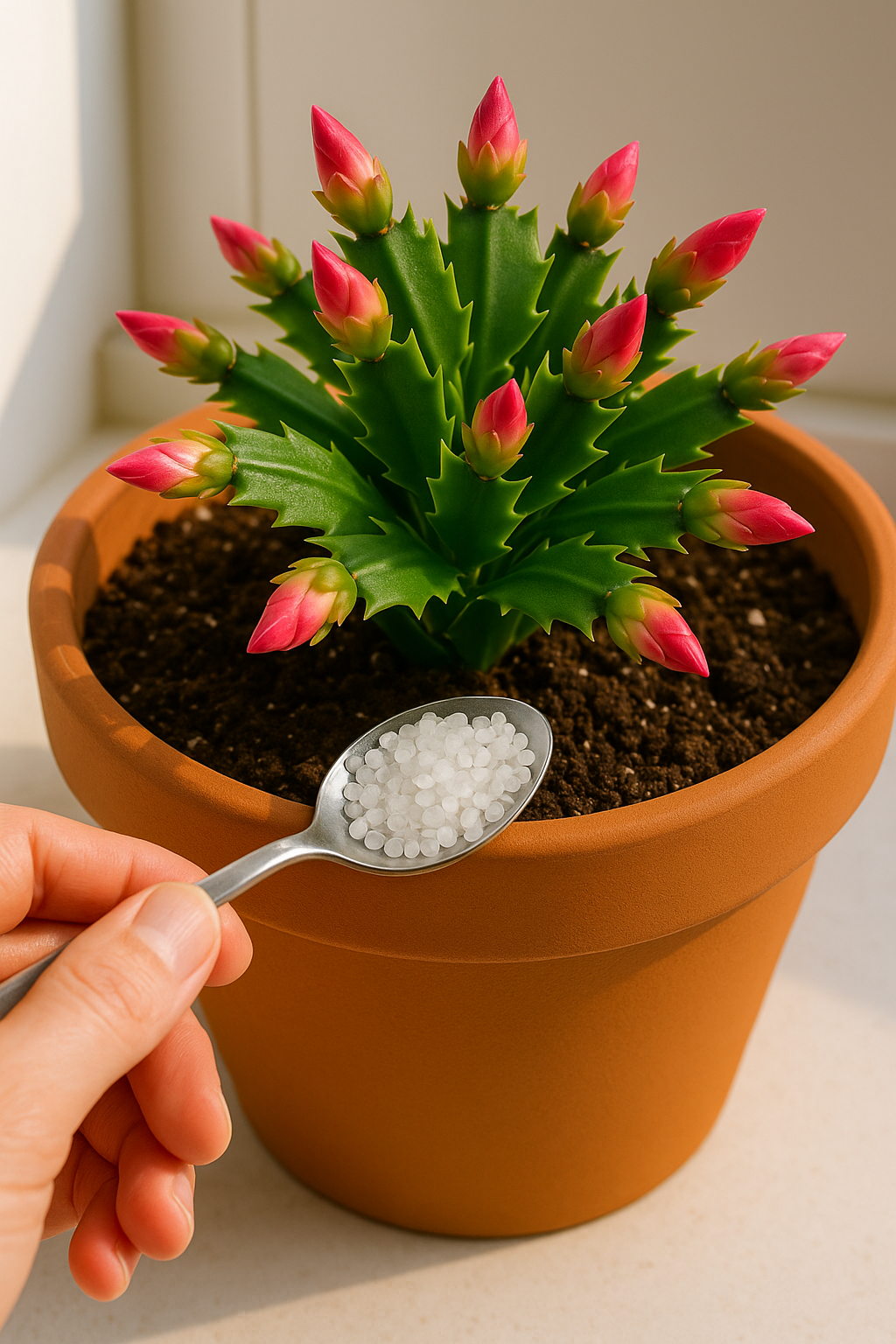
Christmas Cactus Not Blooming? Try This Easy One-Spoon Hack
If your Christmas cactus refuses to bloom no matter how much light or water you give it, the problem is usually nutrient imbalance. This rainforest cactus needs the right minerals at the right time to trigger bud formation. Fortunately, there’s a simple one-spoon hack many experienced growers use to boost blooms almost instantly: a slow-release balanced fertilizer applied in very small amounts.
This technique supports strong growth, healthy buds, and abundant winter flowers—without risking root burn or overfeeding.
Why Your Christmas Cactus Isn’t Blooming
Christmas cactus buds fail to develop for several reasons, but the most common ones are:
- Soil lacking phosphorus and potassium
- Irregular watering during the bud-forming stage
- Too much nitrogen, which encourages leaves instead of flowers
- Stress from heat, drafts, or dry indoor air
- Insufficient light during early fall
Feeding the plant correctly is one of the fastest ways to restore blooming.
The One-Spoon Hack That Triggers Bud Formation
The secret is extremely simple: add one small spoon of slow-release fertilizer pellets to the soil surface. These pellets feed the plant slowly over weeks, giving it a steady supply of nutrients essential for flower production.
Why this works so well
Slow-release fertilizer offers a balanced formula that supports:
- New root development
- Strong, thick leaf segments
- Stable nutrient levels needed for heavy blooming
Unlike liquid fertilizers, pellets cannot overwhelm the plant with sudden doses of nitrogen. They release nutrients gradually, which keeps the Christmas cactus healthy and reduces bud drop.
How to Apply the One-Spoon Hack
Follow these steps for best results:
1. Choose a balanced slow-release fertilizer
Look for a formula like 10-10-10, 14-14-14, or anything designed for indoor flowering plants. These blends offer equal support for roots, leaves, and blooms.
2. Add just one spoon
Sprinkle one level spoon of pellets on top of the soil. Do not bury them deeply. Watering will gradually break them down.
3. Water lightly after applying
This activates the pellets and helps nutrients begin moving into the root zone.
4. Repeat only every 2–3 months
Overfeeding prevents flowering. Slow-release granules work for a long time, especially in indoor gardening conditions.
Combine This Trick With the Bloom Cycle Requirements
For maximum flowering, use the one-spoon hack alongside proper seasonal care.
During September–October (bud formation)
- Provide bright, indirect light
- Reduce watering slightly
- Keep the plant cool at night (55–60°F or 13–16°C)
- Avoid moving the plant once buds appear
During November–December (blooming)
- Keep soil lightly moist
- Increase humidity
- Keep away from heat vents and drafts
- Maintain bright indoor light
When nutrition and environmental conditions align, a Christmas cactus can produce dozens—or even hundreds—of flowers.
Why This Hack Is So Effective
This gentle fertilizing method works better than constant liquid feeding because it:
- Prevents nutrient shock
- Encourages long-term health
- Supports dense clusters of buds
- Reduces bloom failure caused by drought stress
- Improves overall plant vigor and longevity
It’s a reliable strategy favored in houseplant care, indoor gardening, and home gardening tips communities because it works for beginners and experts alike.
Final Thoughts
A Christmas cactus often stays green but bloomless because it isn’t getting the nutrients it needs. With this simple one-spoon hack, you give the plant everything required to produce strong buds and spectacular winter flowers.
Use it once, follow consistent watering and lighting, and your Christmas cactus will reward you with vibrant, long-lasting blooms every holiday season.