Nothing Changes Until They Fix the Root Zone: Why Plant Recovery Starts Below the Soil
When a plant begins to decline, most people focus on what they can see—yellow leaves, weak stems, slow growth, or curling foliage. But the truth is simple: visible problems are only symptoms of what is happening underground. Almost every plant issue begins in one place—the root zone.
The root zone is the plant’s central operating system. It controls water balance, nutrient absorption, oxygen exchange, and overall plant stability. When the root zone becomes compacted, waterlogged, poorly aerated, or deprived of nutrients, the entire plant begins a slow decline. Fixing the root zone is the turning point where real recovery begins.
This article explains why root health determines plant success, how soil structure affects growth, and which strategies improve oxygenation, drainage, and nutrient efficiency inside the root zone.
Why the Root Zone Controls the Entire Plant
Roots are not just anchors—they are living structures with complex biological activity. A plant cannot absorb nutrients without healthy root hairs, cannot breathe without proper oxygenation, and cannot stabilize itself if the soil is compacted.
1. Nutrient Absorption Efficiency
Every nutrient—from nitrogen to magnesium—enters the plant through the root zone. Poor soil structure reduces absorption efficiency, leading to deficiencies that show up as weak leaves and stunted growth.
2. Oxygen Exchange
Roots need oxygen as much as they need water. Without oxygen, roots suffocate, rot, and lose their ability to transport minerals. Soil that is too dense or too wet blocks oxygen flow.
3. Water Regulation
The root zone regulates how fast a plant dries out or becomes overwatered. Plants die far more often from poor drainage than from drought.
4. Microbial Balance
Beneficial microbes live in healthy soil and help break down organic matter into nutrients roots can use. When roots become stressed, the microbial network collapses.
Once these systems fail, no amount of fertilizer or extra watering can fix the plant. You must restore the foundation—the root zone.
How Soil Structure Affects Root Health
Healthy soil has three essential features: drainage, aeration, and stability. Plants thrive when the root zone allows air and water to move freely.
1. Soil Aeration
Aeration is the movement of oxygen between soil particles. Without aeration, roots suffocate. Aeration improves:
- nutrient uptake
- root expansion
- microbial activity
- resistance to rot
Materials like perlite, pumice, and LECA increase soil aeration dramatically.
2. Drainage Systems
Well-engineered soil mix allows excess water to escape quickly. Poor drainage leads to anaerobic conditions, fungal growth, and root collapse. Adding materials that increase drainage is often the fastest way to revive a struggling plant.
3. Particle Size & Soil Engineering
A root zone with uniform particle size prevents compaction. Engineered soil mixes are now widely used for:
- Monstera
- Orchids
- Cactus
- Aroids
- Philodendrons
These mixes improve root-zone longevity, water balance, and oxygen flow.
How to Fix a Compacted or Failing Root Zone
If a plant shows signs of stress—yellowing, drooping, wrinkled leaves, or stunted shoots—the root zone must be repaired. Here is the approach used by professional growers.
Step 1: Evaluate the Root Condition
Remove the plant gently and inspect:
- white, firm roots = healthy
- brown, mushy roots = rot
- dry, brittle roots = dehydration
- compacted roots tightly circling the pot = restriction
A plant cannot improve unless damaged roots are removed.
Step 2: Use a High-Aeration Medium
A well-designed medium improves oxygenation immediately. The most effective combinations are:
- bark + perlite + peat
- coco coir + pumice + LECA
- engineered mixes for tropicals or cacti
The goal is to create a structured environment that prevents compaction.
Step 3: Improve Lateral Oxygen Flow
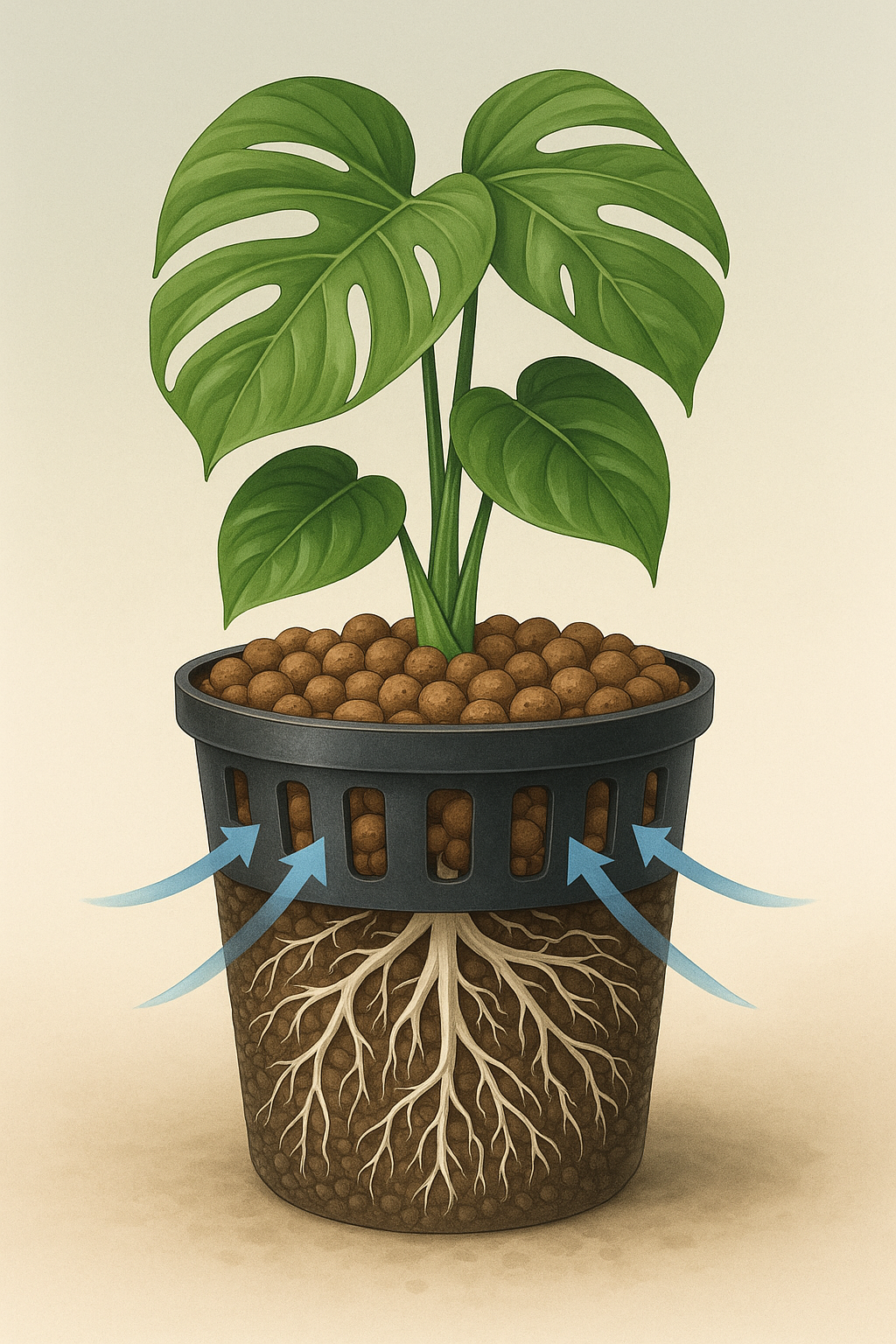
Net pots or slotted pots, like the one shown in your image, allow lateral airflow directly into the root chamber. This innovation dramatically increases oxygen levels, revives root metabolism, and accelerates plant recovery.
Step 4: Optimize Watering Technique
Water deeply but allow complete drainage. Overwatering suffocates roots faster than any other mistake. Underwatering, however, prevents nutrient transport. Controlled watering restores balance.
Step 5: Support Root Recovery With Balanced Fertilizer
After repotting, use:
- diluted fertilizer
- phosphorus-rich formulas for root development
- calcium and magnesium for cell strength
Healthy roots respond quickly to balanced feeding after the structural problems are corrected.
How Long Until Plants Recover After Fixing the Root Zone?
Most plants begin showing signs of improvement within two to three weeks:
- new growth points appear
- leaves regain firmness
- root tips turn white and elongate
- watering intervals stabilize
Full recovery varies by species, but once the root zone is corrected, improvement is inevitable.
Plants That Benefit the Most From Root Zone Optimization
Some plants are extremely sensitive to poor soil and benefit dramatically from improved root aeration and drainage:
- Monstera
- Philodendron
- Pothos
- Fiddle Leaf Fig
- Cactus and Succulents
- Orchids
- Peace Lily
- Alocasia
These plants respond with faster growth, stronger stems, and deeper green foliage once their root zone is repaired.
Why Most Plant Problems Don’t Improve Until the Root Zone Is Fixed
Because leaves are only a reflection of what the roots feel.
If the root zone lacks oxygen, nutrients, stability, or drainage, no amount of care above the soil line will reverse the decline. Once the root system becomes stable and well-oxygenated, the plant’s natural recovery begins automatically.
Fix the roots, and the plant fixes itself.