
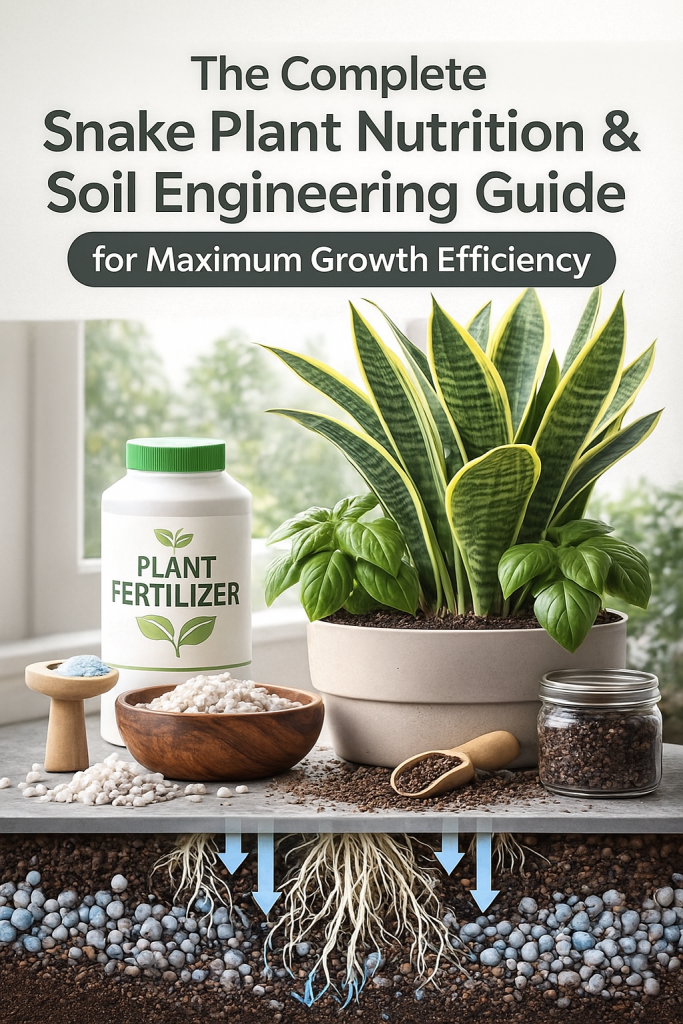
The Complete Snake Plant Nutrition & Soil Engineering Guide for Maximum Growth Efficiency
Snake Plants are known for their resilience, architectural beauty, and ability to thrive in a wide range of environments. But while they are often labeled as low-maintenance, achieving maximum growth efficiency requires more than occasional watering. True long-term success comes from understanding two critical factors: proper nutrition and advanced soil engineering.
This guide breaks down how nutrient delivery, soil structure, drainage, and root-zone aeration work together to create an optimal environment for consistent growth, stronger leaves, and long-lasting plant stability.
Why Snake Plants Need More Than Basic Care
Snake Plants survive neglect, but they do not thrive under it. When properly supported with balanced nutrition and engineered soil structure, they shift from slow, minimal growth to vigorous new shoots, thicker leaves, and improved color patterns.
Three essential systems determine their performance:
- nutrient absorption efficiency
- soil drainage and aeration
- root-zone stability
Improving these systems increases the plant’s overall growth rate and enhances its ability to resist overwatering, compaction, and nutrient imbalance.
Understanding Snake Plant Nutrition
Nutrition plays a critical role in leaf strength, root expansion, and the development of new growth points. A well-balanced fertilizer provides the mineral structure needed to support cellular function and growth regulation.
1. Nitrogen for Leaf Development
Snake Plants use nitrogen to produce chlorophyll and maintain strong variegation. Too little nitrogen leads to pale leaves and slow growth, while too much causes weak, elongated foliage.
2. Phosphorus for Root Expansion
Phosphorus supports root architecture, improves nutrient uptake, and strengthens underground rhizomes responsible for producing new shoots.
3. Potassium for Structural Integrity
Potassium reinforces cell walls, improves water movement, and increases resistance to stress and temperature fluctuations.
4. Micronutrients for Growth Stability
Calcium, magnesium, iron, and trace elements support:
- chlorophyll production
- enzyme activation
- cellular repair
- balanced growth cycles
Together, these minerals create a stable environment for leaf and root development.
How to Apply Fertilizer for Maximum Efficiency
Because Snake Plants grow slowly, they require a precise fertilizer strategy to avoid overfeeding while still delivering the minerals necessary for strong development.
1. Feed Only During Active Growth
Snake Plants grow most vigorously in warm months. Fertilizing during spring and summer supports strong root activity and new leaf formation.
2. Use a Diluted Formula
Slow-growing plants are sensitive to strong mineral solutions. Using a diluted mixture ensures consistent feeding without risk of nutrient burn.
3. Support Root Development
Nutrient formulas that enhance root-zone vitality improve growth efficiency by increasing the plant’s ability to process water and minerals.
4. Avoid Fertilizing in Cold Periods
Lower temperatures slow metabolic activity, making fertilizer ineffective until growth resumes.
Why Soil Engineering Matters More Than Regular Soil Mixing
Snake Plants depend heavily on soil structure for long-term health. They require a medium that delivers drainage, aeration, and mineral stability. Poor soil leads to compaction, root suffocation, and moisture imbalances.
What Makes Engineered Soil Better?
An engineered soil blend improves:
- water distribution
- oxygen availability
- drainage speed
- long-term structural integrity
- nutrient flow through the root zone
These enhancements prevent root rot, salt buildup, and compaction—all common problems in dense soil.
Building the Ideal Soil Engineering Mix for Snake Plants
To maximize growth efficiency, the ideal soil blend must be both structurally supportive and highly aerated.
Recommended Soil Engineering Materials
- Pumice for drainage architecture
- Perlite for lightweight aeration
- Coconut coir for moisture regulation
- Pine bark fines for structural stability
- LECA pebbles for enhanced oxygen flow
This combination forms a multi-layered environment that supports root development and prevents waterlogging.
How Soil Structure Affects Nutrient Performance
Fertilizer becomes dramatically more effective when paired with engineered soil.
1. Faster Nutrient Flow
An aerated medium allows water and minerals to move freely through the root zone, improving nutrient delivery efficiency.
2. Better Root Oxygenation
Roots require oxygen to activate mineral absorption. Engineered soil prevents suffocation, enabling stronger nutrient uptake.
3. Reduced Mineral Accumulation
Proper drainage removes excess salts and prevents nutrient overload.
Root-Zone Optimization: The Key to Consistent Growth
The root zone is where all growth processes begin. When engineered correctly, the root system becomes more stable, more efficient at processing minerals, and more capable of producing new shoots.
Signs of an Optimized Root Zone
- faster development of new leaves
- thicker, upright growth
- improved watering response
- fewer signs of stress or discoloration
A well-oxygenated root zone is the foundation of healthy long-term growth.
Common Mistakes That Limit Snake Plant Growth
Even with fertilizer and proper soil, certain habits can slow growth:
- using dense, moisture-retentive soil
- watering before the soil has fully dried
- keeping the plant in low light for long periods
- applying heavy fertilizer formulas
- repotting too frequently
Correcting these issues allows the plant to direct more energy into producing new foliage.
How Light and Water Support Your Soil and Nutrition Strategy
While nutrition and soil engineering are essential, light exposure and watering frequency complete the system.
1. Bright, Indirect Light
Improves nutrient processing and increases the plant’s metabolic rate.
2. Deep, Infrequent Watering
Supports root expansion and prevents rot.
3. Complete Drying Between Waterings
Essential for maintaining moisture balance in engineered soil mixes.
Final Thoughts
Snake Plants can survive with minimal attention, but they thrive when supported by advanced nutrition and engineered soil systems. By combining balanced fertilizer application, optimized soil structure, and proper root-zone aeration, the plant reaches its highest potential for growth efficiency.
The result is a stronger plant, thicker leaves, faster shoot production, and a more resilient growth pattern. With the right foundation, a Snake Plant becomes not just a low-maintenance houseplant, but a high-performing one capable of long-term vitality.