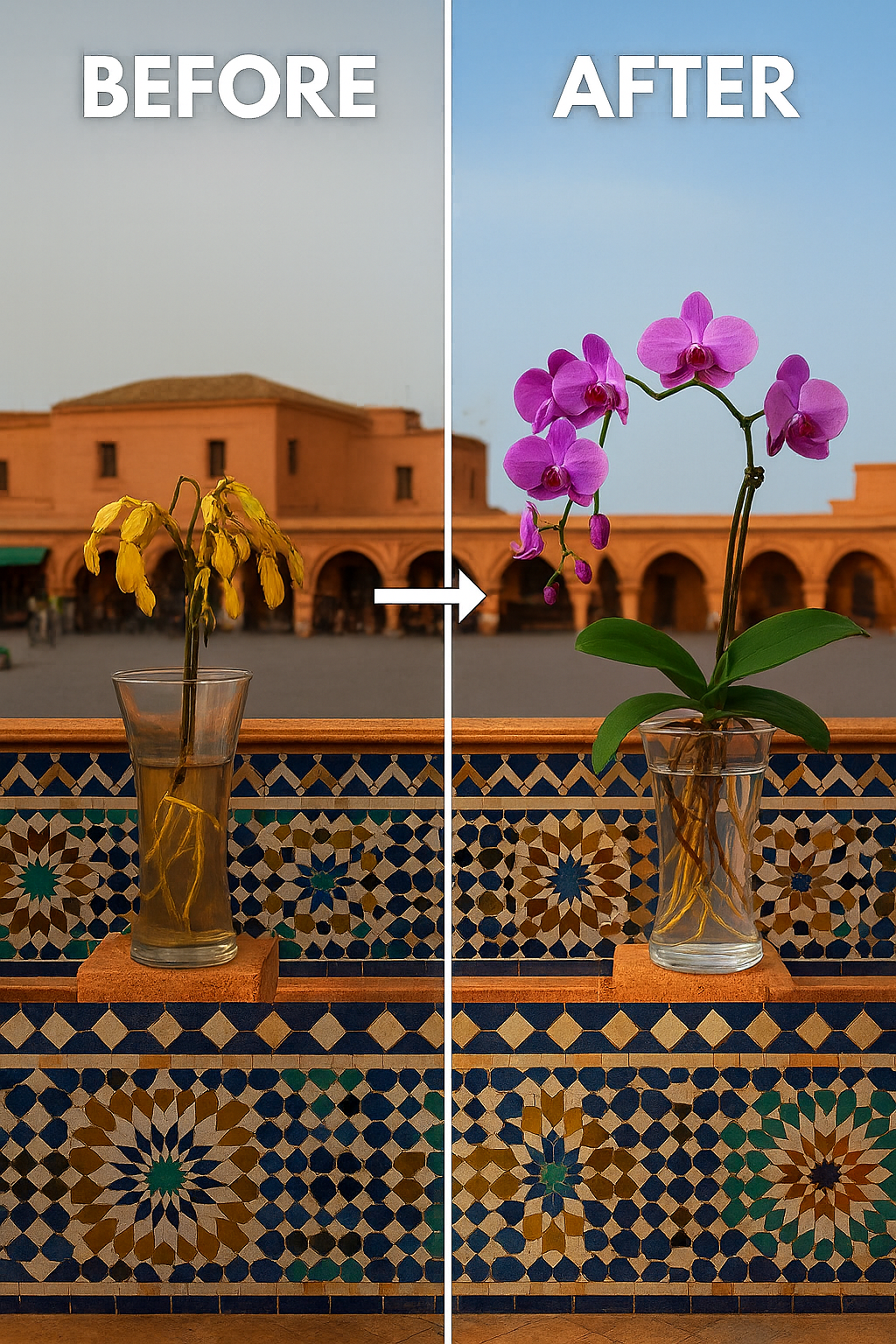
From Fading to Flourishing — Orchid Transformation
An orchid can shift from weak, wilted, and colorless to vibrant and blooming with just a few changes in care. This transformation is easier than most people think, especially when you understand what orchids truly need to thrive indoors. With the right approach to watering, humidity, plant nutrition, and light exposure, even a fading orchid can come back stronger than before.
1. Restore Hydration the Right Way
Many struggling orchids suffer from irregular watering or moisture stress.
For healthy root growth:
- Use room-temperature water
- Keep the roots damp but never soaked
- Allow proper drainage to prevent root damage
Healthy hydration supports nutrient absorption and leaf strength, setting the foundation for recovery.
2. Improve Light Exposure
Orchids depend heavily on bright, indirect light.
Too much sun causes leaf burn, while low light weakens the plant and slows new growth.
Ideal locations include:
- East-facing windows
- Bright rooms with filtered sunlight
- Shelves near natural light sources
Proper lighting encourages stronger stems and better bloom formation.
3. Boost Growth With a Balanced Orchid Fertilizer
Once hydration and light are stable, orchids respond extremely well to plant nutrition.
Use a balanced orchid fertilizer every 2–3 weeks during active growth.
Benefits include:
- Stronger root development
- Brighter blooms
- More consistent flowering cycles
- Improved leaf health
This simple addition is one of the most effective ways to revive a declining orchid.
4. Maintain the Right Humidity Level
Orchids naturally grow in environments with higher humidity.
To recreate those conditions indoors:
- Place a humidity tray under the plant
- Group plants together to increase moisture
- Mist lightly in the morning if needed
Balanced humidity helps buds develop fully and prevents leaf drooping.
5. Refresh the Growing Medium
A compact or old potting mix restricts airflow around the roots.
Repot your orchid every 1–2 years using:
- Orchid bark
- Coco chips
- Perlite
This improves drainage, aeration, and root comfort—key factors for a long-lasting bloom cycle.
6. Stability Is the Final Key
Orchids dislike sudden changes in temperature, air drafts, or water quality.
Keeping the environment stable allows the plant to focus its energy on:
- Root repair
- New leaf growth
- Long-lasting flowers
With consistent care, orchids transition from fading to flourishing—producing rich, vivid blooms that last for weeks.