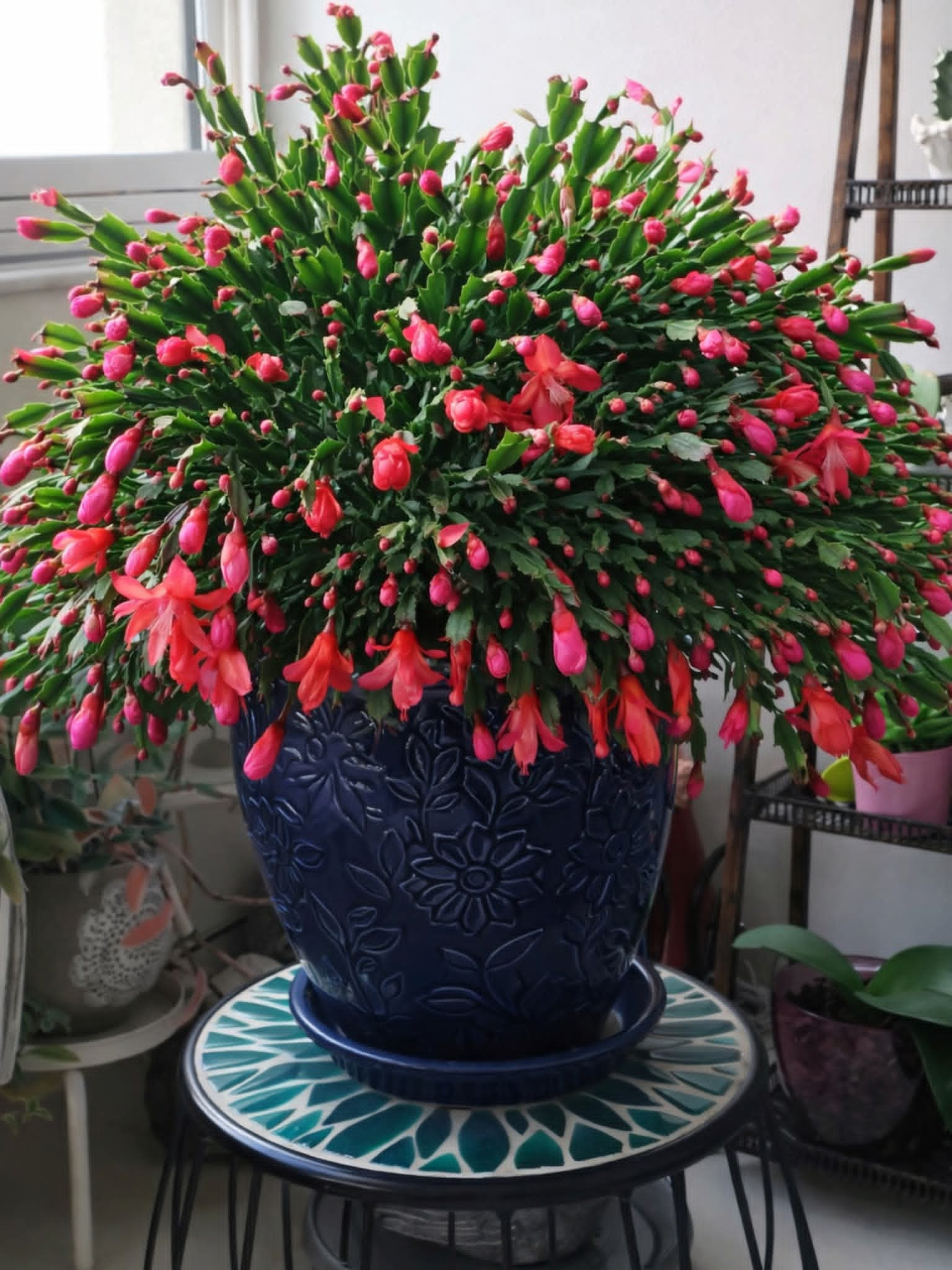
How to Make a Christmas Cactus Bloom Heavily Every Year
A Christmas cactus covered in buds and flowers isn’t luck—it’s routine. Many indoor gardeners keep the plant alive for years but never unlock its full blooming potential. The reason is simple: Christmas cactus follows a seasonal rhythm, and if that rhythm is respected, heavy blooming becomes automatic.
This complete guide explains how to make your Christmas cactus bloom densely, evenly, and reliably every year, using proven indoor-gardening methods that work especially well in U.S. homes and modern apartments.
Why Christmas Cactus Often Fails to Bloom
When a Christmas cactus stays green but produces few flowers, the issue is usually care timing, not plant health.
Common reasons blooms fail:
- Inconsistent watering during bud formation
- Too much nitrogen-rich fertilizer
- Warm nights in fall
- Excess artificial light at night
- Root stress from poor drainage
Unlike desert cacti, Christmas cactus is a tropical epiphyte that depends on subtle environmental cues to trigger flowering.
Step 1: Master the Light Cycle (The Bloom Trigger)
The single most important factor for heavy blooming is night darkness.
From early fall:
- Provide 12–14 hours of uninterrupted darkness each night
- Avoid lamps, TVs, or hallway lights nearby
- A naturally dark room works best
This signals the plant to shift from leaf growth to bud production. Without this signal, flowering will always be weak or inconsistent.
Step 2: The Watering Rhythm That Builds Buds
Christmas cactus blooms best with deep watering followed by controlled drying.
Correct method:
- Water thoroughly until excess drains out
- Empty the saucer immediately
- Wait until the top 1–2 inches of soil are dry before watering again
Avoid:
- Daily light watering
- Water sitting at the bottom of the pot
- Cold water
This rhythm reduces root stress and directs energy into flower buds instead of survival growth.
Step 3: Temperature Control Matters More Than You Think
To bloom heavily, Christmas cactus needs a mild temperature drop.
Ideal range:
- Day: 65–70°F (18–21°C)
- Night: 55–60°F (13–16°C)
This temperature contrast helps lock in bud formation. Plants kept too warm stay in leaf-growth mode and delay blooming.
Step 4: Fertilizer — Less Is More
Overfeeding is one of the most common mistakes.
Best approach:
- Feed lightly in spring and summer
- Stop fertilizing in early fall
- Resume only after blooming finishes
Excess fertilizer, especially nitrogen-heavy formulas, causes:
- Leaf growth at the expense of flowers
- Bud drop
- Weak flower stems
In many cases, proper watering alone is enough to support heavy blooming.
Step 5: Do Not Move the Plant Once Buds Appear
Once buds form:
- Do not rotate the pot
- Do not change its location
- Do not repot
Even small changes can cause buds to drop before opening. Stability is critical so the plant can finish its flowering cycle.
Step 6: Pot Size and Drainage (Often Overlooked)
Christmas cactus prefers being slightly root-bound.
Choose:
- A pot only slightly larger than the root ball
- Excellent drainage holes
- Light, airy soil (not compact garden soil)
Large pots hold excess moisture and delay blooming.
How This Creates a Fuller, More Decorative Plant
When cared for correctly, a Christmas cactus:
- Produces buds across the entire plant
- Blooms more evenly
- Holds flowers longer
- Becomes a focal piece in indoor home decor
This is why Christmas cactus is popular in luxury interiors, seasonal displays, and elegant living spaces.
Frequently Asked Questions
How long does blooming last?
With proper care, flowers can last 4–6 weeks.
Can I force it to bloom earlier?
Yes, by adjusting light and temperature in early fall.
Should I prune for more flowers?
Light pruning after blooming can encourage branching and more buds next season.
Is Christmas cactus good for apartments?
Yes. It thrives in indirect light and stable indoor conditions.
Final Takeaway
Heavy Christmas cactus blooming isn’t about tricks—it’s about consistency.
By controlling light exposure, watering deeply but correctly, maintaining cooler nights, and avoiding unnecessary movement, you can enjoy a Christmas cactus that blooms fuller every year, becoming one of the most reliable and beautiful indoor plants in your home.
Once this rhythm is established, the plant does the rest—season after season.