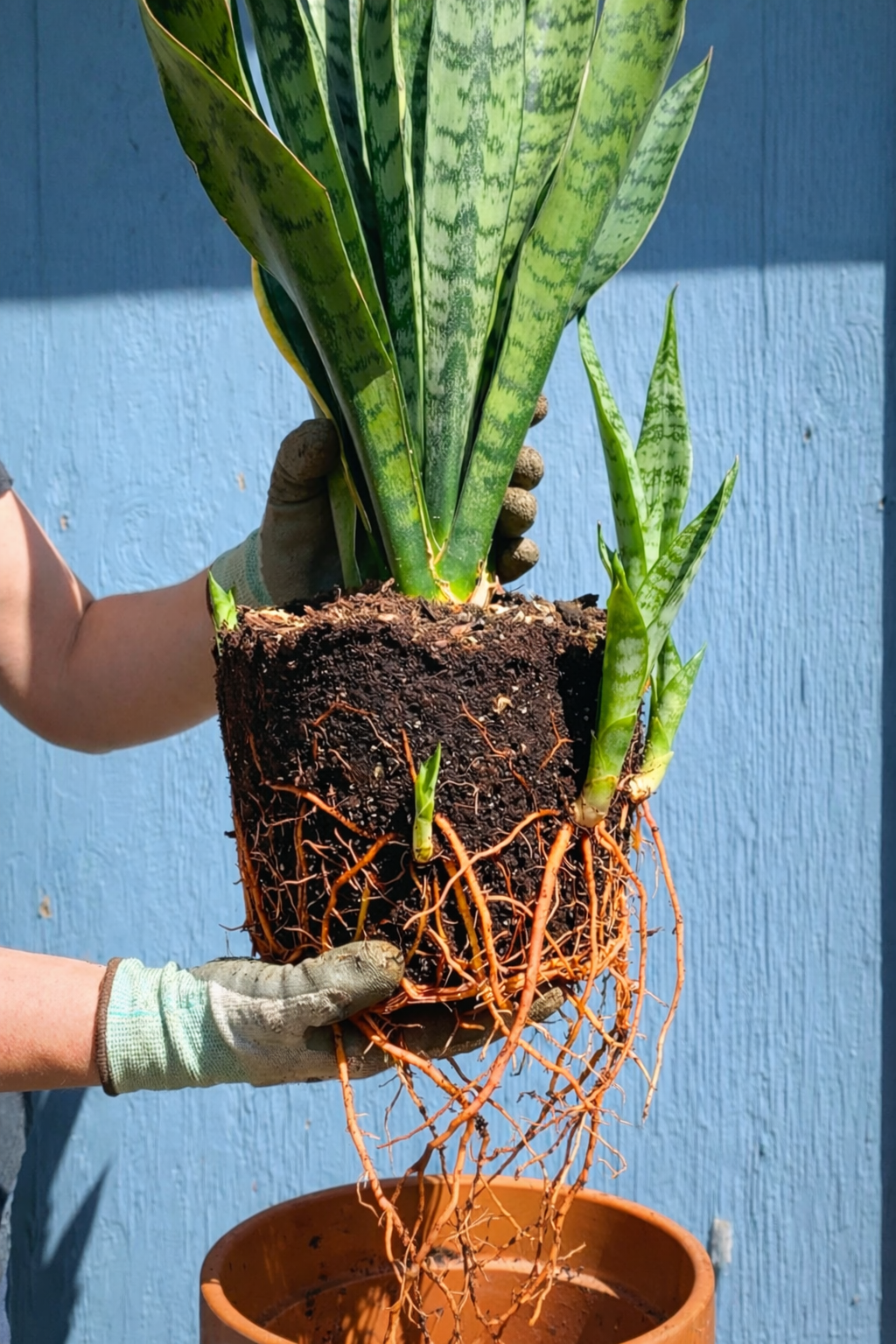
🌿 Why Smart Homeowners Always Check Snake Plant Roots Before Repotting (The Growth Difference Is Huge)
Snake plants are known for being tough, but smart indoor gardeners and luxury homeowners pay close attention to one detail most people ignore — the roots. Before repotting, checking the root structure helps prevent slow growth, weak leaves, and overcrowded pots.
Healthy roots mean stronger vertical leaves, better stability, and faster pup development — which is why many modern plant owners treat repotting like a strategic care step, not just a routine task.
🌱 Why Checking Roots Changes Growth So Much
Inside the soil, snake plants grow thick underground rhizomes that store water and nutrients. When these become crowded or damaged, the plant may look healthy on top but grow slower over time.
Benefits of checking roots before repotting:
✔️ Prevents root rot caused by compact soil
✔️ Helps new pups grow stronger
✔️ Improves nutrient absorption
✔️ Keeps leaves upright and structured
Luxury indoor gardeners often inspect roots gently to maintain that clean designer look without forcing rapid growth.
🪴 Step-by-Step — How to Inspect Snake Plant Roots Safely
1️⃣ Lift the Plant Carefully
Hold the base and tilt the pot sideways. Avoid pulling leaves directly.
2️⃣ Check Root Color
Healthy roots are firm and light orange or beige. Mushy dark roots should be trimmed lightly.
3️⃣ Look for New Pups
Small shoots growing from rhizomes mean the plant is ready for more space.
4️⃣ Refresh the Soil Mix
Use a well-draining mix so roots stay dry between watering.
5️⃣ Repot Only When Needed
Snake plants prefer slightly tight pots — oversized pots slow growth.
Many indoor gardeners combine root checks with consistent watering habits and bright indirect light to keep growth balanced indoors.
📊 Snake Plant Root Care Table
| Element | Best Practice | Benefit |
|---|---|---|
| Root Check | Every repotting cycle | Prevents hidden problems |
| Soil Type | Fast draining mix | Healthy rhizomes |
| Pot Size | Slightly larger only | Strong upright growth |
| Root Trimming | Minimal cuts | Reduces stress |
| Light | Bright indirect | Encourages new pups |
🌿 Garden FAQ — Snake Plant Repotting & Roots (10)
1. How often should roots be checked?
Usually every 1–2 years during repotting.
2. Are thick orange roots normal?
Yes — that’s a healthy sign.
3. Should all roots be cleaned?
No, keep most soil attached.
4. Can roots be cut?
Only damaged or mushy ones.
5. Do bigger pots grow faster plants?
Not always — too much space slows growth.
6. Why do pups grow near roots?
Snake plants spread through underground rhizomes.
7. Can beginners repot safely?
Yes, just handle gently.
8. Should roots be washed?
Only if soil is compacted or unhealthy.
9. What’s the biggest mistake?
Overwatering right after repotting.
10. When is the best season?
Spring or early summer.
Healthy roots are the foundation of luxury-style indoor plants.
Smart homeowners focus on balanced repotting rather than constant feeding — helping snake plants stay structured, strong, and visually premium.