🍶The Plastic Bottle Orchid Trick That Makes Roots Grow Faster
Orchid growers are always searching for gentle ways to encourage stronger root development without stressing delicate plants. Unlike many houseplants, orchids rely heavily on healthy roots to absorb moisture, oxygen, and nutrients from the environment.
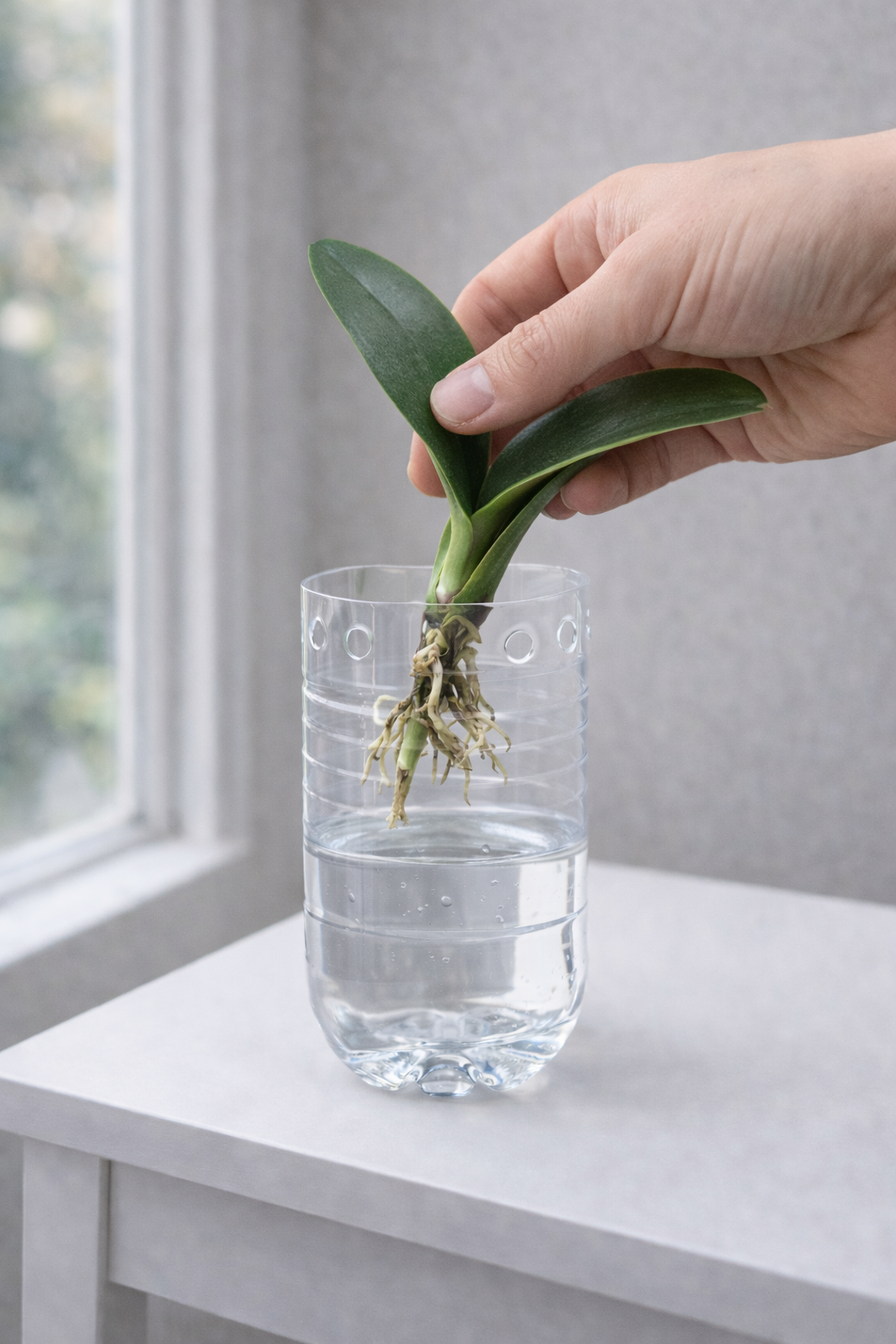
Recently, a surprisingly simple trick has been circulating among indoor plant enthusiasts — using a cut plastic bottle to support orchid roots in water during recovery or propagation. As shown in the image, the bottle acts as a temporary hydration chamber that allows the roots to rehydrate while still receiving airflow.
While the method looks simple, it works best when combined with proper orchid care.
🌿 Why the Plastic Bottle Method Works
Orchid roots behave differently from traditional plant roots. They are designed to absorb moisture quickly and then dry out again while exposed to air.
The plastic bottle setup helps create a controlled environment that provides:
Gentle hydration for dry roots
Air exposure through bottle openings
Stable positioning for the plant
A simple observation window to monitor root health
Because plastic bottles are transparent, growers can easily track root growth and moisture levels.
💧 How to Use the Plastic Bottle Orchid Method
To try this simple propagation or recovery technique:
- Cut a plastic bottle in half
The bottom section becomes a temporary container. - Fill the bottle with a small amount of clean water
Only the root tips should reach the water. - Place the orchid carefully into the bottle
Ensure leaves remain dry. - Allow roots to hydrate briefly
Roots should not remain submerged constantly. - Maintain bright indirect light
Light supports new root formation.
This method is usually used temporarily to revive dehydrated orchids or encourage new root growth.
❌ Common Mistakes When Using Water Methods
Even though orchids can tolerate short hydration periods, these mistakes can cause problems:
❌ Keeping roots fully submerged for long periods
❌ Using stagnant or dirty water
❌ Allowing water to touch the leaves
❌ Placing the plant in direct sunlight
❌ Forgetting airflow around the roots
Orchids require both moisture and oxygen to remain healthy.
🪴 What Helps Orchids Develop Strong Roots
Healthy orchids depend on several environmental factors:
Bright indirect light
Airy orchid bark or moss medium
Moderate humidity
Proper watering cycles
Good air circulation
When roots are healthy, orchids grow stronger leaves and produce longer-lasting flowers.
📊 Orchid Root Recovery Table
| Factor | Ideal Condition | Why It Matters |
|---|---|---|
| Light | Bright indirect | Supports root growth |
| Water | Temporary hydration | Prevents dehydration |
| Airflow | Moderate | Protects roots |
| Growing Medium | Bark mix | Allows oxygen flow |
| Humidity | Moderate | Supports aerial roots |
❓ Orchid Care FAQ (Garden Section)
- Can orchids grow in water permanently?
Most orchids prefer airy bark rather than full water culture. - Why are my orchid roots turning gray?
Roots often turn gray when they dry — this is normal. - How often should orchids be watered?
Usually once every 7–10 days depending on conditions. - Can plastic containers harm orchids?
No — they can help monitor root health. - Why are my orchid roots rotting?
Overwatering and poor airflow are common causes. - Do orchids need fertilizer?
Light feeding during active growth is sufficient. - Can orchids grow without soil?
Yes — many orchids grow in bark or moss instead. - Why are my orchid leaves wrinkled?
Possible dehydration or root damage. - When should orchids be repotted?
Every 1–2 years or when bark breaks down. - What’s the biggest orchid mistake?
Keeping roots constantly wet without airflow.