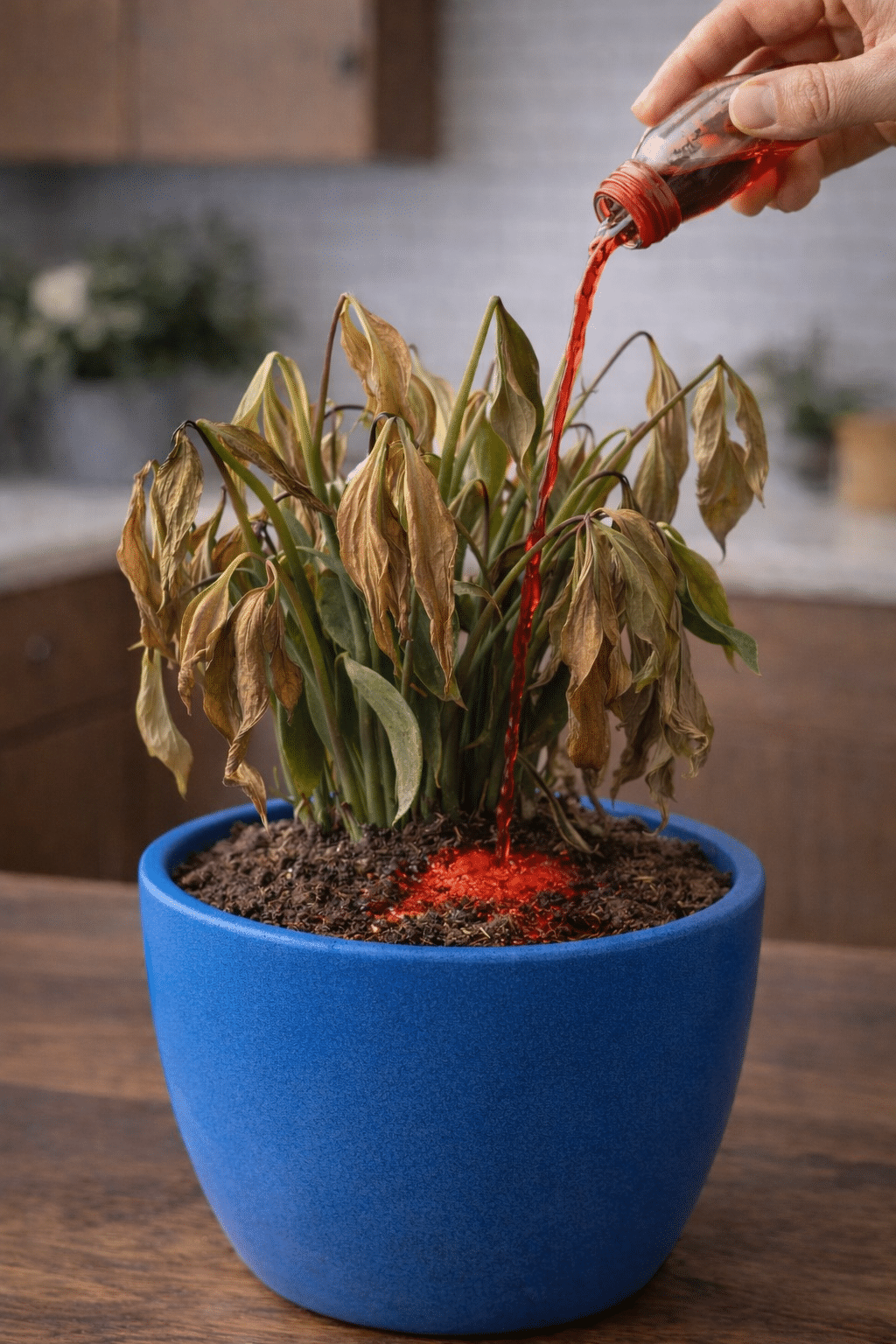
🌿 Why Smart Homeowners Are Pouring This Red Liquid on ZZ Plants (The Results Are Shocking)
The ZZ plant (Zamioculcas zamiifolia) is known for being one of the toughest houseplants you can own. It thrives in low light, survives irregular watering, and still maintains its deep green, glossy leaves.
So when you see people pouring a bright red liquid onto it, it looks like a powerful growth hack…
👉 But here’s the reality:
For ZZ plants, this trend is more risky than helpful if misunderstood.
🌿 What Is the “Red Liquid”?
In most cases, this is:
• A liquid fertilizer (sometimes colored)
• A nutrient solution or plant tonic
• Occasionally a homemade mix with added color or minerals
It’s used to:
✔️ Enhance leaf color
✔️ Support growth
✔️ Provide nutrients
✔️ Improve overall plant appearance
But ZZ plants are different from most houseplants…
🌱 Why ZZ Plants Don’t Need Much Feeding
ZZ plants store water and nutrients in:
• Thick stems
• Underground rhizomes
This means:
👉 They already have a natural reserve system.
Because of this:
• They grow slowly
• They need less water
• They rarely need fertilizer
⚠️ The Hidden Danger of This Trend
The biggest mistake people make is assuming:
👉 “More nutrients = faster growth”
But with ZZ plants:
❌ Too much liquid = root rot
❌ Excess fertilizer = burned roots
❌ Wet soil = plant decline
👉 Overwatering + feeding = the fastest way to kill a ZZ plant.
🌿 When Liquid Feeding Actually Makes Sense
If you want to use any liquid feeding:
✔️ Only during spring and summer
✔️ Once every 4–6 weeks
✔️ Always heavily diluted
🚫 Avoid:
• Winter months
• Low light environments
• Already moist soil
👉 In many homes, ZZ plants grow perfectly fine with no fertilizer at all.
🌱 The Real Secret to a Healthy ZZ Plant
Instead of trends, focus on these fundamentals:
1. Light
Low to bright indirect light
2. Watering
Let soil dry completely between watering
3. Soil
Fast-draining mix is essential
4. Pot
Always use drainage holes
5. Patience
ZZ plants grow slowly — and that’s normal
📊 ZZ Plant Care Optimization Table
| Factor | Ideal Condition | Result |
|---|---|---|
| Light | Low → Bright indirect | Stable growth |
| Water | Infrequent | No root rot |
| Soil | Fast-draining | Healthy roots |
| Feeding | Rare & diluted | Balanced growth |
| Pot | Drainage required | Long-term health |
❓ Garden FAQ — ZZ Plant Care
1. Why are my ZZ plant leaves turning yellow?
Usually due to overwatering.
2. How often should I water it?
Only when the soil is completely dry.
3. Does it need fertilizer?
Not necessarily — it grows well without it.
4. Can I overfeed a ZZ plant?
Yes, very easily.
5. Why are stems soft or mushy?
This is a sign of root rot.
6. Can ZZ plants grow in low light?
Yes, they are very adaptable.
7. What type of soil is best?
Well-draining soil, similar to cactus mix.
8. Should I mist the leaves?
No, it’s not required.
9. How fast does it grow?
Slow to moderate growth.
10. Can I propagate it?
Yes, through leaf or stem cuttings.
11. Why are leaves dull?
Dust buildup or low light.
12. Can I place it in direct sunlight?
Avoid strong direct sun.
13. Does it improve indoor air?
It contributes slightly.
14. Is the red liquid necessary?
No — it’s optional and often unnecessary.
15. What is the biggest mistake with ZZ plants?
Overwatering.