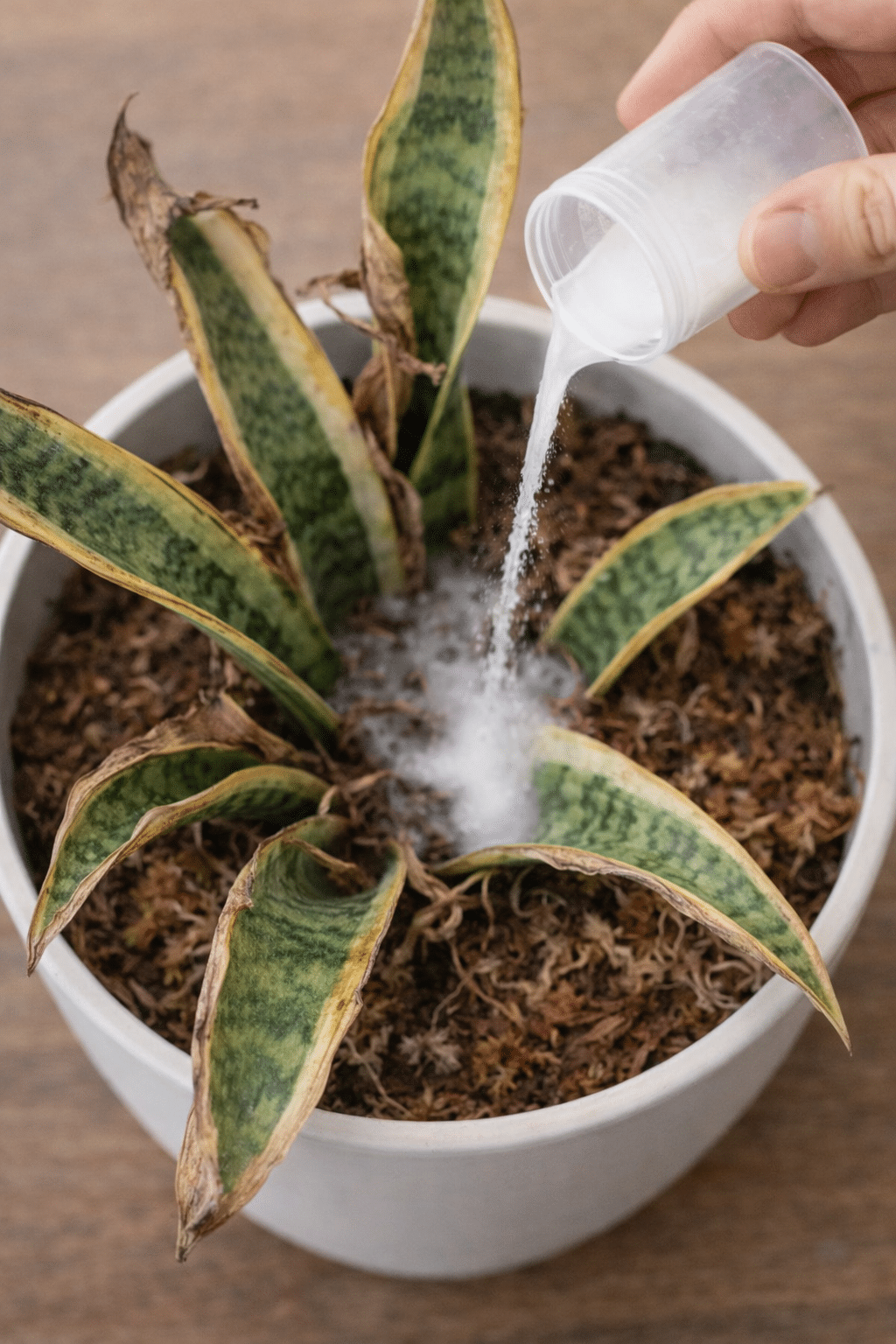
🌿 Why Smart Homeowners Are Using This White Liquid on Snake Plants (The Indoor Comeback Everyone Is Talking About)
Snake plants have become one of the most popular indoor plants in modern homes—and for good reason. They are known for their durability, their ability to survive low-light conditions, and their clean, architectural look that fits perfectly into minimalist and luxury home decor.
But here’s what many homeowners don’t expect…
👉 Even the “easiest” plant can slowly decline if the environment is not right.
You might notice it gradually:
• Leaves losing their deep green color
• Yellowing edges appearing
• Tips turning dry and brittle
• Growth slowing down or stopping completely
At this stage, most people assume the plant is dying.
👉 But in reality, it’s reacting to stress.
Recently, a growing number of indoor plant lovers have started experimenting with a trending method:
👉 Pouring a white liquid into the soil to “revive” snake plants.
This method has gained attention because of its dramatic visual effect—especially when paired with before-and-after transformations.
But here’s the deeper truth that experienced growers understand:
👉 The white liquid is not the real solution.
The real solution lies in understanding how snake plants naturally grow—and adjusting your care routine accordingly.
🌿 Understanding Snake Plants at a Deeper Level
Snake plants (Sansevieria) are native to dry, arid environments. Unlike tropical houseplants, they are adapted to survive in conditions where water is scarce.
This means:
• They store moisture in their thick leaves
• They prefer dry soil over wet soil
• They thrive with minimal watering
• They are sensitive to excess moisture
👉 In simple terms:
Snake plants are built to survive drought—not overwatering.
This is the foundation of everything you need to know.
🪴 The Hidden Root Problem (Why Most Snake Plants Decline)
When a snake plant starts to look unhealthy, the problem is almost always below the surface.
Healthy roots should be:
• Firm
• Light-colored
• Dry between watering cycles
But when conditions are wrong, roots become:
• Soft
• Dark
• Rotting
👉 And this happens silently.
By the time leaves begin to show yellowing or softness, root damage has often already started.
This is why quick fixes like “white liquid” seem to work—because people unintentionally improve care habits at the same time.
🌱 Soil & Drainage — The Real Game Changer
✔️ Ideal Soil Mix
For healthy indoor plant growth, especially snake plants, soil must be:
• Fast-draining
• Lightweight
• Well-aerated
Best options include:
• Cactus soil mix
• Perlite or sand blends
This allows:
✔️ Proper oxygen flow
✔️ Quick drying after watering
✔️ Strong root development
❌ The Most Common Mistake
Using regular potting soil leads to:
• Water retention
• Poor drainage
• Root rot
👉 This is one of the biggest reasons indoor plants fail.
🏺 Pot Setup Used in Luxury Interiors
In modern home design and real estate staging, plants are not just grown—they are styled.
The ideal setup combines functionality and aesthetics:
• Pot with drainage holes
• Inner nursery pot (optional)
• Decorative ceramic or stone outer pot
This setup is widely used in:
• Luxury home decor
• Interior design projects
• High-end real estate staging
👉 It ensures plant health while enhancing visual appeal.
🌡️ Ideal Indoor Growing Conditions
Temperature:
✔️ 18–30°C
Light:
✔️ Bright indirect light (low light tolerated)
Humidity:
✔️ Low to moderate
👉 Snake plants adapt easily, making them perfect for indoor plant styling in modern homes.
💧 Watering — The #1 Factor in Plant Health
When it comes to plant care, watering is the most important variable.
Correct method:
✔️ Wait until soil is completely dry
✔️ Water deeply
✔️ Let excess water drain
Incorrect method:
❌ Watering too often
❌ Keeping soil moist
👉 Overwatering is the leading cause of indoor plant problems.
🧪 What Is the White Liquid (And Why It’s Trending)
The “white liquid” often seen in viral plant care methods is usually:
• A diluted nutrient solution
• A mild mineral supplement
• Sometimes calcium-based
It may help:
✔️ Improve nutrient availability
✔️ Support weak plants
✔️ Encourage new growth
But only under the right conditions.
👉 Without proper soil and watering, it will not fix the problem.
🧴 How to Use It Safely
If you want to try this method:
- Use a very diluted mixture
- Apply occasionally (not regularly)
- Never use on already wet soil
- Avoid overapplication
👉 Always prioritize proper plant care over additives.
⚠️ Common Indoor Plant Mistakes
• Overwatering
• Poor drainage
• Heavy soil
• Low airflow
• Excess fertilizing
👉 Fixing these improves plant health more than any product.
📊 Snake Plant Care Overview
| Factor | Ideal Condition | Benefit |
|---|---|---|
| Light | Indirect | Healthy leaves |
| Soil | Fast-draining | Root protection |
| Water | Rare | Prevent rot |
| Temp | 18–30°C | Stability |
| Pot | Drainage | Avoid buildup |
❓ Garden FAQ (10)
- Why are my snake plant leaves turning yellow?
Usually because of overwatering. - Can snake plants grow in low light?
Yes, but growth slows. - How often should I water?
Every 2–4 weeks. - Is white liquid necessary?
No, proper care is more important. - Can I overuse it?
Yes, it can harm roots. - Best soil type?
Cactus or fast-draining mix. - Why are leaves soft?
Root rot. - Do snake plants need humidity?
No. - Can they recover?
Yes, if roots are still healthy. - Biggest mistake?
Overwatering.