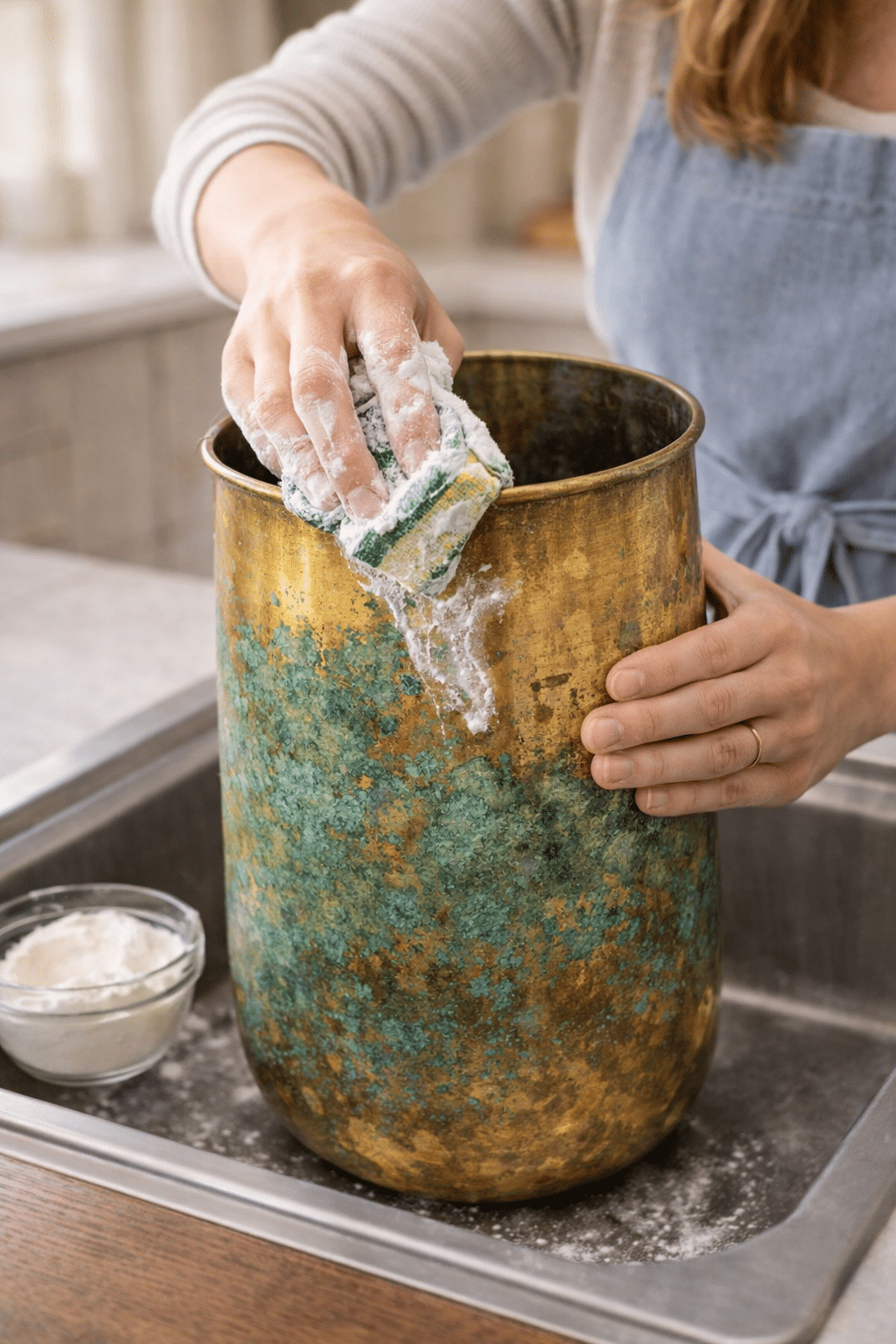
An old metal vase with heavy discoloration, oxidation, water marks, and surface buildup may look worn out at first glance, but pieces like this often have far more decorative potential than people realize. In many homes, aged brass, antique-finish metal, and richly patinated containers can become some of the most interesting design accents in the room once they are cleaned properly. What looks dull, stained, or neglected in the sink can eventually become a beautiful statement piece for indoor plants, decorative stems, or a styled corner in the home.
That is especially true with a tall vase like the one in the image. Its shape already feels decorative. The rounded base, wide opening, and aged metallic finish give it character, depth, and visual warmth. Even though it looks dirty and oxidized now, it has the kind of surface that can become incredibly attractive after the right cleaning process. Some homeowners want to restore this kind of vase until it looks brighter and cleaner, while others want to preserve part of the old-world patina and simply remove grime, residue, and the heaviest buildup. Both approaches can work beautifully.
The key is understanding the difference between dirt and character. Dirt makes a vase look neglected. Controlled patina can make it look expensive, collected, and full of personality. A good restoration does not always mean making the metal look brand new. Sometimes the best result is simply a cleaner, more refined version of what is already there. When done well, the vase can keep its antique charm while still looking fresh enough to display proudly in a living room, entryway, kitchen corner, covered patio, or plant shelf.
This type of project is also satisfying because it combines cleaning, repurposing, home styling, and plant décor in one transformation. You are not just removing buildup. You are uncovering beauty and turning a forgotten piece into something useful again. A cleaned metal vase can become a sculptural planter cover, a holder for faux stems, a dramatic corner accent, or part of a layered indoor plant display that makes the room feel more finished and more personal.
In this guide, you will learn how to clean an oxidized brass or metal vase carefully, when to preserve some patina, how to deal with residue and discoloration, what mistakes to avoid, and how to turn the finished piece into elegant plant décor that feels intentional and high-end.
Why Metal Vases Like This Have So Much Decor Potential
Tall metal vases have something many standard planters do not: presence. They bring height, texture, and richness into a space even before a plant is added. A vase with an aged brass, bronze, or mixed metallic look can warm up neutral interiors, balance minimalist rooms, and add visual weight to corners that otherwise feel empty.
The metal finish in a vase like this also creates depth that smooth ceramic or plain plastic containers often lack. The slight variation in tone, the darker areas, the antique feeling, and the imperfect surface all help the object feel more collected and layered. This is one reason why aged metal décor often looks more expensive than perfectly new but generic containers.
Pieces like this are also versatile. In one room, the vase can feel rustic. In another, it can feel old-world. In a more modern setting, it can work as a contrast piece. If paired with a strong plant and calm styling, it can even look refined and luxurious.
Because of this, cleaning a vase like this is usually worth the effort. Even if you never plant directly into it, it can still become one of the most attractive decorative vessels in the home.
What the Green and Dark Surface Buildup Might Mean
A vase like the one in the image often shows several layers of age at once. The greenish-blue areas may resemble oxidation or patina, especially if the vase has brass, bronze, or copper-toned elements. In some cases, that aged color is actually attractive and worth keeping. Other times, there may also be grime, soap residue, mineral buildup, or dirt sitting over the finish and making it look heavier and duller than it really is.
That is why the first goal is not to strip everything immediately. The first goal is to clean gently enough to reveal what is true finish and what is simply residue. Once that becomes clear, you can decide whether to continue brightening the vase or stop and preserve the antique look.
This approach gives better results than aggressive cleaning right from the beginning. Rushing to scrub too hard can remove beautiful character along with the dirt.
Before You Start: Decide What Final Look You Want
Before cleaning, choose the direction you want the vase to take. This affects how strongly you clean it and how you style it later.
One option is a refreshed antique look. In this version, you remove grime, residue, and the dirtiest buildup, but you keep much of the aged metallic color and patina. This often gives the best balance between clean and character.
Another option is a brighter restored look. In this version, you clean deeper to reveal more of the brass or warm metal underneath. This can make the piece feel more polished and formal.
A third option is a decorative repurpose look. In this version, the vase is cleaned and stabilized, but not necessarily restored to a brighter finish. It is then used as a dramatic planter cover or decorative vessel exactly because of its aged surface.
For most homes, the first option works beautifully. A refreshed antique finish tends to feel the most natural and the most stylish.
Should You Use the Vase as a Planter or as a Decorative Outer Container?
For most indoor plant styling, the best approach is to use a metal vase like this as an outer decorative container rather than planting directly into it. This is especially true if the piece is old, decorative, or has no drainage.
Using it as a cover for a nursery pot makes life much easier. It helps protect the metal from standing water, keeps roots healthier, makes watering simpler, and allows you to change plants later without making a mess inside the vase. It also keeps the inside cleaner for longer.
If you want to use the vase purely for stems, faux greenery, or preserved branches, that is even easier. In that case, interior perfection matters less, though it should still be clean and dry.
In most cases, using the vase as a decorative outer vessel is the smartest and safest option.
Supplies You May Need
To clean and restore a metal vase like this, gather simple supplies first.
You may need:
- Baking soda
- Mild dish soap
- Warm water
- A soft sponge
- A non-scratch scrubbing pad
- A soft-bristle brush or toothbrush
- Microfiber cloths
- White vinegar for limited spot treatment if needed
- A small bowl for mixing paste
- Dry towels
- Gloves
- Optional metal polish for brass or antique metal if appropriate
- Optional wax or clear protective finish for the final step
The image suggests baking soda or a similar powder is being used, and that is a good starting point. Baking soda is especially useful because it helps with grime and buildup while still giving you more control than harsh chemical products.
Step 1: Empty the Vase and Inspect the Surface
If the vase has anything inside it, remove everything first. Then inspect the piece carefully in good light. Look at the rim, inner wall, base, and outer surface. Identify which areas seem like dirt and which areas seem like part of the finish.
The rim is especially important because it is one of the most visible areas once the vase is styled. The interior top section often holds the most residue. The lower outer areas may show darker aging, oxidation, or splash marks.
Try not to judge the finish too quickly. Old metal often looks duller than it really is until the first cleaning pass removes the surface layer of grime.
Step 2: Remove Loose Dust and Dry Debris First
Before using water, wipe away loose dust and dry dirt. Use a dry cloth or soft brush. This step prevents the grime from turning into a muddy layer once wet cleaning begins.
If there are powdery spots or loose surface residue, brushing them away first helps you see the true condition of the metal better. It also makes the rest of the cleaning feel easier and more controlled.
Step 3: Wash With Warm Water and Mild Soap
Start gently. Mix warm water with a small amount of dish soap and use a soft sponge or cloth to wipe the vase. Clean both inside and outside, focusing first on general grime rather than oxidation.
This initial wash removes kitchen residue, fingerprints, dust, old splash marks, and any dirt sitting on top of the finish. Often the vase already looks noticeably better after this step alone.
Be especially careful not to soak the vase unnecessarily for a long period if it is older or if you are not sure of the metal composition. Clean it steadily, then dry areas as you go if needed.
Once the soapy layer is removed, wipe the vase with a clean damp cloth.
Step 4: Make a Baking Soda Paste for Buildup and Heavy Grime
After the general wash, make a thick paste from baking soda and a little water. Apply it to areas with visible buildup, especially around the rim and on any grimy patches.
Let the paste sit briefly, then scrub gently with a sponge or soft brush. Baking soda works well here because it helps lift dull residue and grime without forcing you into harsh stripping too quickly.
Use small circular motions and pay attention to the texture of the finish. If the metal underneath begins to look richer, warmer, or more refined, you are likely removing dirt rather than damaging the vase. If the surface suddenly becomes too bright in a way that looks unnatural compared to the rest, slow down and reassess.
The goal is to improve clarity and beauty, not to erase all age.
Step 5: Clean the Rim Thoroughly
The top edge matters a lot in decorative styling. A dirty rim can make the whole vase feel unfinished even if the rest is improved.
Use the baking soda paste and a small brush to work carefully around the upper edge, inner lip, and any narrow bands of grime. This area usually collects the most visible residue, especially if the vase has held water, stems, or dusty decorative materials in the past.
Once the rim is cleaner, the vase often starts looking significantly more display-worthy.
Step 6: Decide Whether to Keep Some Patina
After the first deeper cleaning, stop and look at the vase from a distance. This is the point where you decide how much aging to keep.
If the greenish-blue tones and darker patches now look beautiful and balanced, you may not need to clean much further. Those tones can add richness and make the vase feel antique and artistic.
If some areas still look more like dirt than patina, you can continue cleaning selectively. It is usually better to clean targeted areas than to strip the whole vase evenly. Selective cleaning often creates a more natural finished look.
Many decorative metal pieces look best when some age remains.
Step 7: Use Vinegar Carefully Only if Needed
If some residue or mineral buildup remains stubborn, white vinegar can help in small amounts. Use it carefully and only in targeted areas. Apply it to a cloth rather than pouring it broadly over the vase.
Wipe gently, then rinse the area with a damp cloth and dry it. Vinegar can brighten some buildup, but it can also affect certain aged finishes if overused. This is why it works best as a limited tool rather than the main method.
Avoid soaking the vase in vinegar or leaving it on for too long unless you are intentionally trying to strip the finish more aggressively, which is usually not necessary for décor purposes.
Step 8: Dry the Vase Fully and Assess the Finish
Once the cleaning is done, dry the vase thoroughly with a soft towel. Then let it air-dry completely. This gives you the clearest view of the finished surface.
The metal may look warmer, more dimensional, and more decorative once fully dry. Damp surfaces can hide the true color and make the vase seem duller than it really is.
At this stage, ask yourself whether the vase now looks clean and attractive enough for display. In many cases, the answer will be yes without needing any stronger restoration.
Step 9: Optional Polishing for Brighter Metal Highlights
If the vase is actually brass or brass-toned metal and you want more brightness, you can use a metal polish very selectively. Do not apply it everywhere automatically.
Sometimes a better approach is to brighten only a few areas, such as the rim or upper sections, while leaving the lower body aged. This creates contrast and helps the vase look refined without losing its character.
Always test a hidden spot first. Some polishes can remove patina quickly. If you love the old finish, skip this step or use it only on very small areas.
Step 10: Protect the Surface if Desired
Once you are happy with the look, you can leave the vase natural or add a protective layer. A light wax or a clear matte finish can help stabilize the appearance, reduce transfer onto hands, and slow future dulling.
A protective step is especially helpful if the vase will be placed on wood furniture, shelving, or floors. It can also help preserve the refreshed finish if you spent time bringing out the beauty of the metal.
Always choose something suitable for decorative metal and test first so the finish does not become glossier than you want.
Common Mistakes to Avoid
One common mistake is trying to make every old metal vase look brand new. Many such pieces look far better with some age left on them. Stripping all patina can flatten their character and make them feel less special.
Another mistake is scrubbing too hard too early. Strong abrasion can scratch the metal, remove attractive finish, and create patchy bright spots that do not suit the rest of the piece.
Some people also clean only the outside and ignore the rim and upper interior. But in styling, those are often the most visible parts.
Another mistake is planting directly into the vase without thinking about drainage and moisture. This can cause water problems and shorten the beauty of the vessel.
Finally, people sometimes style the finished vase in a way that hides its best qualities. A piece like this needs room to breathe visually.