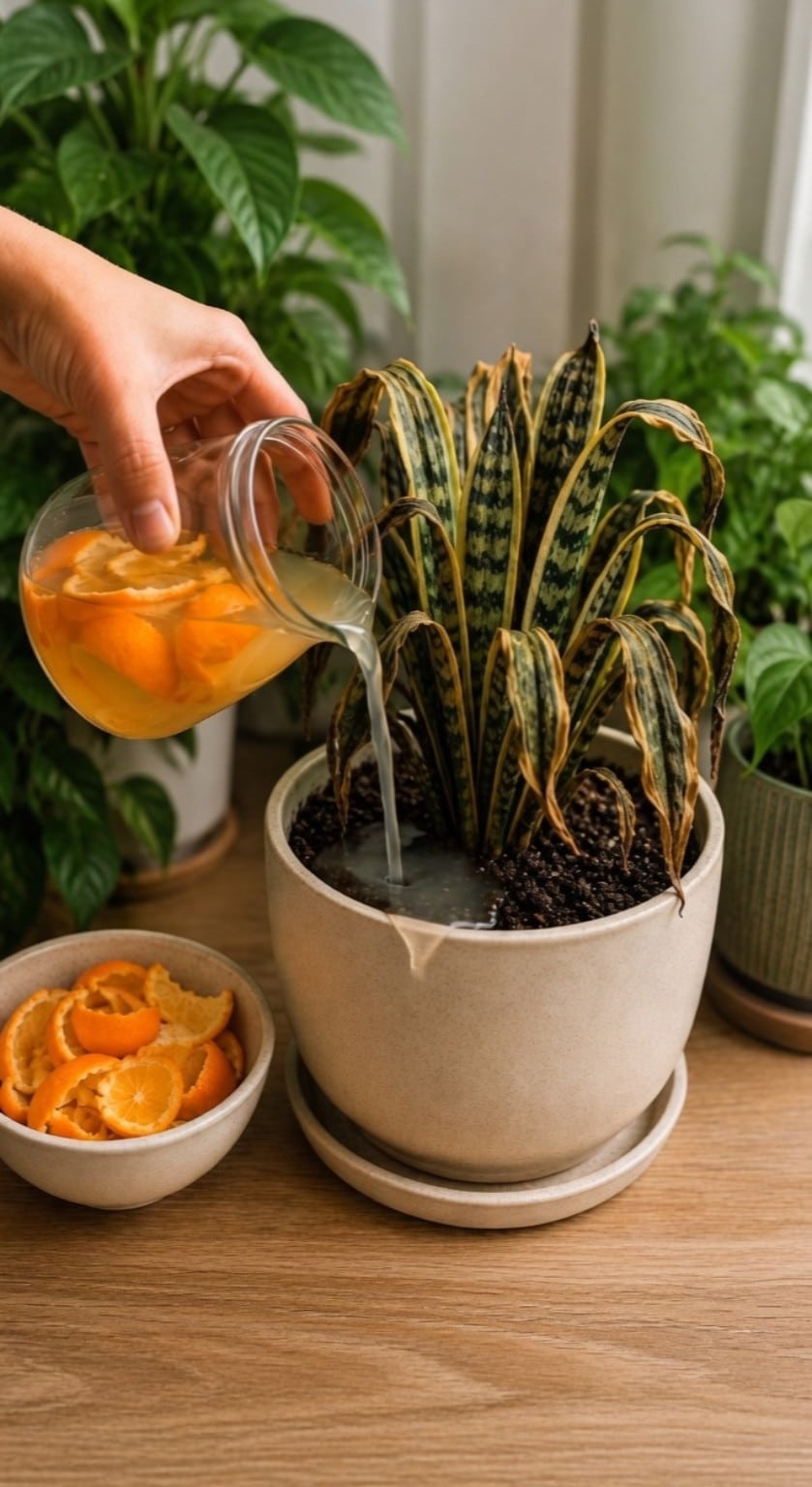
A struggling snake plant changes the whole feeling of a room. When the leaves are firm, upright, and richly patterned, the plant brings structure, calm, and quiet luxury into the space around it. But when the leaves start curling, browning, collapsing, or looking dehydrated at the edges, that polished effect disappears fast. Instead of looking modern and intentional, the plant starts making the whole corner feel tired.
That is exactly why a video like this catches attention. You see a weakened snake plant with dry, damaged foliage, and then a cloudy liquid with orange peels is poured into the soil. It immediately creates curiosity. It looks homemade, simple, and affordable. It suggests that maybe a citrus-based water or orange-peel soak is being used as a rescue trick when snake plants start declining indoors.
But smart plant owners know the real answer is always more important than the visual hook. A snake plant does not recover because of orange peels alone. In fact, if the plant is already stressed, adding the wrong homemade liquid can sometimes make things worse instead of better. What truly decides whether a weak snake plant improves is root health, drainage, watering rhythm, light, soil structure, and whether the real cause of decline has been identified correctly.
That is why experienced homeowners ask better questions. Is the plant dry from underwatering, or is it actually rotting from too much moisture? Are the roots healthy? Is the pot draining properly? Is the soil old and compacted? Is the plant exposed to cold drafts or harsh direct heat? Is the orange-peel liquid mild and heavily diluted, or is it adding unnecessary stress to an already damaged root zone? Those are the questions that matter most.
In other words, the video may show orange-peel water, but the true rescue plan for a snake plant is almost never just one liquid. It is a system.
What the Image Suggests
From the visual, this looks like:
- a stressed snake plant
- browning, curling, and weakened leaves
- a homemade citrus-peel liquid being poured into the soil
- an attempt to revive a declining indoor plant
The plant itself appears to be a snake plant, and the treatment shown appears to be some kind of orange-peel water or citrus-infused liquid. That matters because snake plants are not heavy feeders, and they are especially sensitive when the root zone stays wet for too long.
Why Snake Plants Usually Start Looking Like This
A snake plant can decline for several different reasons, and the symptoms often overlap. Leaves may curl, thin out, wrinkle, or turn brown whether the plant is too dry, too wet, rootbound, or sitting in damaged soil.
The most common causes are:
- chronic overwatering
- compacted soil that stays wet too long
- underwatering over a long period
- root damage
- poor drainage
- cold stress
- very low light mixed with watering mistakes
- salt or residue buildup in the soil
This is why homemade rescue liquids often get too much credit or too much blame. The real problem is usually older and deeper.
What Orange-Peel Water Is Supposed to Do
People who use orange-peel water usually do it because they believe it may:
- add mild nutrients
- create a more “natural” plant-care routine
- freshen the soil
- support root recovery
- offer a homemade alternative to fertilizer
The problem is that snake plants do not respond well to random experimentation when they are already stressed. Citrus peels can introduce sugars, organic residues, or acidity that the soil may not need. In a very mild, diluted, carefully strained form, some homeowners may use it without obvious short-term issues. But it is not a guaranteed fix, and it is not the main reason a damaged snake plant recovers.
Why Root Health Matters More Than Any Homemade Liquid
If the roots are unhealthy, no homemade liquid will truly solve the problem. Snake plants depend on a clean, firm root system to hold leaves upright and support new growth. Once the roots weaken, the leaves often start collapsing or browning from the base or edges.
Healthy roots help a snake plant:
- hold strong upright leaves
- manage moisture properly
- resist stress better
- push new healthy pups
- recover after neglect or repotting
That is why the smartest first step is not usually pouring something in. It is checking whether the roots are alive, firm, and functional.
How to Tell If the Plant Is Too Dry or Too Wet
This is one of the most important parts of rescuing a snake plant.
Signs it may be too dry:
- leaves look wrinkled or thinner than normal
- soil is very dry and pulling away from the pot
- leaves bend without feeling mushy
- roots may look dry and papery but not rotten
Signs it may be too wet:
- leaves soften near the base
- soil feels damp for too long
- pot smells sour or stale
- roots may be black, mushy, or slipping apart
- lower leaf tissue may yellow before browning
The problem is that many people see brown crispy edges and assume the plant needs more liquid. But if the roots are already struggling in wet soil, more liquid only increases the stress.
Why Orange-Peel Water Can Be Risky for Snake Plants
A snake plant is not a thirsty, heavy-feeding flowering plant that enjoys frequent organic drenches. It usually prefers a simpler routine. Homemade citrus water may seem harmless, but it can cause problems such as:
- residue buildup in the soil
- attracting fungus gnats if the mix stays moist
- unnecessary acidity
- organic breakdown in the pot
- confusion that delays the real fix
That is why most successful snake plant care routines focus on clean water, proper soil, good drainage, and occasional light feeding only when the plant is healthy.
What Actually Helps a Weak Snake Plant Most
The biggest improvements usually come from:
- removing severely damaged leaves
- checking the root system
- repotting into a fast-draining mix if needed
- reducing watering frequency
- improving light
- using a pot with drainage
- allowing the soil to dry appropriately between waterings
If the plant is still alive at the center and the roots are partly healthy, it can often recover surprisingly well once the setup is corrected.
The Best Soil for Recovery
A recovering snake plant needs air around the roots. Heavy wet potting soil is one of the fastest ways to keep the plant weak. A better mix usually includes:
- a fast-draining cactus or succulent-style base
- perlite, pumice, or bark
- enough structure to prevent compaction
- no long-term swampy moisture
Once the soil drains properly, the plant has a better chance of rebuilding strength instead of fighting rot or suffocation below the surface.
The Pot Matters Too
The pot in a recovery situation should:
- have proper drainage holes
- not be too oversized
- allow the soil to dry at a reasonable pace
- support the plant without trapping excess moisture
A pot that is too large can hold too much wet soil around damaged roots. That often slows recovery.
Light Makes Recovery Faster
Snake plants tolerate low light, but a stressed plant usually recovers better in bright indirect light. Better light helps the plant:
- hold stronger leaf structure
- support healthier new growth
- dry the soil more predictably
- regain a cleaner, richer look
The plant does not need harsh scorching sun, but it usually does better near bright supportive light than in a dark corner.
Should You Use the Orange-Peel Liquid at All?
If the plant is already weak, the safest answer is usually no, or at least not until the plant is stable and the real cause of decline is clear. The risk is not always dramatic, but the benefit is also often overstated.
A safer approach is:
- identify the real stress source
- correct the soil and drainage
- water cleanly and sparingly
- wait for signs of stable recovery
- only consider mild feeding later, after new healthy growth begins
That is a much smarter rescue plan than trying to “pour life back into” a damaged plant.
Quick Rescue Table for a Weak Snake Plant
| Problem | What It Often Means | Better Response |
|---|---|---|
| Crispy edges with very dry soil | Underwatering or root dehydration | Rehydrate carefully, then restore a steady routine |
| Soft base and damp soil | Overwatering or root rot | Unpot, inspect roots, repot into dry airy mix |
| Brown and curled older leaves | Chronic stress | Remove worst damage and correct conditions |
| No new growth for a long time | Weak roots, low light, or stale soil | Improve light and root environment |
| Homemade citrus liquid being considered | Visual “fix” but not full solution | Focus on roots, drainage, and watering first |
Frequently Asked Questions
Can orange-peel water save a snake plant?
Not by itself. If the plant recovers, it is usually because the roots, soil, drainage, and watering routine were corrected. Orange-peel water is not a reliable rescue method.
Is orange-peel water safe for snake plants?
It can be risky, especially if the plant is already stressed. Citrus residues and organic matter may not help the root zone, especially in a pot that dries slowly.
What is the safest way to rescue a damaged snake plant?
Check the roots, remove rot if present, repot into a fast-draining mix, reduce watering, and place the plant in bright indirect light.
Should I cut off the brown leaves?
You can remove leaves that are badly damaged or collapsing. If only the tips are brown, you may trim the damaged parts neatly or leave them until the plant stabilizes.
How long does recovery take?
It depends on the damage. A mildly stressed snake plant may improve in weeks, but a badly weakened one may take months to rebuild strong healthy growth.