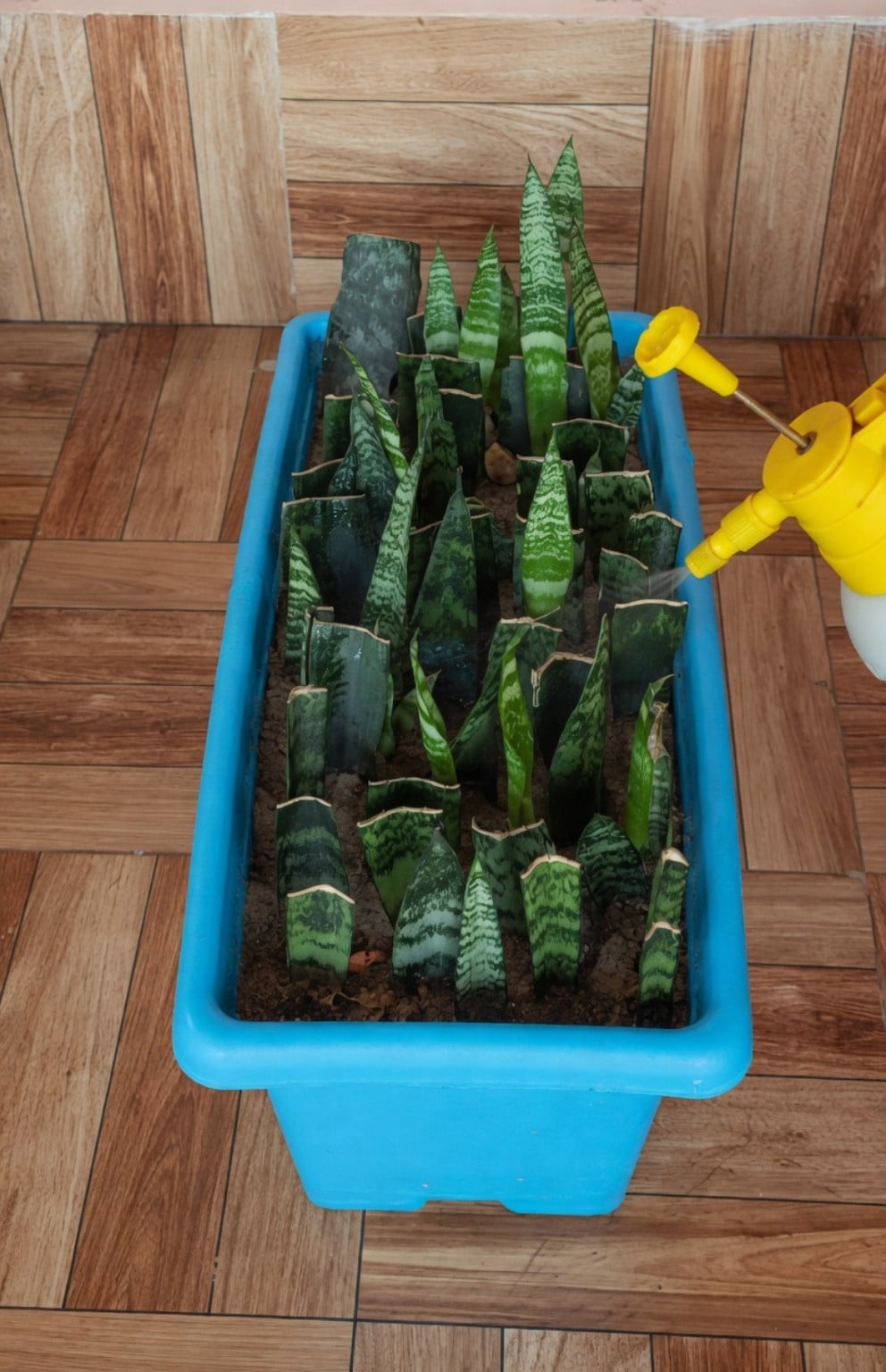
Snake plants are already one of the easiest houseplants to love. They look strong, modern, and clean, and they fit almost any room style. But one of the most satisfying things about them is not only keeping a mature plant healthy. It is multiplying them. That is exactly why a video and image like this get attention so quickly. Instead of showing a finished decorative plant in a pot, this setup shows many snake plant leaf cuttings placed upright in one shallow tray, with a sprayer being used over the surface. It immediately suggests a propagation method that feels simple, organized, and easy to copy.
From the visual, this is clearly a snake plant leaf propagation setup. The cut leaves have been inserted into a long rectangular container filled with soil or propagation mix. Some cuttings are older sections, while a few smaller fresh green shoots are already visible between them. That detail matters a lot. It means this is not just a random tray of cut leaves. It is a staged propagation project where the goal is to root leaf sections and eventually produce new growth.
The yellow sprayer is also important. It suggests a controlled moisture routine rather than heavy top watering. That makes sense because leaf cuttings in a shallow tray can rot easily if the medium stays soggy. A light spray method looks attractive in videos because it feels gentle and precise. But smart plant lovers know the real secret is not the sprayer itself. The real secret is the balance between moisture, airflow, light, and patience.
That is why experienced growers ask better questions. Are the leaf cuttings planted the right way up? Is the medium airy enough? Is the tray draining properly? Is the spray light or excessive? Is the setup getting bright indirect light? Are the cuttings rotting at the base or slowly rooting as they should? Those are the questions that actually decide whether this tray becomes a beautiful row of future snake plants or just a soggy propagation failure.
A setup like this is exciting because it turns one plant into many. And when done well, it can be one of the most practical and satisfying indoor plant projects you can start at home.
What This Setup Appears to Be
From the image and likely video context, this appears to be:
- snake plant leaf cuttings
- inserted into a long shallow propagation container
- spaced upright across the tray
- lightly sprayed with water using a hand sprayer
- at different stages of rooting and regrowth
You can even see that some cuttings are older trimmed sections while a few younger shoots are emerging, which strongly suggests that at least part of the tray has already begun taking root successfully.
Why People Love Propagating Snake Plants This Way
This method looks appealing because it feels:
- organized
- low-cost
- easy to scale
- beginner-friendly at first glance
- satisfying because many cuttings can be started at once
Instead of propagating one cutting in one pot, this tray method allows growers to work with many leaf sections together. That makes it especially attractive for:
- multiplying a favorite snake plant
- filling future pots
- creating gifts
- testing propagation in batches
- making a fuller display later
That is one reason videos like this get strong attention. Viewers can imagine turning one old plant into a whole collection.
Why Snake Plant Leaf Cuttings Work at All
Snake plants are unusually good candidates for propagation because each healthy leaf contains stored energy and structure. If a section is cut cleanly and placed in the right medium, it can form roots and eventually push new pups from the base.
Healthy leaf cuttings can:
- root slowly over time
- stay upright in a shallow medium
- develop a callused base before rooting
- form new growth points under the soil line
That is why even a tray full of cut leaf pieces can eventually become a tray full of young plants.
Why Orientation Matters More Than Most Beginners Realize
One of the biggest hidden mistakes in snake plant propagation is planting cuttings upside down. With many plants, orientation is obvious. With cut snake plant pieces, it is easy to forget which end originally faced down.
If the base end is planted correctly:
- rooting is much more likely
- the cutting has a better chance of forming pups
- moisture is absorbed more naturally
If the cutting is planted upside down:
- rooting usually fails
- the piece may just rot
- time is wasted without any real progress
That is why careful growers mark the lower edge before starting if they are cutting many sections at once.
Why the Sprayer Looks Smart in This Setup
In a shallow propagation tray, a spray bottle or pressure sprayer feels safer than dumping large amounts of water into the container. A lighter spray can help:
- moisten the surface gently
- avoid dislodging cuttings
- reduce heavy saturation in one area
- create a more controlled routine
But this only helps if the grower uses restraint. A sprayer is not automatically safer if it is used too often. Constant spraying can still create:
- soggy bases
- fungal issues
- rot
- weak rooting
So the real benefit is not the tool. It is the controlled watering style the tool makes possible.
Why Drainage Still Matters Even in a Propagation Tray
A lot of people see a tray method and focus only on moisture. But drainage is just as important. Snake plant cuttings are much more likely to fail in a tray that traps water at the bottom.
A better propagation tray usually has:
- drainage holes or another way to avoid standing water
- a light airy medium
- enough depth to anchor cuttings
- no long-term swampy conditions
If water sits in the base of a tray like this for too long, many cuttings may rot before they ever root.
Why the Medium Has to Stay Airy
Snake plants do not like heavy wet soil even when they are mature. Leaf cuttings are even more sensitive. A propagation medium that is too dense holds too much moisture around the cut base.
A better rooting mix often includes:
- succulent or cactus-style soil
- perlite or pumice
- coarse sand or grit in some cases
- enough structure to keep air around the cuttings
That is why a tray filled with dark compacted soil often performs worse than a lighter, better-draining mix.
Why Bright Indirect Light Helps More Than Heat and Water Alone
People often assume rooting is all about moisture. It is not. Light matters too. Snake plant cuttings usually do best in:
- bright indirect light
- warm stable temperatures
- no harsh all-day direct sun on the tray
- no deep dark corners
Better light helps:
- keep the cuttings firmer
- support healthier rooting
- reduce slow soggy stagnation
- encourage stronger pup formation later
That is why propagation trays usually perform better near a bright window or in a bright protected space than in a dim corner.
Why Patience Is the Real Secret
This is one of the biggest truths behind snake plant propagation. The tray in the image looks active because some new shoots are already visible, but snake plant cuttings are not fast. They often take much longer than beginners expect.
A cutting may:
- sit unchanged for weeks
- root slowly below the surface first
- produce no visible signs at the top for a long time
- suddenly push a pup after a long quiet phase
That is why many people fail. They assume nothing is happening and start changing the setup too much. Smart growers understand that quiet progress is still progress.
Why Some Cuttings Produce Variegation Changes
This matters especially if the original plant was variegated. Leaf propagation of some snake plant varieties may not always preserve the exact same variegation pattern in the pups. New growth can sometimes come back greener or visually different from the mother plant.
That is why people use this method mainly because it is:
- practical
- satisfying
- productive
But not always perfect for preserving every decorative trait of the parent plant.
Common Mistakes With This Tray Method
The image shows a promising setup, but many people still make mistakes such as:
- planting cuttings upside down
- using a tray without drainage
- spraying too often
- using dense wet soil
- placing the tray in poor light
- trying to pull cuttings up too early to check roots
- expecting fast visible growth
The best propagation trays usually look boring for a while. They succeed because the grower leaves them alone just enough.
Table: What Smart Growers Check in a Snake Plant Propagation Tray
| Factor | What to Check | Why It Matters |
|---|---|---|
| Cutting direction | Is the base end planted down? | Wrong orientation usually fails |
| Medium | Is it airy and fast-draining? | Dense wet soil causes rot |
| Moisture | Is the tray lightly moist, not soggy? | Too much water is the biggest risk |
| Drainage | Can extra water escape? | Standing water ruins cuttings |
| Light | Is the tray in bright indirect light? | Better light supports rooting |
| Patience | Has enough time passed? | Snake plant cuttings root slowly |
When This Method Works Best
This tray method works especially well when:
- the leaf sections are healthy
- the cut ends were allowed to dry or callus before planting
- the mix drains well
- the spray routine is light
- the temperature is stable
- the grower is patient enough not to interfere constantly
In that kind of setup, one tray can eventually turn into a very satisfying collection of new snake plants.
Frequently Asked Questions
Is this really a good way to propagate snake plants?
Yes, it can work well. Snake plant leaf cuttings often root successfully when placed in a light medium and kept in balanced conditions.
Why use a sprayer instead of normal watering?
A sprayer allows gentler moisture control in a shallow tray, but only if it is not overused.
How long do snake plant cuttings take to grow new pups?
Usually longer than people expect. It may take weeks or even longer before visible new growth appears.
Can I propagate many cuttings in one tray?
Yes, that is one reason this method is popular. It lets you start many pieces at once in a compact space.
What is the biggest reason cuttings fail?
Usually too much moisture, bad drainage, upside-down planting, or a medium that stays too wet.