Want to turn one healthy Geranium into several beautiful flowering plants without buying expensive new plants?
Geranium propagation from stem cuttings is one of the easiest and most affordable ways to expand your flower collection.
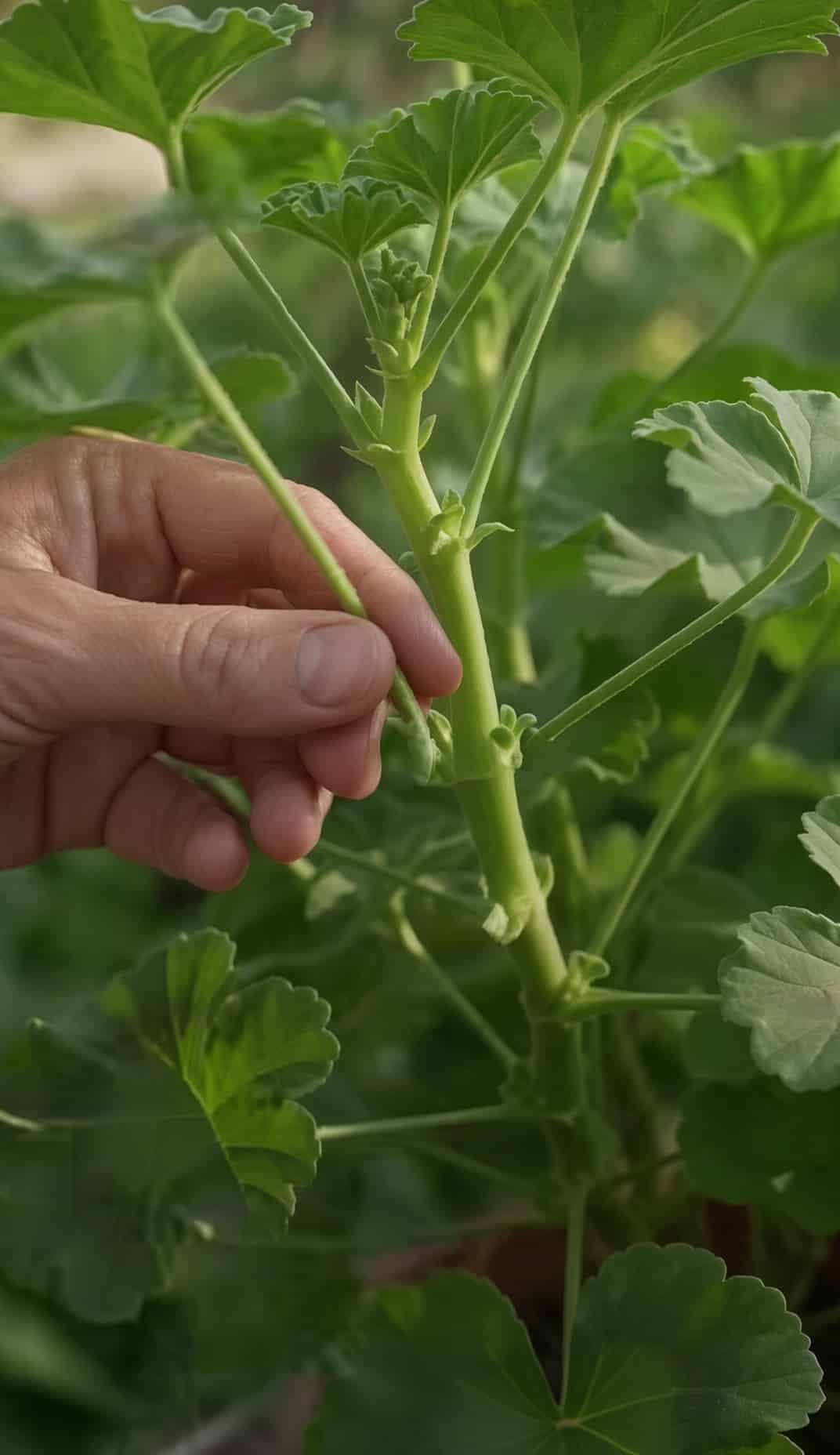
As shown in the image, a healthy green Geranium stem can be selected, trimmed, and planted in a small container. Some gardeners also use white rooting powder to encourage root development.
With proper care, that small cutting can gradually develop strong roots, fresh green leaves, and eventually colorful flowers.
Here’s how to do it successfully.
1. How to Take Geranium Cuttings
Geraniums, commonly called Pelargoniums, are popular flowering plants for patios, balconies, and container gardens.
The best cuttings come from healthy, actively growing stems.
Step-by-Step Instructions
- Choose a healthy Geranium stem approximately 3–5 inches long.
- Use clean, sharp pruning scissors to cut just below a leaf node.
- Remove the lower leaves, leaving 2–3 healthy leaves near the top.
- Remove flower buds or open flowers so the cutting can focus on root development.
- Allow the cut end to dry briefly in a shaded location before planting.
Choose firm, green stems without signs of pests, rot, or disease.
Spring and early summer are excellent times for propagation, although cuttings can root indoors during other seasons.
2. Does White Rooting Powder Help Geranium Cuttings?
White rooting powder is commonly used in plant propagation, but not every white gardening powder is a rooting hormone.
Commercial rooting hormone products may contain indole-3-butyric acid (IBA), a plant-growth regulator that supports root initiation.
How to Use Rooting Hormone
- Select a rooting hormone labeled for ornamental stem cuttings.
- Lightly moisten the base of the cutting if the product instructions recommend it.
- Dip the lower stem into a small amount of powder.
- Tap off any excess.
- Insert the treated stem into the prepared potting mix.
Important: Geranium cuttings can root without rooting hormone. Avoid sprinkling unidentified white powders over the soil or leaves, and always follow product directions.
Rooting powder may support propagation, but it cannot make a cutting grow or flower instantly.
3. Best Potting Soil for Geranium Cuttings
Healthy root development begins with the right growing medium.
Geranium cuttings need a lightweight, well-draining mix that provides moisture without becoming waterlogged.
Recommended Soil Mix
- 50% premium indoor potting mix
- 30% perlite
- 20% coco coir or fine peat-based growing medium
This combination offers good drainage, moisture retention, and airflow around developing roots.
You can also use a commercial seed-starting and propagation mix.
Avoid heavy garden soil because it can retain excessive moisture and increase the risk of stem rot.
4. How to Plant Geranium Cuttings in Pots
Once your cutting is prepared, planting is simple.
Step 1: Choose a small nursery pot or terracotta planter with drainage holes.
Step 2: Fill the container with lightly moistened propagation soil.
Step 3: Make a small hole in the center using a pencil or planting tool.
Step 4: Insert approximately 1–2 inches of the stem into the soil, ensuring at least one node is buried.
Step 5: Gently press the soil around the cutting.
Step 6: Place the container in bright, indirect sunlight.
Keep the growing medium lightly moist, but never saturated.
Under suitable conditions, Geranium cuttings often begin rooting within approximately 2–4 weeks.
5. How to Encourage Strong Roots and New Growth
Successful propagation depends on several important factors.
Bright, Indirect Light
Place newly planted cuttings near a bright window or in a sheltered outdoor location.
Avoid intense afternoon sunlight until roots are established.
Proper Watering
Water carefully when the growing medium begins drying.
Overwatering is one of the most common causes of cutting failure.
Warm Temperatures
Geranium cuttings generally root well in temperatures around 65–75°F (18–24°C).
Good Air Circulation
Provide ventilation to reduce excessive moisture and fungal problems.
Patience
Fresh leaves and increased resistance to a very gentle tug may indicate successful rooting.
Once roots are established, gradually introduce the plant to brighter growing conditions.
6. Best Fertilizer for Geranium Growth and Flowering
Fresh Geranium cuttings do not require fertilizer immediately.
Wait until roots have developed and new growth is visible.
Then begin feeding with a suitable liquid fertilizer for flowering plants.
| Fertilizer Type | Main Benefit |
|---|---|
| Balanced liquid fertilizer | Supports overall growth |
| Complete flowering plant fertilizer | Provides nutrients for established flowering plants |
| Slow-release fertilizer | Offers gradual nutrient delivery |
| Organic container plant fertilizer | Alternative feeding option |
A balanced fertilizer containing nitrogen, phosphorus, potassium, and micronutrients is a reliable choice.
Follow the manufacturer’s recommended dilution and application schedule.
Avoid excessive nitrogen, which can encourage leafy growth at the expense of flowers.
7. How to Make Geraniums Grow Bushier and Bloom More
Once your cutting develops a healthy root system, you can encourage a fuller, more attractive plant.
Pinch the Growing Tips
Remove the soft tip of a growing stem above a leaf node.
This can encourage side branches and create a bushier appearance.
Provide Adequate Sunlight
Established Geraniums generally perform best with several hours of direct sunlight daily.
In extremely hot climates, afternoon shade may help prevent stress.
Remove Faded Flowers
Deadheading spent blooms encourages a tidy appearance and helps the plant direct energy toward new growth.
Maintain Consistent Watering
Allow the upper portion of the potting mix to dry slightly between waterings.
Feed During Active Growth
Use a complete fertilizer at the appropriate concentration.
Remember: A healthy cutting needs time to establish roots, develop branches, and mature before producing abundant flowers.
8. Common Geranium Propagation Problems
Cutting Turns Black or Mushy
Usually associated with stem rot or excessive moisture.
Use fresh propagation soil and improve drainage.
Leaves Turn Yellow
Possible causes include overwatering, poor drainage, or environmental stress.
Cutting Wilts
Some wilting can occur before roots develop. Protect the cutting from intense sunlight and check soil moisture.
No New Growth
Root formation may happen before visible leaf development.
Maintain suitable conditions and allow additional time.
Geranium Grows Leaves but No Flowers
Insufficient sunlight, excessive nitrogen, or immature growth may delay flowering.
9. Best Pots and Gardening Supplies for Geraniums
Choosing quality gardening products can improve convenience and growing conditions.
Consider these useful supplies:
- Premium Geranium potting soil for container growing
- Rooting hormone powder for optional propagation support
- Terracotta planters with drainage holes for healthy root conditions
- Balanced liquid flower fertilizer for established plants
- LED grow lights for indoor propagation
- Professional pruning shears for clean stem cuttings
- Self-watering planters for established plants, when moisture is carefully managed
These products are especially useful for gardeners growing multiple Geranium varieties.
10. Luxury Geranium Decor Ideas for Patios and Homes
Geraniums are not only easy to propagate; they are also beautiful decorative plants.
Elegant Ceramic Planters
Display flowering Geraniums in premium white, beige, or textured ceramic pots.
Luxury Patio Containers
Combine red, pink, and salmon-colored Geraniums in coordinated outdoor planters.
Decorative Balcony Gardens
Use stylish railing planters to create colorful floral displays in small spaces.
Modern Outdoor Plant Stands
Arrange Geraniums at different heights using wooden or metal stands.
Premium Garden Centerpieces
Pair blooming Geraniums with ornamental foliage plants and decorative containers for a sophisticated outdoor living space.
With thoughtful plant selection, high-quality potting soil, and elegant garden accessories, even a small collection of propagated Geraniums can become a beautiful luxury-inspired patio garden.
Frequently Asked Questions
Can Geraniums grow from cuttings?
Yes. Stem cuttings are one of the most reliable ways to propagate Geraniums.
Is white rooting powder necessary?
No. Healthy Geranium cuttings can root without it, although suitable commercial rooting hormone may help.
How long do Geranium cuttings take to root?
Usually around 2–4 weeks under favorable conditions.
What is the best soil for Geranium cuttings?
A lightweight propagation mix containing perlite and a moisture-retentive growing medium works well.
When should I fertilize Geranium cuttings?
Begin light feeding after roots are established and new growth appears.
How do I encourage more Geranium flowers?
Provide adequate sunlight, balanced nutrition, appropriate watering, and regular deadheading.
Final Thoughts
Growing Geraniums from cuttings is a simple, affordable way to create more flowering plants for your home, patio, or garden.
The secret is not using large amounts of white powder or expensive treatments.
Instead, focus on healthy stem cuttings, premium propagation soil, proper drainage, optional rooting hormone, and balanced flowering plant fertilizer.
With patience and consistent care, a single Geranium cutting can develop into a lush, bushy plant filled with beautiful seasonal blooms.
Finish your display with elegant ceramic planters, premium outdoor containers, and stylish garden accessories to create a colorful, luxury-inspired garden without spending a fortune.