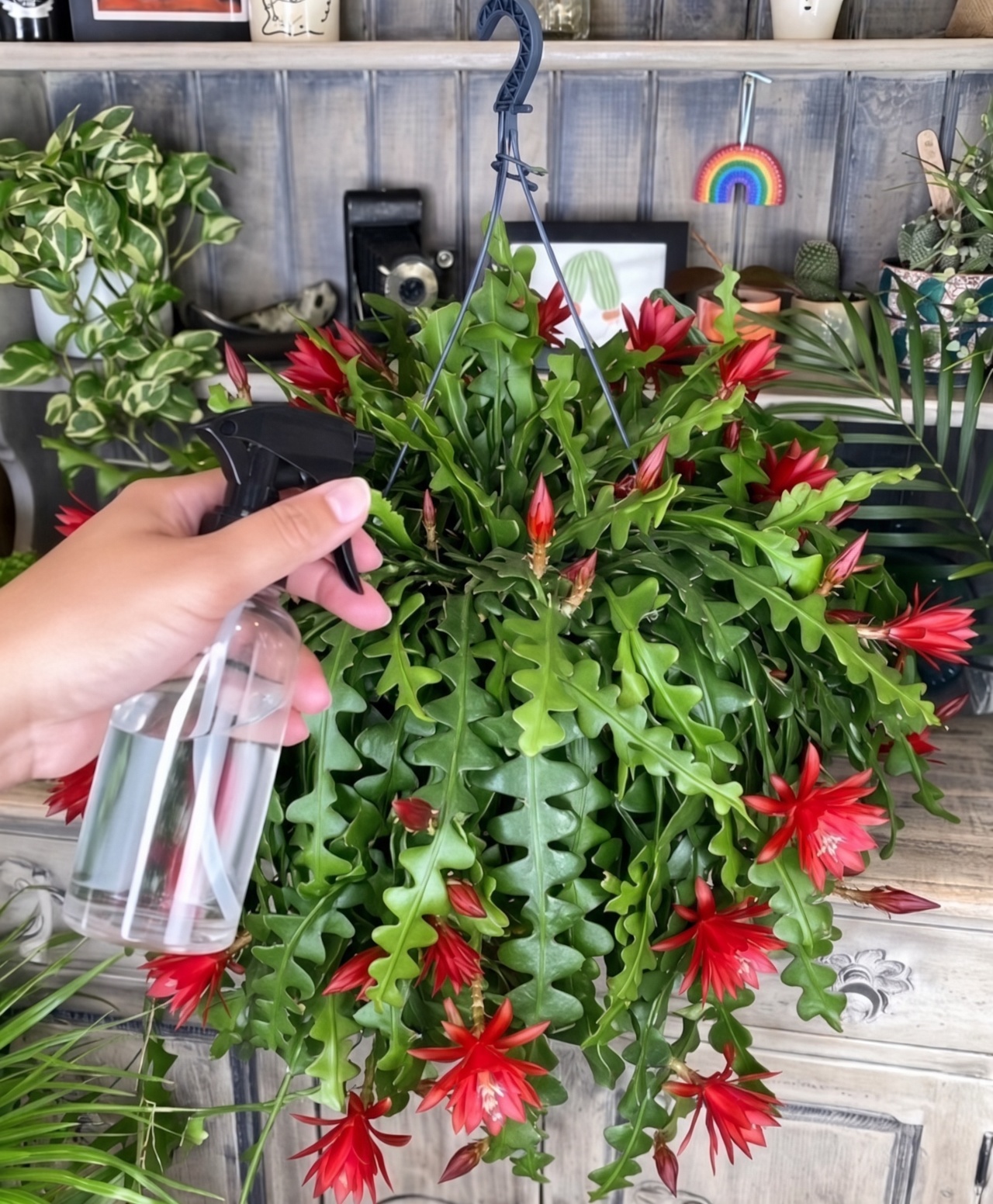
A spectacular Fishbone Cactus overflowing from a hanging basket, with long zigzag stems and vibrant red flowers, can become the centerpiece of an indoor plant collection.
The plant pictured has cascading, deeply lobed green stems and numerous red, star-shaped flowers. A clear spray bottle is positioned beside the foliage, highlighting an important gardening question: Can a liquid fertilizer spray help Fishbone Cactus grow fuller and produce more flowers?
The answer depends on the fertilizer, application method, and growing conditions.
Fishbone Cactus needs more than occasional spraying to thrive. Proper lighting, a well-draining potting mix, balanced nutrition, and careful watering are the foundations of healthy growth and seasonal flowering.
1. Understanding the Fishbone Cactus
Fishbone Cactus, commonly associated with Disocactus anguliger, is an epiphytic cactus known for its unusual zigzag stems.
Unlike desert cacti, it naturally grows in environments with filtered light, good airflow, and relatively consistent moisture.
The pictured plant resembles a Fishbone Cactus, although its unusually narrow lobes and bright red flowers may indicate a related flowering epiphytic cactus or hybrid. Exact identification is important because flowering habits vary among species.
Main Features
- Long, flat, deeply lobed green stems
- Cascading growth ideal for hanging baskets
- Attractive architectural foliage
- Seasonal flowering under suitable conditions
- A preference for bright, indirect light
- Greater moisture needs than many desert cacti
A mature plant can develop an impressive hanging display when its roots and stems remain healthy.
2. Does Fertilizer Spray Help Fishbone Cactus Grow?
The image shows a transparent liquid in a handheld spray bottle.
Its contents cannot be identified visually. It could be water, a diluted foliar fertilizer, or another plant-care solution.
A suitable foliar fertilizer may provide supplemental nutrients, but regular soil feeding is generally a more dependable approach.
Potential Benefits of Balanced Fertilization
When nutrients are insufficient, appropriate feeding can support:
- Healthy new stem growth
- Normal green coloration
- Development of additional branching
- Stronger overall plant vigor
- Normal bud and flower formation
However, fertilizer cannot create immediate blooms or make a cactus double in size overnight.
Important: Fishbone Cactus is sensitive to overfeeding. Excessive fertilizer can damage roots and tender stems.
3. Best Fertilizer for Fishbone Cactus
A complete, balanced liquid houseplant fertilizer is a practical option for most Fishbone Cactus plants.
Comparing Fertilizer Options
| Fertilizer Type | Main Advantage | Best Use |
|---|---|---|
| Balanced liquid fertilizer | Easy nutrient control | Regular soil feeding |
| Water-soluble cactus fertilizer | Convenient measured feeding | Active growth |
| Organic liquid fertilizer | Supplemental plant nutrition | Diluted soil application |
| Foliar fertilizer spray | Optional supplemental feeding | Label-approved spraying |
| Controlled-release fertilizer | Gradual nutrient supply | Light seasonal feeding |
Which NPK Ratio Is Best?
Balanced formulas such as 10-10-10 or 20-20-20 can work when diluted according to the manufacturer’s instructions.
Nitrogen supports vegetative growth, phosphorus contributes to normal root and reproductive processes, and potassium supports overall plant function.
Specialized bloom boosters are not essential for most healthy plants.
How Often Should You Fertilize?
During spring and summer, feed approximately once every 4–6 weeks with a diluted fertilizer.
Begin with a reduced concentration, such as one-quarter to one-half strength when suitable for the product.
Reduce or stop feeding when growth slows significantly.
Never apply concentrated fertilizer to dry, stressed roots.
4. How to Use Fertilizer Spray Safely
Spraying the stems of Fishbone Cactus requires care.
Step 1: Select the Right Product
Choose a foliar fertilizer specifically labeled for ornamental plants.
Avoid spraying ordinary concentrated soil fertilizer directly onto the stems.
Step 2: Follow the Dilution Instructions
Prepare the spray using the product’s foliar application directions.
Do not guess the concentration.
Step 3: Test a Small Area
Spray a small section of the plant and wait 24–48 hours.
Check for discoloration, spotting, or tissue damage.
Step 4: Apply a Fine Mist
If the test is successful, apply a light mist without soaking the foliage.
Avoid spraying directly into open flowers and developing buds.
Step 5: Avoid Strong Sunlight
Apply only under mild conditions with good airflow.
Step 6: Monitor the Results
Watch for unusual softening, yellow patches, or damaged stems.
Stop using the product if irritation appears.
Best practice: Apply balanced fertilizer through the potting mix for routine feeding. Foliar spraying is optional and should not replace proper root nutrition.
5. How to Grow a Fuller Hanging Fishbone Cactus
The hanging basket in the image has numerous overlapping stems, creating a dense, cascading appearance.
To develop a similar display, focus on long-term growing conditions.
Provide Bright, Indirect Light
Place the plant near an east-facing window or another location with strong filtered daylight.
Gentle morning sunlight is usually beneficial.
Intense afternoon sunlight can scorch stems.
Maintain Consistent Watering
Water thoroughly when the upper portion of the potting mix begins to dry.
Allow excess water to drain completely.
Avoid leaving the pot submerged in water.
Encourage Healthy Branching
Healthy plants naturally produce additional growth from established stems.
Selective pruning can encourage branching in some plants, but excessive cutting reduces the plant’s ability to produce flowers.
Use the Correct Hanging Planter
Choose a sturdy hanging basket with drainage holes.
A container that is too large may hold excess moisture around the roots.
Maintain Suitable Temperatures
Most Fishbone Cactus varieties prefer approximately 60–80°F (16–27°C).
Protect the plant from frost, cold drafts, and extreme heat.
6. Best Potting Soil for Fishbone Cactus
Fishbone Cactus needs a growing medium that provides moisture without becoming waterlogged.
A dense, heavy soil can increase the risk of root rot.
Recommended Premium Potting Mix
Try combining:
- 40% high-quality indoor potting soil
- 30% fine orchid bark
- 20% perlite or pumice
- 10% coco coir
This mixture provides airflow, drainage, and moderate moisture retention.
Why Orchid Bark Is Useful
Orchid bark creates air spaces around the roots, helping imitate the loose organic materials found in natural epiphytic growing environments.
Should You Use Regular Cactus Soil?
Commercial cactus soil can be used as a base, but many desert cactus mixes dry too quickly for epiphytic species.
Adding fine orchid bark or a moisture-retentive organic component can improve the balance.
7. How to Encourage More Fishbone Cactus Flowers
The red flowers in the image create an especially dramatic display.
Flowering depends on the plant’s species, maturity, light exposure, seasonal conditions, and general health.
Give the Plant Enough Light
Insufficient light is a common reason for poor flowering.
Bright, filtered daylight supports healthy growth and may improve blooming potential.
Respect Seasonal Temperature Changes
Some flowering epiphytic cacti respond to cooler seasonal conditions.
Exact temperature and day-length requirements vary by species.
Avoid Excess Nitrogen
Overfeeding with nitrogen-rich fertilizer may encourage vegetative growth without improving flowering.
Keep Watering Consistent
Severe drought or prolonged saturation can stress the plant and contribute to bud loss.
Avoid Moving a Budding Plant Repeatedly
Maintain stable growing conditions once flower buds appear.
Sudden changes in temperature, light, or moisture may contribute to bud drop.
Remember: No fertilizer spray can guarantee red flowers. Flower color is determined primarily by the plant’s genetics.
8. Fishbone Cactus Care: Soil Fertilizer vs. Foliar Spray
| Feature | Soil Fertilizer | Foliar Fertilizer |
|---|---|---|
| Nutrient delivery | Through roots | Through stem surfaces |
| Routine feeding | Generally preferred | Supplemental |
| Application frequency | Based on active growth | Product-dependent |
| Main concern | Root damage from overfeeding | Surface irritation or spotting |
| Ease of use | Simple with watering | Requires careful dilution |
| Best recommendation | Primary feeding method | Optional, if label-approved |
For most home gardeners, a diluted liquid fertilizer applied to the soil offers the most practical approach.
9. Best Gardening Products for Healthy Fishbone Cactus
Several gardening products can help maintain healthy roots, attractive foliage, and reliable growing conditions.
Premium Epiphytic Cactus Potting Mix
Choose a loose, bark-rich blend with excellent drainage.
Complete Liquid Houseplant Fertilizer
A balanced formula provides essential nutrients without requiring complicated feeding schedules.
Full-Spectrum LED Grow Lights
An adjustable LED grow light can help in rooms with insufficient natural daylight.
Use a timer to provide a consistent daily lighting schedule while preserving a normal dark period.
Decorative Hanging Planters
Sturdy ceramic-look or lightweight resin hanging planters can showcase the plant’s cascading stems.
Ensure the container has functional drainage.
Digital Moisture Meter
A moisture meter can provide an additional reference when checking the growing medium, although direct inspection remains important.
Precision Watering Can
A narrow-spout watering can makes it easier to water the potting mix without soaking flowers and stems.
10. How to Propagate Fishbone Cactus From Cuttings
Propagation is an effective way to create additional hanging plants.
Step-by-Step Method
- Select a healthy, mature stem.
- Cut a section approximately 4–6 inches long using clean scissors.
- Allow the cut end to dry and callus for a few days.
- Fill a small pot with a loose, well-draining mix.
- Insert the callused end into the potting mix.
- Keep the medium lightly moist, never saturated.
- Place the cutting in bright, indirect light.
- Wait for root development before increasing watering or feeding.
Rooting can take several weeks, depending on temperature and growing conditions.
A commercial rooting hormone may be used if its label permits application to cactus cuttings, but it is not essential.
11. Common Fishbone Cactus Problems
| Problem | Possible Cause | Recommended Solution |
|---|---|---|
| Yellow stems | Excess moisture or stress | Check drainage and roots |
| Wrinkled stems | Underwatering or damaged roots | Inspect soil and root health |
| Brown patches | Sunburn or tissue damage | Reduce direct sunlight |
| Few flowers | Insufficient light or seasonal conditions | Improve light and growing environment |
| Falling buds | Environmental stress | Maintain stable conditions |
| Soft, mushy stems | Possible rot | Remove damaged tissue and correct watering |
| Weak growth | Low light or poor root health | Improve light and inspect roots |
Pest Control
Fishbone Cactus may occasionally attract mealybugs, scale insects, or spider mites.
Inspect stem joints and sheltered areas regularly.
For infestations, use a treatment specifically labeled for the identified pest and ornamental plant.
Test a small section before treating the entire plant.
Avoid combining multiple pesticide products unless their labels explicitly permit it.
12. Luxury Hanging Plant Decor Ideas
A flowering Fishbone Cactus can be a striking addition to premium interior and patio designs.
Elegant Hanging Baskets
Suspend the plant near a bright window where its long stems can cascade naturally.
Modern Indoor Jungle Displays
Combine Fishbone Cactus with trailing pothos, orchids, and other tropical foliage plants in separate containers.
Decorative Wooden Shelves
The sculptural zigzag stems create attractive contrast against natural wood and neutral backgrounds.
Premium Ceramic Planters
White, charcoal, and textured stone-look planters complement the green foliage and colorful flowers.
Covered Patio Gardens
A sheltered patio with filtered daylight can provide an attractive growing environment during suitable weather.
Design tip: Position the hanging basket at a height where the cascading stems and flowers can be appreciated without touching nearby furniture.
13. Frequently Asked Questions
Can I spray fertilizer directly on Fishbone Cactus?
Only use a fertilizer specifically labeled for foliar application on ornamental plants. Test a small section first and avoid soaking flowers.
What is the best fertilizer for Fishbone Cactus?
A diluted, balanced liquid houseplant fertilizer is usually a practical choice during active growth.
How often should I fertilize Fishbone Cactus?
Approximately every 4–6 weeks during active growth is generally sufficient, depending on the product and plant condition.
Does spraying fertilizer make Fishbone Cactus bloom faster?
There is no reliable evidence that ordinary fertilizer sprays cause immediate flowering. Light, maturity, genetics, and seasonal conditions are more important.
Why is my Fishbone Cactus not flowering?
Possible reasons include insufficient light, plant immaturity, unsuitable seasonal conditions, or stress.
Can Fishbone Cactus grow indoors?
Yes. It can thrive indoors with bright indirect light, appropriate watering, and a well-draining growing medium.
Does Fishbone Cactus need a special potting mix?
A loose mix containing indoor potting soil, orchid bark, and perlite is generally preferable to dense garden soil.
Should I mist Fishbone Cactus every day?
Daily misting is usually unnecessary. Good airflow, appropriate watering, and suitable ambient humidity are more useful.
Final Thoughts
Fishbone Cactus is a beautiful hanging plant valued for its distinctive zigzag stems and impressive seasonal flowers.
The spray bottle shown in the image represents a popular plant-care technique, but fertilizer spraying should be treated as optional supplemental care rather than a shortcut to instant growth or blooming.
For a fuller, healthier Fishbone Cactus, prioritize bright indirect light, a premium well-draining potting mix, balanced liquid fertilizer, and careful watering.
With consistent care, patience, and a suitable hanging planter, this remarkable cactus can become a dramatic feature in an indoor garden, sunny living room, or elegant covered patio.