A healthy Christmas Cactus can transform an ordinary indoor space into a beautiful holiday display filled with colorful flowers and cascading green stems.
But when growth slows, the segmented leaves become dull, or flower buds fail to develop, many gardeners wonder whether a special fertilizer could help.
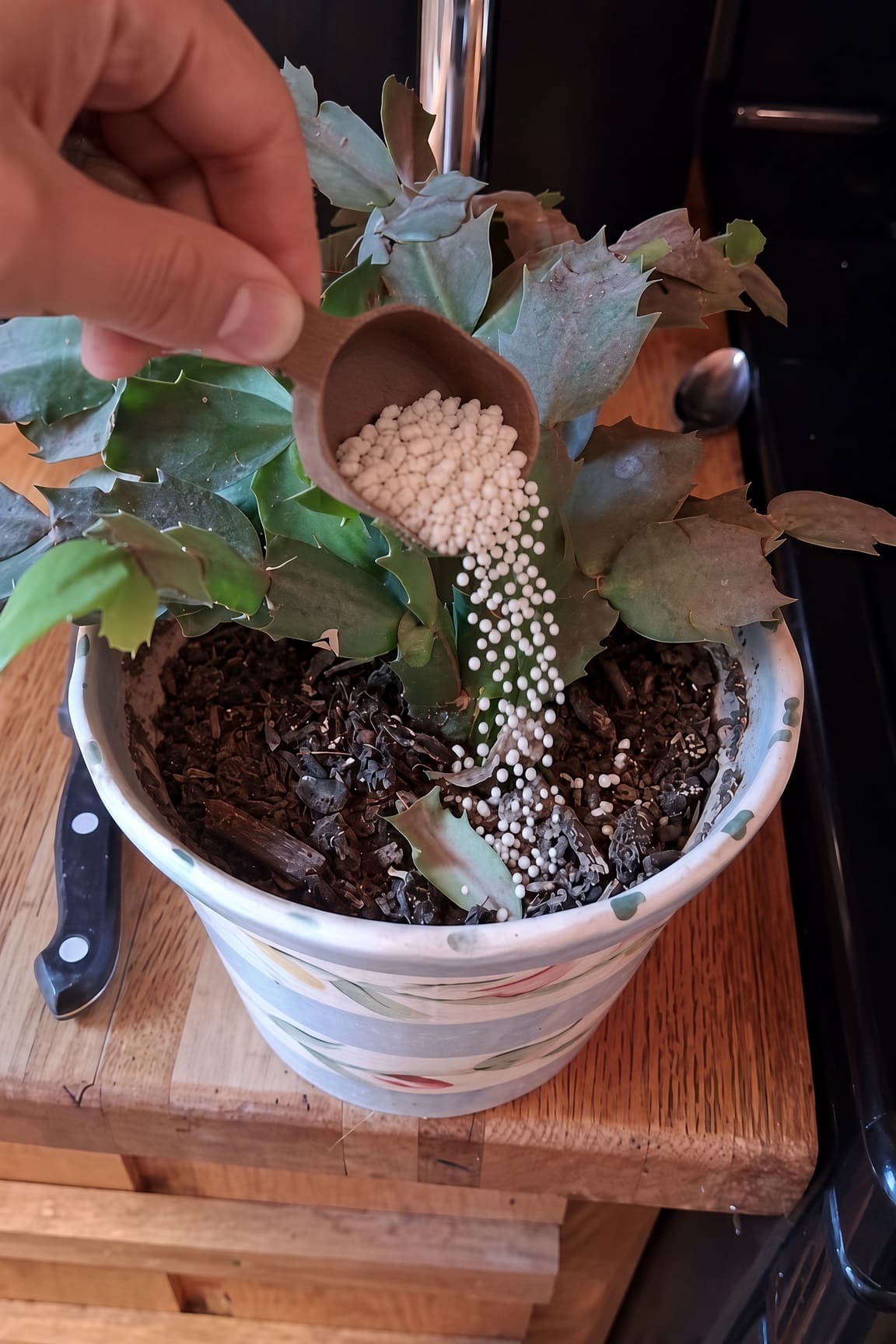
The image shows a Christmas Cactus (Schlumbergera), growing in a decorative ceramic pot while small white fertilizer-like granules are sprinkled around the base.
Could these tiny white pellets help support stronger roots, healthier growth, and more abundant Christmas blooms?
The answer depends on the fertilizer’s ingredients, application rate, and the plant’s overall growing conditions.
1. What Are the White Granules Added to Christmas Cactus?
The small white pellets resemble granular plant fertilizer, although their exact composition cannot be confirmed from appearance alone.
Several gardening products have a similar appearance:
- Slow-release fertilizer granules
- Controlled-release plant food pellets
- Granulated mineral supplements
- Calcium-based soil amendments
- Specialty indoor plant fertilizers
Some provide a balanced supply of nutrients, while others contain only specific minerals.
Can White Fertilizer Granules Help Christmas Cactus?
Yes, when the granules contain suitable nutrients and are applied correctly.
A complete fertilizer can support:
- Healthy green stem segments
- Strong root development
- Normal new growth
- Overall plant vigor
- Nutrient availability during the growing season
However, fertilizer alone cannot guarantee more flowers.
Important: Never apply unidentified white pellets. Always check the fertilizer label, NPK analysis, dosage instructions, and suitability for indoor container plants.
2. Best Fertilizer for Christmas Cactus Growth and Flowering
Christmas Cactus is a tropical epiphytic cactus rather than a desert cactus.
It naturally grows in humid environments where its roots receive moisture, organic matter, and good airflow.
This means it requires a different feeding approach from many drought-tolerant succulents.
Balanced Liquid Houseplant Fertilizer
A complete liquid fertilizer with an NPK ratio such as 10-10-10 or 20-20-20 can provide essential nutrients.
- Nitrogen: Supports healthy green stem growth.
- Phosphorus: Contributes to root development and plant energy processes.
- Potassium: Supports overall plant health and water regulation.
A fertilizer containing essential micronutrients is preferable.
Slow-Release Fertilizer Granules
Controlled-release fertilizer is a convenient option for gardeners who prefer less frequent feeding.
These products release nutrients gradually, depending on their formulation, temperature, and moisture conditions.
Choose a product labeled for indoor flowering plants or container-grown houseplants.
Organic Liquid Fertilizer
Commercial organic fertilizers can also support normal growth.
Choose a product with a clearly stated nutrient analysis and follow the recommended application rate.
Christmas Cactus Fertilizer Comparison
| Fertilizer Type | Main Benefit | Best Use |
|---|---|---|
| Balanced liquid fertilizer | Adjustable nutrient supply | Spring and summer |
| Slow-release fertilizer | Gradual feeding | Established plants |
| Organic liquid fertilizer | Alternative nutrient source | Active growth |
| Bloom fertilizer | Specialized nutrient formulation | Only when needed |
| Unidentified white granules | Unknown nutrient content | Not recommended |
Best overall choice: A complete, balanced houseplant fertilizer applied moderately during active growth.
3. How to Apply White Fertilizer Granules to Christmas Cactus
If the white pellets are a labeled slow-release fertilizer, careful application helps reduce the risk of overfeeding.
Step 1: Examine the Plant
Check that the stems are firm and healthy.
Avoid fertilizing a Christmas Cactus with root rot, severe dehydration, or significant pest damage.
Step 2: Choose the Correct Fertilizer
Select a controlled-release product suitable for container plants.
Step 3: Measure the Recommended Dose
Follow the manufacturer’s instructions for the pot size.
Never apply a large quantity simply because it appears in a gardening video.
Step 4: Distribute the Granules
Sprinkle the measured amount evenly over the potting mix.
Keep the pellets away from the base of the stems.
Step 5: Water as Directed
Follow the product’s watering instructions.
Allow excess water to drain completely.
Step 6: Monitor the Plant
Observe the stems for discoloration, unusual softness, or brown edges.
Avoid adding additional liquid fertilizer while the granules are actively releasing nutrients unless the total dosage has been calculated.
4. How to Encourage Christmas Cactus to Produce More Flowers
Christmas Cactus flowering depends heavily on seasonal light and temperature.
Fertilizer supports healthy plant growth, but proper environmental conditions are essential for flower-bud formation.
Provide Long, Uninterrupted Nights
During autumn, Christmas Cactus benefits from approximately 12–14 hours of uninterrupted darkness each night for several weeks.
Artificial lighting during the dark period can interfere with bud formation.
Maintain Cooler Temperatures
Cool autumn temperatures, often around 55–65°F (13–18°C), can encourage flower-bud development.
Avoid frost and sudden temperature extremes.
Provide Bright Indirect Sunlight
During daylight hours, place the plant near a bright window.
Avoid prolonged exposure to harsh afternoon sunlight.
Reduce Heavy Feeding Before Flowering
Excessive fertilizer, particularly nitrogen-heavy products, is unnecessary during bud formation.
Keep Growing Conditions Stable
Once buds appear, avoid sudden changes in watering, temperature, or location.
These changes can contribute to bud drop.
Key point: Christmas Cactus produces flowers in response to appropriate seasonal conditions, not simply because fertilizer has been added.
5. Best Potting Soil for Christmas Cactus
A premium, well-draining potting mix is one of the most important investments for healthy Christmas Cactus roots.
Unlike desert cacti, Christmas Cactus prefers a growing medium that retains moderate moisture while allowing good airflow.
Recommended Christmas Cactus Potting Mix
A practical homemade blend includes:
- 40% premium indoor potting soil
- 30% fine orchid bark
- 20% perlite or pumice
- 10% coco coir
This mixture provides a balance of moisture retention and drainage.
Why Orchid Bark Is Helpful
Orchid bark creates air spaces and reduces compaction around the roots.
Why Perlite Matters
Perlite improves drainage and helps prevent the growing medium from becoming excessively dense.
Can You Use Regular Cactus Soil?
Yes, although some desert cactus mixes may dry too quickly.
Adding a moisture-retentive organic component can make them more suitable.
Best Pots for Christmas Cactus
Choose a container with drainage holes.
Terracotta pots dry faster, while glazed ceramic and plastic pots retain moisture longer.
6. How Often Should You Water Christmas Cactus?
Christmas Cactus needs more consistent moisture than many desert cacti, but its roots should never remain waterlogged.
Best Watering Method
- Check the upper inch of the potting mix.
- Water when the surface begins to dry.
- Apply water evenly around the root zone.
- Allow excess water to drain.
- Empty any standing water from the saucer.
Watering frequency depends on pot size, temperature, humidity, and growing medium.
During cooler months, the plant may require less frequent watering.
Avoid allowing the entire root ball to remain completely dry for extended periods.
7. How to Grow a Fuller Christmas Cactus
A mature Christmas Cactus can develop a beautiful cascading appearance with hundreds of segmented stems.
Prune After Flowering
Remove one or two segments from selected branch tips after blooming.
This encourages branching and helps create a fuller shape.
Provide Adequate Light
Bright indirect light supports compact, healthy growth.
Feed During Active Growth
Apply a balanced fertilizer during spring and summer according to the product label.
Avoid Oversized Pots
Christmas Cactus generally grows well in a container only slightly larger than its root system.
Repot When Necessary
Repot when the growing medium has deteriorated or the roots need additional space.
Avoid unnecessary repotting while the plant is developing flower buds.
8. Why Is My Christmas Cactus Not Blooming?
Several common problems can prevent flower formation.
| Problem | Possible Cause | Recommended Solution |
|---|---|---|
| No flower buds | Insufficient darkness | Provide longer autumn nights |
| Buds falling off | Sudden environmental changes | Maintain stable conditions |
| Wrinkled segments | Water stress or damaged roots | Check moisture and root health |
| Yellowing stems | Excessive sunlight or root stress | Adjust light and watering |
| Brown stem edges | Sunburn or fertilizer buildup | Review growing conditions |
| Soft stems | Excess moisture or root rot | Improve drainage |
| Slow growth | Low light or seasonal slowdown | Evaluate growing conditions |
| White crust on soil | Mineral or fertilizer salts | Check water quality and feeding |
Can Too Much Fertilizer Stop Christmas Cactus From Blooming?
Excessive fertilization can damage roots and encourage unnecessary vegetative growth.
It may also contribute to salt accumulation in the potting medium.
Why Are Christmas Cactus Buds Falling Off?
Bud drop may occur after abrupt changes in temperature, watering, light exposure, or plant location.
Why Are the Segments Turning Purple?
Purple coloration can be associated with intense light, cool temperatures, or other environmental stress.
Check the plant’s growing conditions before applying additional fertilizer.
9. Best Gardening Products for Christmas Cactus Care
Choosing the right gardening products can make Christmas Cactus maintenance easier.
Premium Christmas Cactus Potting Mix
Look for a loose, moisture-balanced growing medium containing bark and drainage amendments.
Balanced Liquid Houseplant Fertilizer
A complete liquid fertilizer offers precise nutrient control during active growth.
Slow-Release Fertilizer Pellets
Controlled-release products provide gradual nutrition when applied according to the label.
Decorative Ceramic Planters
Premium ceramic planters complement the cascading stems and colorful holiday flowers.
Use a drainage-equipped nursery pot inside decorative containers without drainage holes.
Full-Spectrum LED Grow Lights
Indoor grow lights can supplement natural daylight in darker homes.
During autumn bud formation, ensure the light schedule still provides sufficiently long, uninterrupted nights.
Moisture Meters
A moisture meter can provide an additional reference, although direct soil checks are often more dependable.
Indoor Plant Pest Control
Mealybugs, scale insects, and other houseplant pests can occasionally affect Christmas Cactus.
Choose appropriately labeled treatments and follow all application instructions.
10. Luxury Holiday Decor Ideas With Christmas Cactus
Christmas Cactus is an excellent choice for elegant seasonal decorating.
Its cascading stems and colorful flowers create a natural holiday centerpiece.
Elegant Christmas Table Centerpiece
Place a flowering Christmas Cactus in a white ceramic planter with subtle gold accents.
Luxury Living Room Display
Position a mature plant on a decorative wooden or marble plant stand.
Holiday Window Arrangement
Combine Christmas Cactus with orchids and other flowering indoor plants.
Modern Hanging Planter
Allow long stems to cascade from a premium hanging ceramic planter.
Festive Indoor Plant Shelf
Arrange Christmas Cactus plants in coordinated containers alongside warm decorative lighting.
Keep artificial lights from disrupting the plant’s required dark period before flowering.
11. Frequently Asked Questions
Are white fertilizer granules good for Christmas Cactus?
They can be suitable if they are a properly labeled fertilizer formulated for indoor container plants and applied at the recommended rate.
What is the best fertilizer for Christmas Cactus?
A complete, balanced liquid houseplant fertilizer is a reliable choice. Suitable slow-release products can also work.
How often should I fertilize Christmas Cactus?
Light liquid feeding approximately every four to six weeks during active growth is often sufficient, depending on the product.
Can slow-release fertilizer help Christmas Cactus bloom?
It can support overall plant health, but flowering depends primarily on appropriate seasonal light and temperature conditions.
Should I fertilize Christmas Cactus during winter?
Heavy feeding is generally unnecessary when growth slows or the plant is flowering.
Can fertilizer burn Christmas Cactus roots?
Yes. Excess fertilizer can cause salt buildup and root damage.
What is the best soil for Christmas Cactus?
A well-draining, moisture-balanced potting mix containing organic matter, fine bark, and perlite works well.
How do I make my Christmas Cactus fuller?
Provide bright indirect light, appropriate watering, moderate fertilization, and light pruning after flowering.
Why does my Christmas Cactus have buds but no flowers?
Buds may fail to open because of temperature stress, watering problems, or sudden environmental changes.
Can Christmas Cactus live for many years?
Yes. With proper care, Christmas Cactus can remain healthy and flower for decades.
Final Thoughts
Christmas Cactus is a beautiful, long-lived houseplant that rewards consistent care with attractive green stems and colorful seasonal flowers.
The white granules shown in the image resemble slow-release fertilizer, but their exact ingredients cannot be determined visually.
For dependable results, focus on balanced houseplant fertilizer, premium well-draining potting soil, appropriate watering, and the cooler temperatures and long nights needed for flower-bud development.
With the right care routine, your Christmas Cactus can become a stunning holiday centerpiece that continues to grow and bloom year after year.