Amaryllis is one of the most spectacular flowering bulbs you can grow in a container. With its tall, sturdy flower stalks, glossy green leaves, and enormous trumpet-shaped blossoms, this plant brings dramatic color to patios, balconies, and indoor gardens.
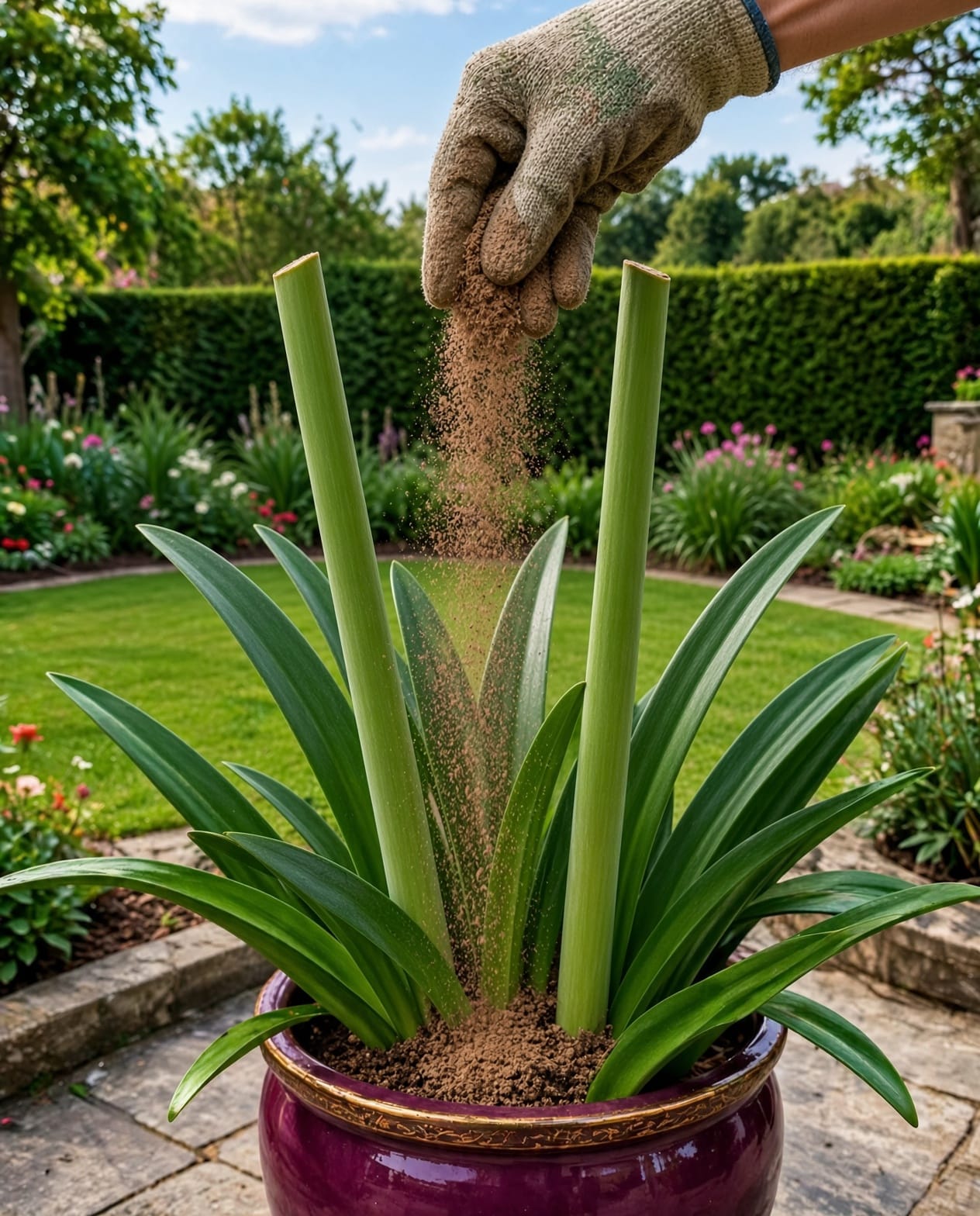
The images show a beautiful Amaryllis (Hippeastrum) growing in an elegant burgundy ceramic planter. In the first image, a gardener sprinkles fine brown powder around the plant. In the second, the plant displays an impressive collection of large pink-and-white striped flowers.
But can brown powder really encourage Amaryllis to produce more flowers?
The answer depends on what the powder contains. A suitable organic soil amendment or properly formulated bulb fertilizer can support healthy growth, but no unidentified powder can guarantee spectacular blooms.
Here’s how to choose the right fertilizer, improve bulb health, and encourage beautiful Amaryllis flowers.
1. What Is the Brown Powder Being Added to Amaryllis?
The fine brown material shown in the image could represent several different gardening products, including:
- Commercial organic fertilizer powder
- Worm castings
- Finely screened compost
- Organic bulb fertilizer
- A powdered soil conditioner
Its exact composition cannot be identified from appearance alone.
Some brown gardening powders provide nutrients, while others mainly improve soil structure or microbial activity.
Can Brown Powder Make Amaryllis Bloom?
A suitable fertilizer may help replenish nutrients used during leaf and bulb development. However, Amaryllis flowering also depends on bulb maturity, stored energy, light, temperature, and previous growing conditions.
Fertilizer cannot instantly transform a nonflowering bulb into a fully blooming plant.
2. Best Fertilizer for Amaryllis Bulbs and Flowers
Amaryllis bulbs store energy that supports future flower production. Choosing the right fertilizer is especially important after flowering, when healthy leaves help replenish those reserves.
Balanced Liquid Fertilizer
A complete liquid houseplant fertilizer is a convenient choice for container-grown Amaryllis.
Common formulations include:
- 10-10-10 balanced fertilizer
- 20-20-20 water-soluble fertilizer
- Complete flowering bulb fertilizer
Use the manufacturer’s recommended dilution and application schedule.
Slow-Release Fertilizer Granules
Slow-release fertilizers gradually provide nutrients over several weeks or months.
They are useful for outdoor containers and larger decorative planters.
Organic Fertilizer Powder
Commercial organic fertilizers may contain nutrients derived from plant or animal materials.
Choose products labeled for flowering bulbs or container plants.
Worm Castings
Worm castings can be incorporated into potting soil in modest amounts to improve its organic content.
They should not automatically be treated as a complete fertilizer.
Fertilizer Comparison
| Fertilizer Type | Main Advantage | Best Use |
|---|---|---|
| Balanced liquid fertilizer | Easy nutrient control | Active leaf growth |
| Slow-release granules | Gradual feeding | Outdoor containers |
| Organic fertilizer powder | Organic nutrient source | Soil feeding |
| Worm castings | Soil amendment | Potting mix improvement |
| Bulb-specific fertilizer | Formulated for flowering bulbs | Seasonal bulb care |
| Unidentified brown powder | Unknown composition | Avoid until identified |
Best overall option: A complete fertilizer used moderately while the plant is actively growing.
3. How to Apply Brown Organic Fertilizer to Amaryllis
If the brown powder is a commercial fertilizer specifically suitable for Amaryllis, follow these steps.
Step 1: Inspect the Bulb
Check that the bulb is firm and free from soft, rotten areas.
Step 2: Check Soil Moisture
The potting mix should not be waterlogged.
Step 3: Read the Fertilizer Label
Confirm the correct application rate for container-grown flowering bulbs.
Step 4: Apply Around the Soil
Distribute the recommended amount around the soil surface, keeping fertilizer away from exposed bulb tissue and leaves.
Step 5: Incorporate Gently
If the product label recommends incorporation, lightly mix it into the upper layer of soil without disturbing roots.
Step 6: Water Appropriately
Water according to the product instructions and allow excess moisture to drain.
Step 7: Monitor Growth
Watch for healthy leaf development, firm stems, and signs of fertilizer stress.
Avoid adding extra fertilizer simply because flowers have not appeared.
4. Best Potting Soil for Healthy Amaryllis Roots
Amaryllis grows best in a fertile, well-draining potting medium.
Heavy garden soil can retain excessive moisture and increase the risk of bulb rot.
Recommended Amaryllis Potting Mix
A practical mixture includes:
- 50% premium indoor potting soil
- 25% perlite or pumice
- 15% fine pine bark
- 10% mature compost
This mixture supports root aeration while retaining enough moisture for healthy growth.
Why Drainage Matters
Amaryllis bulbs are vulnerable to rot when soil stays excessively wet.
Choose a pot with drainage holes and avoid letting the container stand in water.
How Deep Should You Plant the Bulb?
For typical potted Amaryllis, leave approximately the upper one-third of the bulb above the soil surface.
This helps prevent moisture from collecting around the bulb neck.
5. How to Encourage Bigger Amaryllis Flowers
The large pink-and-white blooms in the image are an excellent example of the ornamental appeal of striped Amaryllis varieties.
To encourage healthy flowering, focus on the following conditions.
Bright Light
Provide bright light, including several hours of gentle direct sunlight where appropriate.
After flowering, adequate light is particularly important for rebuilding bulb reserves.
Suitable Temperatures
During active growth, Amaryllis generally performs well at normal indoor temperatures around 65–75°F (18–24°C).
Cooler conditions during flowering can help blossoms last longer.
Consistent Watering
Water when the upper layer of potting mix begins to dry.
Avoid keeping the bulb constantly wet.
Feed During Active Growth
After flowering, allow the leaves to remain healthy and continue feeding moderately while they grow.
Preserve the Leaves
Do not cut off healthy green leaves immediately after flowering.
They photosynthesize and help the bulb store energy for future blooms.
Allow Proper Seasonal Recovery
Depending on the variety and growing conditions, Amaryllis may benefit from a seasonal rest period.
Not every bulb requires exactly the same dormancy treatment.
6. Amaryllis Fertilizer Schedule
| Growth Stage | Fertilizer Recommendation |
|---|---|
| Newly planted dormant bulb | Usually no immediate fertilizer needed |
| Flower stalk emerging | Light feeding only if appropriate |
| Active leaf growth | Complete fertilizer according to label |
| After flowering | Continue moderate feeding while leaves grow |
| Leaves naturally yellowing | Reduce and stop feeding |
| Dormant period | No fertilizer |
The most important feeding period is often after flowering, when the bulb is rebuilding energy reserves.
7. Why Your Amaryllis Is Not Blooming
Even a healthy-looking Amaryllis may fail to flower.
Common reasons include:
Insufficient Light
Without enough light, leaves may grow but the bulb may not replenish adequate energy.
Immature or Small Bulb
Smaller bulbs may need additional growing time before producing flower stalks.
Poor Nutrition
Long-term nutrient deficiencies can reduce overall vigor.
Excessive Nitrogen
Too much nitrogen may encourage leafy growth without improving flowering.
Damaged Roots
Poor drainage, compacted soil, or root rot can interfere with nutrient absorption.
Inadequate Recovery After Flowering
Removing healthy leaves too early prevents the bulb from rebuilding its stored reserves.
8. Common Amaryllis Problems and Solutions
| Problem | Possible Cause | Recommended Action |
|---|---|---|
| No flowers | Small bulb or inadequate light | Improve growing conditions |
| Yellow leaves | Natural dormancy or watering stress | Check season and soil |
| Soft bulb | Excess moisture or rot | Inspect bulb and roots |
| Weak flower stalks | Insufficient light | Move to a brighter location |
| Brown leaf tips | Salt buildup or moisture stress | Review watering and fertilizer |
| Slow growth | Poor roots or unsuitable conditions | Check drainage and temperature |
| Flowers fade quickly | Excessive heat | Move to a cooler bright location |
9. Choosing the Best Amaryllis Bulbs, Fertilizers, and Planters
Quality gardening products can make growing Amaryllis easier and more predictable.
Premium Amaryllis Bulbs
Choose large, firm bulbs without visible rot or major damage.
Larger mature bulbs often have greater flowering potential.
Complete Flowering Bulb Fertilizer
Select a product that supplies nitrogen, phosphorus, potassium, and essential micronutrients.
Premium Potting Mix
A lightweight, well-draining growing medium supports healthy roots.
Decorative Ceramic Planters
Choose attractive containers with drainage or use a removable nursery pot inside a decorative outer planter.
Moisture Meters
These can provide supplementary guidance, although checking soil moisture manually is often more reliable.
LED Grow Lights
Full-spectrum grow lights can supplement natural sunlight in darker homes.
Plant Supports
Discreet supports help stabilize tall flower stalks carrying heavy blossoms.
10. Luxury Garden Styling With Pink-and-White Amaryllis
The burgundy ceramic planter in the image beautifully complements the pink-striped flowers.
Amaryllis is especially suitable for elegant indoor and outdoor displays.
Luxury Patio Centerpiece
Position a large blooming Amaryllis in a decorative glazed ceramic pot on a patio table.
Elegant Entryway Display
Use matching planters to frame a bright entrance.
Premium Indoor Flower Arrangement
Display flowering Amaryllis beside neutral furniture and warm natural materials.
Modern Balcony Garden
Combine Amaryllis with evergreen foliage plants in separate containers.
Holiday Decorating
Pink-and-white striped Amaryllis creates a sophisticated alternative to traditional red holiday flowers.
Design tip: Deep burgundy, charcoal, ivory, and brushed gold planters create striking contrasts with pale pink Amaryllis blossoms.
11. Frequently Asked Questions
Does brown powder help Amaryllis bloom?
A suitable fertilizer may support healthy bulb development, but flowering depends on several environmental and physiological factors.
What is the best fertilizer for Amaryllis?
A complete, balanced liquid fertilizer is a practical choice during active growth.
Can I use coffee grounds on Amaryllis?
Fresh coffee grounds are not recommended as a direct fertilizer. Properly composted materials can be incorporated into a suitable potting mix in modest amounts.
How often should I fertilize Amaryllis?
Follow the fertilizer manufacturer’s instructions during active growth and stop feeding during dormancy.
Why does my Amaryllis grow leaves but no flowers?
Insufficient light, an immature bulb, inadequate energy reserves, or unsuitable growing conditions may be responsible.
Should I fertilize Amaryllis while it is blooming?
Heavy feeding is unnecessary. Moderate feeding becomes particularly useful as the plant develops leaves after flowering.
How many times can Amaryllis bloom?
Healthy bulbs can flower in successive years when given sufficient light, nutrients, and recovery time.
Can Amaryllis grow outdoors?
Yes, in suitable climates. Amaryllis bulbs must be protected from freezing temperatures.
Is Amaryllis suitable for indoor containers?
Yes. It is an excellent indoor flowering bulb when provided with sufficient light and drainage.
Are Amaryllis plants toxic to pets?
Yes. Amaryllis contains compounds that are toxic to cats and dogs, particularly in the bulb. Keep plants away from pets.
Final Thoughts
The dramatic pink-and-white Amaryllis flowers shown in the image demonstrate why this plant is so popular for luxury container gardens and seasonal indoor displays.
Although brown organic powders can sometimes provide useful nutrients, the real foundation of successful Amaryllis care is a healthy mature bulb, complete fertilizer, premium well-draining potting soil, sufficient sunlight, and proper post-flowering care.
Rather than relying on an unidentified powder as a miracle bloom booster, choose a suitable commercial fertilizer and maintain consistent growing conditions.
With patience and proper care, Amaryllis bulbs can reward gardeners with magnificent trumpet-shaped flowers year after year.