A Christmas Cactus covered in pink flower buds is a beautiful sight, especially during the holiday season. But when those buds suddenly start falling onto the soil before opening, it can be frustrating.
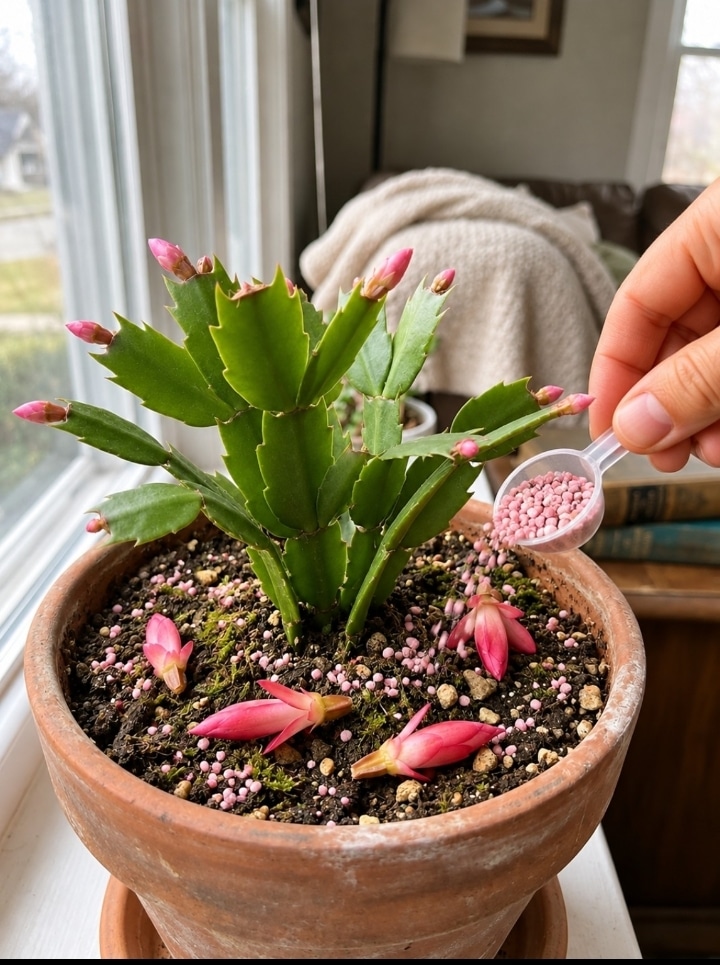
The image shows a Christmas Cactus growing in a terracotta pot, with several pink buds still attached and others scattered across the soil. A small scoop of pink fertilizer granules is being applied around the plant.
Could the right fertilizer help prevent Christmas Cactus buds from falling off?
Yes, proper nutrition can support healthy flowering, but fertilizer alone cannot stop bud drop. Watering mistakes, temperature changes, and environmental stress are often the real causes.
Here’s how to identify the problem and help your Christmas Cactus keep its beautiful blooms.
1. Sudden Temperature Changes
Christmas Cactus is sensitive to abrupt temperature fluctuations, particularly while developing flower buds.
Moving the plant from a cool room into a warm living room or placing it near a heating vent can cause buds to fall prematurely.
How to Fix It
- Keep temperatures around 60–70°F (16–21°C) during flowering.
- Avoid cold drafts and hot air from heating systems.
- Keep the plant away from frequently opened exterior doors.
- Maintain a stable environment once buds appear.
Consistent temperatures help protect developing flowers.
2. Overwatering and Poor Drainage
Too much water is one of the most common problems affecting Christmas Cactus.
Waterlogged soil prevents roots from receiving sufficient oxygen. Over time, damaged roots struggle to supply the moisture and nutrients needed for healthy buds.
Signs of Overwatering
- Flower buds dropping unexpectedly.
- Soft or limp stem segments.
- Soil remaining wet for several days.
- Yellowing or unhealthy-looking growth.
- Dark, mushy roots in severe cases.
How to Fix It
Water when the upper inch of potting mix begins to feel dry.
Use a container with drainage holes and empty any water collecting in the saucer.
A premium, well-draining indoor potting mix containing orchid bark and perlite can help prevent excessive moisture retention.
3. Underwatering During Bud Development
Although Christmas Cactus should never sit in soggy soil, allowing the potting mix to become excessively dry can also cause bud loss.
Developing flowers require a consistent supply of moisture.
Best Watering Method
- Insert your finger about one inch into the soil.
- If the upper layer feels dry, water thoroughly.
- Allow excess water to drain.
- Avoid leaving the entire root ball dry for extended periods.
- Check moisture more frequently in warm, dry rooms.
Terracotta pots, like the one shown in the image, may dry faster than glazed ceramic or plastic containers.
4. Moving the Plant After Buds Appear
Christmas Cactus can react to sudden changes in growing conditions.
Moving a budding plant to a location with different light, humidity, or temperature may cause flower buds to drop.
How to Fix It
Choose a bright location with indirect sunlight before the plant begins producing buds.
Once buds appear, try to maintain the same conditions.
Avoid unnecessary repotting, major changes in light exposure, or sudden relocation.
5. Incorrect Fertilizer or Too Much Fertilizer
The pink fertilizer granules shown in the image represent a common approach to feeding container plants.
However, the color of fertilizer does not indicate its nutrient content or whether it is suitable for Christmas Cactus.
Some granules are slow-release fertilizers, while others are concentrated products that require specific application methods.
Applying too much fertilizer can damage sensitive roots and increase plant stress.
Best Fertilizer for Christmas Cactus
A balanced fertilizer can support healthy stems, root development, and future flowering.
| Fertilizer Type | Main Benefit | Recommended Use |
|---|---|---|
| Balanced liquid fertilizer (10-10-10) | General plant nutrition | Active growing season |
| Water-soluble fertilizer (20-20-20) | Provides essential nutrients | Diluted according to label |
| Controlled-release fertilizer granules | Gradual nutrient delivery | Use at labeled container rates |
| Organic houseplant fertilizer | Provides plant nutrients | Spring and summer |
| Specialty epiphytic cactus fertilizer | Designed for similar plant needs | Follow product directions |
How to Apply Fertilizer Granules Safely
If using a controlled-release fertilizer suitable for Christmas Cactus:
- Check the NPK ratio and product label.
- Measure the recommended amount for the pot size.
- Apply granules evenly over the soil surface, away from direct contact with stems.
- Water according to the manufacturer’s instructions.
- Avoid adding additional fertilizer when the potting mix already contains sufficient slow-release nutrients.
Important: If your Christmas Cactus is already dropping buds, do not immediately add more fertilizer. First investigate watering, temperature, and root health.
Routine feeding is generally best during active growth in spring and summer. Reduce or stop feeding as the plant enters its seasonal resting and bud-forming period.
6. Low Humidity and Dry Indoor Air
Christmas Cactus originates from humid tropical environments.
During winter, indoor heating can make household air particularly dry.
Very low humidity, especially when combined with inconsistent watering, can contribute to plant stress and premature bud drop.
How to Improve Humidity
- Use a small indoor plant humidifier.
- Group compatible houseplants together.
- Keep plants away from direct heating vents.
- Maintain moderate room humidity, around 40–60% when practical.
- Avoid spraying developing flowers with fertilizer solutions.
A reliable digital hygrometer can help monitor indoor humidity levels.
How to Encourage More Christmas Cactus Flower Buds
Preventing bud drop starts before the flowering season.
Step 1: Provide Bright, Indirect Light
Place your Christmas Cactus near an east-facing window or another bright location protected from intense afternoon sunlight.
Step 2: Encourage Seasonal Bud Formation
For approximately six to eight weeks before flowering, provide long, uninterrupted nights of around 12–14 hours.
Cooler nighttime temperatures around 55–65°F (13–18°C) can help encourage flower bud development.
Step 3: Maintain Consistent Moisture
Avoid both prolonged drought and waterlogged soil.
Step 4: Feed During Active Growth
Use a suitable balanced houseplant fertilizer during spring and summer to support healthy growth before flowering.
Step 5: Protect New Buds
Once buds develop, maintain stable temperatures, lighting, and watering.
With proper care, the buds can gradually mature into beautiful pink, red, white, or purple flowers, depending on the variety.
Best Potting Mix and Planters for Christmas Cactus
Healthy roots are essential for successful flowering.
Unlike desert cacti, Christmas Cactus prefers an airy, moisture-retentive but well-draining growing medium.
Recommended Soil Mix
Combine:
- 50% high-quality indoor potting soil.
- 25% fine orchid bark.
- 25% perlite or pumice.
This mixture allows excess water to drain while retaining enough moisture for healthy root growth.
Choosing the Right Container
| Planter Type | Advantages | Considerations |
|---|---|---|
| Terracotta | Porous, helps soil dry | Requires more frequent moisture checks |
| Glazed ceramic | Decorative and retains moisture | Must have drainage |
| Plastic nursery pot | Lightweight and affordable | Soil may remain moist longer |
| Hanging planter | Displays cascading stems | Choose a drainage-friendly design |
Avoid repotting a healthy Christmas Cactus while it is actively developing flower buds unless there is an urgent root problem.
Christmas Cactus Bud Drop: Quick Troubleshooting Guide
| Symptom | Possible Cause | Best Solution |
|---|---|---|
| Buds fall after moving the pot | Environmental change | Maintain stable conditions |
| Buds drop and stems feel soft | Excess water or root damage | Inspect roots and drainage |
| Buds shrivel before opening | Underwatering or dry air | Adjust moisture and humidity |
| Buds drop near a heater | Excessive heat or dry air | Move away from heat sources |
| Brown roots and wet soil | Root rot | Replace damaged soil and improve drainage |
| Bud loss after fertilizing | Possible fertilizer stress | Stop feeding and assess roots |
Luxury Holiday Decorating Ideas With Christmas Cactus
A healthy Christmas Cactus makes an elegant indoor holiday decoration.
Elegant Terracotta Display
Place a blooming Christmas Cactus in a natural terracotta planter on a wooden windowsill.
Add soft cream-colored textiles and subtle seasonal decorations for a warm, traditional appearance.
Premium Ceramic Centerpiece
Choose a decorative ivory or champagne-colored ceramic planter with a removable inner pot.
The neutral finish complements bright pink flowers and rich green stems.
Hanging Holiday Arrangement
Display a mature Christmas Cactus in a stylish hanging planter, allowing its flowering stems to cascade naturally.
Warm LED holiday lights can enhance the arrangement, but avoid exposing plants to bright nighttime lighting during the bud-inducing period.
Frequently Asked Questions
Why are my Christmas Cactus buds falling off before opening?
Sudden temperature changes, inconsistent watering, low humidity, and changes in light exposure are common causes.
Can fertilizer prevent Christmas Cactus buds from dropping?
Proper nutrition supports overall plant health, but fertilizer cannot correct environmental stress or guarantee that buds will remain attached.
Are pink fertilizer granules safe for Christmas Cactus?
They may be suitable if the product is specifically labeled for container plants and used at the recommended rate. Color alone does not establish safety.
Should I fertilize Christmas Cactus while it is blooming?
Established plants generally do not require additional fertilizer during peak flowering. Excessive feeding can increase stress.
How often should I water Christmas Cactus with buds?
Water when the upper inch of potting mix begins to dry. The exact frequency depends on temperature, pot size, humidity, and soil composition.
Will fallen Christmas Cactus buds grow back?
Individual fallen buds will not reattach. However, a healthy plant can produce new flower buds during a future flowering cycle.
Why does my Christmas Cactus have buds but no flowers?
The buds may need more time to mature. Environmental stress can also interrupt flowering.
What is the best temperature for Christmas Cactus flowering?
Temperatures around 60–70°F (16–21°C) are generally suitable during flowering, with cooler conditions often helping initiate buds beforehand.
Final Thoughts
Christmas Cactus bud drop is disappointing, but it is often preventable once the underlying cause is identified.
The pink fertilizer granules in the image highlight the importance of proper plant nutrition, but the most effective way to protect flower buds is to combine balanced feeding with consistent watering, healthy roots, stable temperatures, and appropriate light.
Choose a quality fertilizer, use a well-draining potting mix, and avoid sudden environmental changes while buds are developing.
With patient, consistent care, your Christmas Cactus can reward you with a beautiful display of colorful holiday flowers year after year.