Variegated ZZ Plants (Zamioculcas zamiifolia) are among the most attractive low-maintenance houseplants, especially varieties featuring creamy yellow, golden, and deep green foliage.
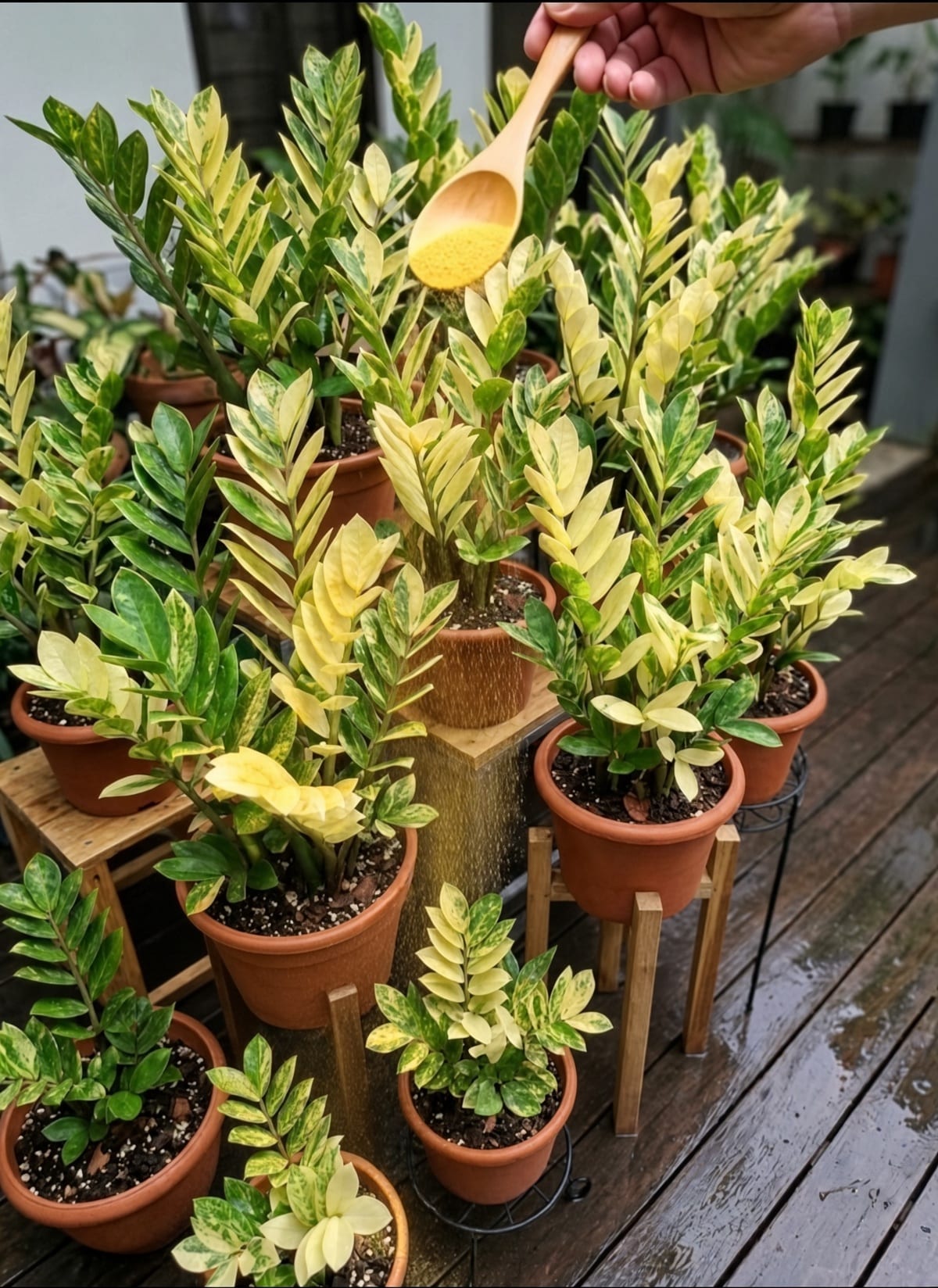
The image shows a beautiful collection of variegated ZZ Plants growing in terracotta pots, with a fine yellow powder being applied using a wooden spoon.
But can yellow powder fertilizer improve ZZ Plant growth, strengthen roots, and maintain beautiful golden leaves?
The answer depends on the fertilizer’s ingredients, application method, and the plant’s growing conditions.
This guide explains how to choose the best ZZ Plant fertilizer, maintain healthy rhizomes, select premium potting soil, and care for variegated ZZ Plants indoors.
1. What Is the Yellow Powder Used on Variegated ZZ Plants?
The yellow powder shown in the image resembles several types of powdered plant nutrients or soil amendments.
Possible products include:
- Commercial powdered houseplant fertilizer.
- Water-soluble NPK fertilizer.
- Mineral-based plant nutrients.
- Organic powdered fertilizer.
- Specialty micronutrient blends.
The exact substance cannot be identified by color alone.
Important: Never apply unidentified yellow powder directly to ZZ Plant leaves or soil. Use only products clearly labeled as suitable for ornamental houseplants.
ZZ Plants are relatively light feeders, so excessive fertilization can damage their roots and underground rhizomes.
2. Can Yellow Powder Fertilizer Improve ZZ Plant Growth?
A suitable fertilizer can support healthy growth when nutrients are insufficient.
However, fertilizer does not create variegation or turn ordinary green ZZ Plants into golden varieties.
Their yellow and cream coloration is primarily determined by genetics.
Essential Nutrients for ZZ Plants
| Nutrient | Main Benefit |
|---|---|
| Nitrogen (N) | Supports healthy leaf growth |
| Phosphorus (P) | Supports root development and energy transfer |
| Potassium (K) | Supports overall plant health |
| Magnesium | Supports chlorophyll production |
| Calcium | Supports cell development |
| Iron | Helps maintain healthy green tissue |
A balanced houseplant fertilizer generally provides the nutrients needed for normal growth.
3. How to Use Yellow Powder Fertilizer Safely
Step 1: Identify the Fertilizer
Check the product label for its NPK ratio, ingredients, dilution instructions, and application frequency.
Avoid using unknown powders.
Step 2: Check Soil Moisture
ZZ Plants prefer their potting mix to dry substantially between waterings.
Do not fertilize a plant suffering from root rot or severe stress.
Step 3: Prepare the Fertilizer
If using water-soluble fertilizer, dissolve it completely according to the manufacturer’s instructions.
For a routine feeding, a reduced concentration may be appropriate if the label permits.
Step 4: Apply to the Potting Mix
Pour the prepared fertilizer solution evenly over the soil, avoiding excessive moisture.
If using a dry fertilizer, apply it only as directed on the packaging.
Step 5: Monitor the Plant
Watch for healthy new shoots and firm leaves.
Growth may take several weeks or longer, particularly in low-light conditions.
Never increase fertilizer concentration to force faster growth.
4. Best Fertilizer for Variegated ZZ Plants
Variegated ZZ Plants generally require less fertilizer than many fast-growing tropical houseplants.
| Fertilizer Type | Benefits | Recommended Use |
|---|---|---|
| Balanced liquid fertilizer | Easy to dilute and control | Light seasonal feeding |
| Water-soluble NPK powder | Supplies essential nutrients | Diluted soil application |
| Slow-release granules | Gradual nutrient delivery | Low-maintenance feeding |
| Organic houseplant fertilizer | Provides plant nutrients | Occasional feeding |
| Worm castings | Mild nutrients and organic matter | Small soil amendment |
Recommended Fertilizing Schedule
During spring and summer, feed approximately once every 6–8 weeks with a diluted, balanced fertilizer if the plant is actively growing.
Reduce or stop fertilizing during winter when growth slows.
If using slow-release fertilizer, follow its labeled application interval rather than combining multiple feeding schedules.
Avoid overfertilizing: ZZ Plants store water and nutrients in their underground rhizomes and do not require heavy feeding.
5. Best Potting Mix for Variegated ZZ Plants
Choosing the right potting soil is especially important because ZZ Plants are vulnerable to root rot in poorly drained containers.
Recommended Soil Recipe
A practical indoor ZZ Plant mix includes:
- 50% premium indoor potting mix.
- 30% perlite or pumice.
- 20% fine orchid bark.
This combination creates an airy growing medium that drains efficiently.
Why Drainage Matters
Poor drainage may cause:
- Yellowing leaves.
- Soft or rotting rhizomes.
- Weak stems.
- Slow growth.
- Root deterioration.
Use pots with drainage holes and empty excess water from saucers.
6. How to Maintain Golden and Cream Variegation
The beautiful yellow and green foliage shown in the image is the main attraction of variegated ZZ Plants.
Variegated leaves contain areas with reduced chlorophyll, making adequate lighting particularly important.
Best Lighting Conditions
Place the plant in bright, indirect light.
Avoid prolonged exposure to harsh afternoon sunlight.
What Happens With Insufficient Light?
- Growth becomes slower.
- New stems may become stretched.
- The plant may produce fewer new shoots.
- Variegated varieties may struggle to maintain vigorous growth.
Leaf coloration depends largely on genetics and the particular growth point. Fertilizer cannot reliably increase or restore variegation.
Should You Use an LED Grow Light?
A full-spectrum LED grow light can help in darker rooms.
Begin with approximately 10–12 hours of suitable supplemental light daily, adjusting the distance and duration according to the manufacturer’s recommendations and the plant’s response.
7. How to Encourage Fuller ZZ Plant Growth
ZZ Plants produce new shoots from underground rhizomes.
Healthy growth depends on appropriate light, moisture, temperature, and root conditions.
Step 1: Provide Bright Indirect Light
Good lighting supports photosynthesis and new shoot development.
Step 2: Avoid Overwatering
Allow the potting mix to dry substantially before watering again.
Step 3: Maintain Comfortable Temperatures
ZZ Plants generally grow well around 65–85°F (18–29°C).
Protect them from frost and cold drafts.
Step 4: Feed Lightly
Apply a balanced fertilizer during active growth when needed.
Step 5: Repot Only When Necessary
Move the plant into a slightly larger container when the rhizomes become crowded.
Avoid oversized pots that retain excessive moisture.
Step 6: Be Patient
ZZ Plants naturally grow more slowly than many tropical houseplants, and variegated varieties may be especially slow.
8. Best Pots for Variegated ZZ Plants
The image features several ZZ Plants in terracotta containers, creating a beautiful natural display.
Terracotta Pots
Terracotta is porous and allows moisture to evaporate through the pot walls.
This can be helpful for growers who tend to overwater.
Ceramic Planters
Premium ceramic planters provide a refined decorative appearance.
Choose designs with adequate drainage or use a removable nursery pot inside a decorative cachepot.
Self-Watering Planters
Self-watering containers require careful management because ZZ Plants prefer drying periods.
They are not always the best choice for beginners growing ZZ Plants.
9. Common ZZ Plant Problems and Solutions
| Problem | Possible Cause | Solution |
|---|---|---|
| Yellowing green leaves | Excess moisture or aging | Check roots and watering |
| Brown leaf tips | Salt buildup or moisture stress | Review fertilizer and watering |
| Soft stems | Possible root or rhizome rot | Inspect roots and improve drainage |
| Slow growth | Low light or seasonal dormancy | Improve conditions and be patient |
| Brown patches | Sunburn or physical damage | Avoid harsh direct sunlight |
| No new shoots | Low light or natural slow growth | Maintain consistent care |
| Wilting foliage | Root damage or severe dryness | Inspect soil and roots |
Remember that naturally cream or yellow variegated leaves should not automatically be treated as unhealthy.
10. Best Indoor Gardening Products for ZZ Plants
Investing in appropriate plant-care products can make maintenance easier.
Premium Indoor Potting Soil
Choose a lightweight mix designed for indoor container plants.
Perlite and Pumice
These amendments improve aeration and drainage.
Balanced Houseplant Fertilizer
A gentle, properly diluted fertilizer supports healthy growth without unnecessary nutrient buildup.
Moisture Meter
A moisture meter can provide an additional indication of soil moisture, although checking deeper soil conditions and pot weight is often more reliable.
Full-Spectrum LED Grow Lights
Useful for maintaining variegated ZZ Plants in rooms with limited natural sunlight.
Decorative Ceramic and Terracotta Planters
Choose attractive pots that also provide suitable drainage.
11. Luxury Indoor and Patio Decor With Golden ZZ Plants
Golden variegated ZZ Plants can create a sophisticated display with their creamy foliage and upright architectural stems.
The terracotta containers shown in the image provide a warm, natural contrast to the yellow-green leaves.
Elegant Styling Ideas
- Arrange several variegated ZZ Plants on premium wooden plant stands.
- Pair golden foliage with matte black ceramic planters.
- Use terracotta pots for a Mediterranean-inspired patio.
- Display a mature ZZ Plant in a minimalist living room.
- Combine variegated ZZ Plants with natural stone and warm wood furniture.
- Place plants near bright windows with filtered sunlight.
For outdoor displays, protect ZZ Plants from direct afternoon sun, cold temperatures, and prolonged rainfall.
Frequently Asked Questions
What is the yellow powder used on ZZ Plants?
The image shows a fine yellow powder that resembles a fertilizer or soil amendment. Its actual composition cannot be determined visually.
Can yellow fertilizer turn a green ZZ Plant golden?
No. Golden and cream variegation is primarily genetic. Fertilizer cannot transform a normal green ZZ Plant into a variegated variety.
What is the best fertilizer for variegated ZZ Plants?
A balanced liquid or water-soluble houseplant fertilizer, used sparingly, is generally suitable.
How often should I fertilize my ZZ Plant?
Light feeding every 6–8 weeks during active growth is usually sufficient when fertilizer is needed.
Why is my variegated ZZ Plant growing slowly?
Variegated ZZ Plants can grow slowly because their lighter-colored foliage contains less chlorophyll. Low light, cool temperatures, and seasonal changes can also affect growth.
Can ZZ Plants grow outdoors?
Yes, in warm, frost-free conditions with protection from intense direct sunlight and excessive rain.
Should I sprinkle fertilizer directly on ZZ Plant leaves?
No. Apply fertilizer to the soil according to the product instructions unless it is specifically labeled for foliar use.
What is the best soil for ZZ Plants?
A well-draining indoor potting mix amended with perlite, pumice, or orchid bark is a good choice.
Are ZZ Plants safe for pets?
No. ZZ Plants contain irritating calcium oxalate crystals and should be kept away from pets and children who may chew the foliage.
Final Thoughts
Variegated ZZ Plants are beautiful, low-maintenance houseplants that bring golden and green foliage into indoor gardens.
Although the yellow powder shown in the image resembles a plant fertilizer, its identity cannot be confirmed without product information.
For healthy variegated ZZ Plants, prioritize bright indirect light, well-draining potting soil, careful watering, and light fertilization during active growth.
With consistent care and patience, these striking plants can develop strong upright stems and beautiful variegated foliage that enhances any indoor plant collection.