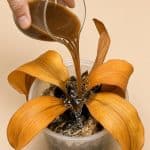
A weak orchid can still recover when the roots, light, and watering routine are corrected. In the image, this Phalaenopsis orchid has yellowing leaves, tired roots, and dry bark mix, with brown powder and water placed nearby as a possible recovery treatment.
This brown powder is best explained as a light orchid root-support powder, gentle organic plant fertilizer, or plant nutrition booster. Used carefully, it may help support root recovery and future blooms, but orchids need airflow and drainage more than heavy feeding.
What Plant Is This?
This plant looks like a Phalaenopsis Orchid, also called a moth orchid.
You can recognize it by the thick leaves, clear pot, bark mix, visible roots, and tall flower spike. The yellow leaf in the image suggests stress, which may come from old bark, overwatering, underwatering, weak roots, or too much direct sun.
Why Use Brown Root Powder?
Brown root powder may help if it is orchid-safe and used lightly. It can support the bark surface and encourage healthier roots during recovery.
It may help with:
- stronger orchid roots
- better root recovery
- healthier green leaves
- future flower support
- improved indoor plant care results
Do not use too much. Orchid roots need air, and too much powder can block airflow.
How to Use It Safely
Mix only a small pinch of brown powder with water or sprinkle lightly over the bark surface. Do not cover the crown or bury the roots.
If roots are brown, soft, or mushy, remove damaged roots first with clean scissors. Then repot the orchid into fresh orchid bark.
Do not use sugar, salt, flour, strong coffee powder, or random kitchen powders. A gentle organic plant fertilizer or orchid-safe product is much safer.
Best Orchid Potting Mix
Orchids should not grow in normal garden soil. They need a loose mix with airflow.
A good mix can include:
- orchid bark
- perlite
- charcoal
- coconut husk chips
- a little sphagnum moss
Fresh bark or premium indoor plant soil mixes made for orchids help protect roots from rot while keeping enough moisture.
Light and Watering Tips
Place the orchid near bright indirect light. A window with soft filtered light is ideal.
Water when the roots turn silver and the bark is almost dry. Green roots usually mean the plant still has moisture.
Never leave the orchid sitting in water. Let the pot drain fully after watering.
Common Mistakes to Avoid
Do not overwater.
Do not use heavy soil.
Do not cover the crown with powder.
Do not use strong fertilizer on weak roots.
Do not leave rotten roots inside the pot.
Do not place the orchid in harsh direct sun.
Decor and Luxury Styling
Phalaenopsis orchids are perfect for luxury home decor plant styling because the flowers look elegant and clean. A clear orchid pot can show the roots, while a luxury ceramic planter can make the display look premium.
They look beautiful on bright window ledges, office desks, bathroom shelves with light, luxury entryway plant displays, and minimalist modern indoor greenery styling.
High-Value Plant Care Tips
Use organic plant fertilizer lightly during active growth. If your room is dark, professional LED grow lights can help support new leaves and future blooms.
Humidity control trays can help dry rooms, but keep the pot above the water. If pests appear, use specialized pest control solutions made for orchids.
For luxury homes, offices, or window plant displays, professional landscaping services can style orchids with premium garden decor, natural wood, and clean ceramic planters.
Where to Place This Indoor and Outdoor Plant: Advanced Interior Styling & Architectural Placement
For luxury living room plant placement, keep the orchid near a bright window with filtered light.
It can also work as a luxury entryway plant display in a clean decorative pot. Custom built-in planter boxes in interior architecture can include orchids in bright indoor-outdoor spaces.
Outdoors, place orchids on shaded balconies, covered patios, or porch shelves beside luxury outdoor furniture. Avoid direct hot sun and strong wind.
Quick Care Notes
Can brown powder save a weak orchid?
It may help if it is plant-safe, but fresh bark, clean roots, bright indirect light, and correct watering are more important.
Why are orchid leaves turning yellow?
Yellow leaves can come from overwatering, root rot, old bark, too much sun, low light, or natural aging.
Final Thoughts
This orchid needs gentle recovery care, not strong feeding. Brown root powder may support the plant when used lightly, but the real key is fresh orchid bark, healthy roots, airflow, and careful watering.
With premium indoor plant soil mixes, gentle organic plant fertilizer, bright indirect light, and good drainage, a weak orchid can become a beautiful indoor plant, window display, luxury entryway plant, shaded balcony plant, or premium decor feature again.
- Can a Brown Liquid Save a Dying Orchid? The Complete Phalaenopsis Recovery, Root Care, and Reblooming Guide
 A struggling orchid with yellow leaves, damaged roots, and a lifeless appearance can be one of the most frustrating sights for any indoor plant enthusiast. Yet the transformation of a neglected orchid into a healthy plant with glossy green foliage and spectacular pink-and-white flowers is exactly what makes orchid care so rewarding. The images show CONTINUE READING
- ZZ Plant Growth Secrets: How to Use Yellow Liquid Fertilizer for Glossy Leaves, Strong Roots, and Fuller Indoor Growth
The ZZ Plant is one of the most elegant and resilient indoor plants available today. With its glossy green leaves, upright stems, and sculptural appearance, this tropical houseplant has become a favorite for modern homes, luxury apartments, offices, and professionally designed interiors. In the image, a healthy ZZ Plant grows in a decorative gray ceramic CONTINUE READING
- Christmas Cactus Fertilizer Secrets: How to Use White Slow-Release Granules for Strong Roots, Fuller Growth, and Spectacular Holiday Blooms
A healthy Christmas Cactus can transform an ordinary windowsill, patio, or living room into a beautiful display of cascading greenery and colorful seasonal flowers. With its distinctive segmented stems, graceful arching branches, and spectacular winter blooms, this tropical cactus has become one of the most popular flowering houseplants. The image shows three lush Christmas Cactus-type CONTINUE READING
- Jade Plant Fertilizer Guide: How to Grow a Thick Trunk, Strong Roots, Fuller Branches, and a Beautiful Indoor Money Tree
A mature Jade Plant can become one of the most impressive living decorations in a home or garden. With its thick woody trunk, glossy green succulent leaves, and naturally branching canopy, this long-lived plant has the appearance of a miniature ornamental tree. The image shows a healthy Jade Plant growing in a decorative terracotta container. CONTINUE READING
- Christmas Cactus With White Powder: The Complete Guide to Stronger Roots, Healthy Green Segments, More Flower Buds, and Beautiful Hanging Patio Displays
Christmas Cactus is one of the most beautiful flowering plants for homes, covered patios, balconies, and hanging gardens. Its cascading green stems, delicate flower buds, and colorful seasonal blooms make it an outstanding choice for gardeners who want an elegant display without growing a traditional desert cactus. The image shows a collection of Christmas Cactus CONTINUE READING
- Indoor Plant Arrangement With Brown Organic Powder: How to Care for Snake Plants, Pothos, and Purple Tradescantia in a Luxury Mixed Planter
A beautifully arranged indoor planter can transform an ordinary table, windowsill, or living room corner into a miniature botanical garden. Combining upright architectural foliage, trailing purple stems, and cream-variegated greenery creates a striking decorative display that looks professionally designed. The arrangement in the image brings together several attractive houseplants inside a large black-and-white patterned ceramic CONTINUE READING
- Roselily Plant Care: The Liquid Fertilizer Method for Bigger Buds, Beautiful Double Flowers, and Spectacular Balcony Blooms
Roselily plants are among the most luxurious flowering lilies available for home gardens, balconies, patios, and decorative container arrangements. Their enormous double flowers, elegant petals, and extraordinary color combinations make them a favorite for gardeners who want a dramatic floral display without maintaining a large outdoor garden. Unlike traditional lilies, Roselily varieties are specially bred CONTINUE READING
- Gloxinia Flower Care: How to Use White Fertilizer Granules Safely for Healthy Roots, Vibrant Leaves, and Spectacular Indoor Blooms
Gloxinia is one of the most impressive flowering houseplants for gardeners who appreciate luxurious, colorful blooms and elegant indoor plant displays. Its velvety green leaves and large trumpet-shaped flowers create a striking combination that can transform a simple windowsill into a beautiful miniature flower garden. Available in rich red, purple, pink, white, and spectacular multicolored CONTINUE READING