Purple Shamrock (Oxalis triangularis) is one of the most beautiful indoor ornamental plants, loved for its deep purple butterfly-shaped leaves and delicate pale pink or white flowers.
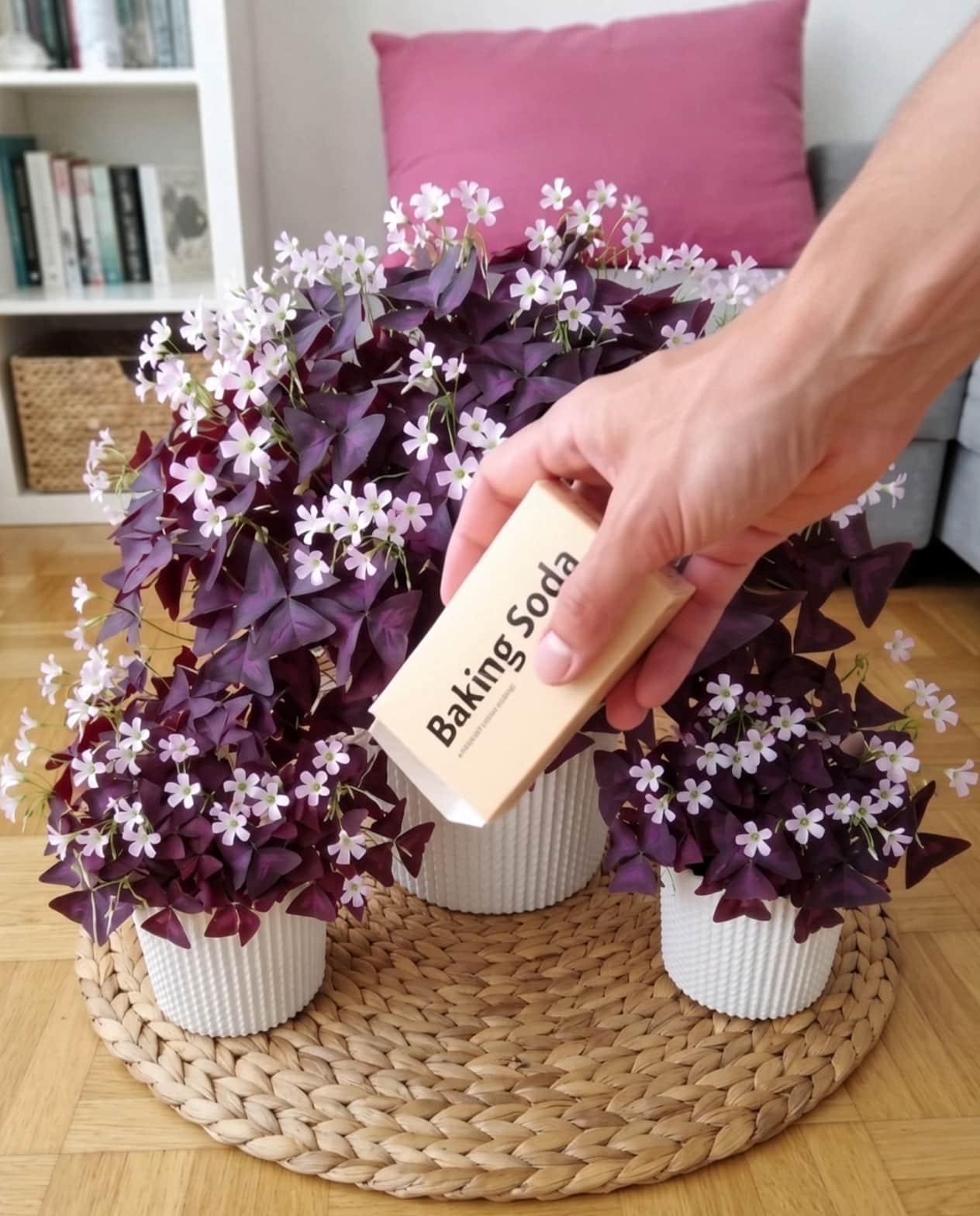
The image features three lush Purple Shamrock plants displayed in elegant white textured planters, with a box of baking soda held nearby. Their rich burgundy foliage and abundant flowers create a striking indoor garden arrangement.
But can baking soda help Purple Shamrock grow healthier, and what is the best way to encourage beautiful foliage and long-lasting flowers?
Here’s everything you need to know about Purple Shamrock care, fertilizer, potting soil, and stylish indoor plant displays.
1. Is Baking Soda Good for Purple Shamrock?
Baking soda, or sodium bicarbonate, is a household ingredient sometimes discussed as a natural gardening treatment.
Some gardeners use diluted baking soda solutions to help manage certain fungal problems on ornamental plants.
However, baking soda is not a plant fertilizer, and there is no reliable evidence that it increases Purple Shamrock flowering or makes its leaves more vibrant.
Purple Shamrock has delicate foliage that can be damaged by concentrated baking soda treatments.
Avoid sprinkling baking soda directly onto the leaves, flowers, or potting soil. Repeated applications may cause sodium buildup and interfere with healthy root growth.
For stronger plants, focus on proper lighting, balanced nutrition, and well-draining soil.
2. Best Fertilizer for Purple Shamrock Growth and Flowers
Purple Shamrock grows from small underground bulbs or rhizome-like storage structures and benefits from gentle feeding during active growth.
Choosing a suitable indoor plant fertilizer helps support healthy leaves and flowering.
Balanced Liquid Houseplant Fertilizer
A balanced liquid fertilizer, such as a 10-10-10 or 20-20-20 formulation, can provide essential nutrients.
Use a diluted solution according to the product label, typically every 3–4 weeks during active growth.
Organic Indoor Plant Fertilizer
Commercial organic liquid fertilizers can also provide nutrients for container-grown Oxalis.
Choose products formulated for indoor ornamental plants.
Slow-Release Fertilizer Granules
A carefully measured slow-release houseplant fertilizer offers convenient feeding over an extended period.
Avoid excessive fertilizer, which can damage roots and encourage salt accumulation.
Important: Stop or reduce feeding when Purple Shamrock enters its natural dormancy period.
3. Best Potting Soil for Healthy Purple Shamrock Roots
Healthy roots are essential for attractive foliage and reliable flowering.
Purple Shamrock prefers a lightweight, well-draining potting mix that retains some moisture without staying soggy.
A practical soil combination includes:
- 60% premium indoor potting soil
- 20% perlite or pumice
- 20% coco coir or a suitable organic potting amendment
Choose containers with drainage holes to prevent water from accumulating around the underground storage structures.
A high-quality indoor potting mix for flowering houseplants can help maintain the right balance between moisture and aeration.
4. How to Encourage More Purple Shamrock Flowers
Purple Shamrock can produce clusters of delicate flowers when its growing conditions are favorable.
Provide Bright Indirect Light
Place the plant near a bright window where it receives filtered sunlight.
Gentle morning sun is often beneficial, but harsh afternoon sunlight may scorch the leaves.
Water When the Soil Begins to Dry
Water thoroughly when the upper inch of potting soil feels dry.
Allow excess water to drain away.
Feed During Active Growth
Use a diluted balanced liquid fertilizer to support healthy foliage and flowers.
Maintain Comfortable Indoor Temperatures
Purple Shamrock generally performs well in normal indoor temperatures, approximately 60–75°F (16–24°C).
Respect Natural Dormancy
Purple Shamrock may occasionally stop growing and lose its leaves as part of its natural growth cycle.
Reduce watering during dormancy and resume normal care when new shoots appear.
5. Common Purple Shamrock Problems and Solutions
Purple Leaves Turning Green or Fading
Insufficient light may reduce the intensity of the foliage color.
Move the plant to a brighter location with indirect sunlight.
Yellowing Leaves
Overwatering, poor drainage, or natural dormancy may cause yellowing foliage.
Check soil moisture before adding water.
Drooping or Folding Leaves
Purple Shamrock naturally folds its leaves in low light and at night.
This movement is normal and does not necessarily indicate a problem.
Brown Leaf Edges
Excessive direct sunlight, inconsistent watering, or fertilizer salt buildup may damage leaf margins.
Few or No Flowers
Insufficient light, dormancy, or unsuitable growing conditions may limit flowering.
Improve the plant’s environment rather than relying on household treatments.
6. Best Indoor Gardening Products for Purple Shamrock
Choosing suitable gardening supplies makes Purple Shamrock care easier and helps create a more attractive indoor display.
Consider these products:
- Premium indoor plant fertilizer: Provides balanced nutrients during active growth.
- Organic liquid houseplant food: Offers another feeding option for indoor plants.
- High-quality potting soil: Supports root health and proper drainage.
- Decorative ceramic planters: Enhance the appearance of purple foliage.
- Self-watering indoor planters: Can help manage moisture when designed with proper drainage and used carefully.
- Full-spectrum LED grow lights: Provide supplemental light in darker rooms.
- Digital soil moisture meters: Can assist with watering decisions when combined with checking the soil by hand.
Select products that suit your growing conditions rather than applying unnecessary treatments.
7. Luxury Home Decor Ideas With Purple Shamrock
Purple Shamrock is an excellent choice for luxury indoor plant decor because its dramatic foliage creates natural contrast with neutral interiors.
Elegant White Ceramic Planters
The image demonstrates how beautifully dark purple foliage pairs with white textured ceramic pots.
This combination works especially well in contemporary living rooms, minimalist interiors, and Scandinavian-inspired spaces.
Luxury Living Room Plant Arrangements
Group three Purple Shamrock plants in coordinating designer planters to create a balanced decorative arrangement.
Place them on a wooden side table, floating shelf, or stylish plant stand near a bright window.
Modern Indoor Garden Styling
Combine Purple Shamrock with natural wood furniture, woven decorative trays, and soft neutral textiles.
The contrast between burgundy leaves and cream-colored accessories creates an elegant appearance.
Premium Indoor Plant Accessories
For a sophisticated indoor garden, consider luxury ceramic plant pots, modern indoor plant stands, designer home accessories, decorative woven baskets, and premium LED grow lights.
These accessories can turn a simple collection of houseplants into a beautiful decorative feature.
8. Frequently Asked Questions
Can baking soda make Purple Shamrock bloom?
No. Baking soda is not proven to increase Oxalis flowering. Adequate light and appropriate plant nutrition are more useful.
Should I sprinkle baking soda on Purple Shamrock soil?
No. Baking soda may alter soil chemistry and contribute to sodium buildup.
What is the best fertilizer for Oxalis triangularis?
A diluted balanced liquid houseplant fertilizer is generally suitable during active growth.
Why does Purple Shamrock close its leaves at night?
Purple Shamrock naturally folds its leaves in response to changes in light through a process called nyctinasty.
Can Purple Shamrock grow indoors year-round?
Yes. It can grow indoors for many years with appropriate care, although it may occasionally enter dormancy.
Are decorative ceramic pots suitable for Purple Shamrock?
Yes. Ceramic pots are excellent decorative options when they have drainage holes or contain a removable nursery pot that drains properly.
Final Thoughts
Purple Shamrock is a beautiful indoor flowering plant that brings rich color, delicate flowers, and distinctive foliage into the home.
Although baking soda is frequently mentioned in homemade gardening tips, it is not necessary for healthy Purple Shamrock growth and may damage delicate leaves when used incorrectly.
For the best results, choose premium indoor potting soil, balanced houseplant fertilizer, appropriate watering, and bright indirect light.
Complete your display with elegant white ceramic planters, modern plant stands, and luxury home decor accessories to create a sophisticated indoor garden that looks beautiful throughout the growing season.