Morning glories are among the most beautiful flowering climbing plants for patios, balconies, fences, and outdoor gardens. Their heart-shaped green leaves, fast-growing vines, and spectacular trumpet-shaped flowers can transform an ordinary space into a colorful vertical garden.
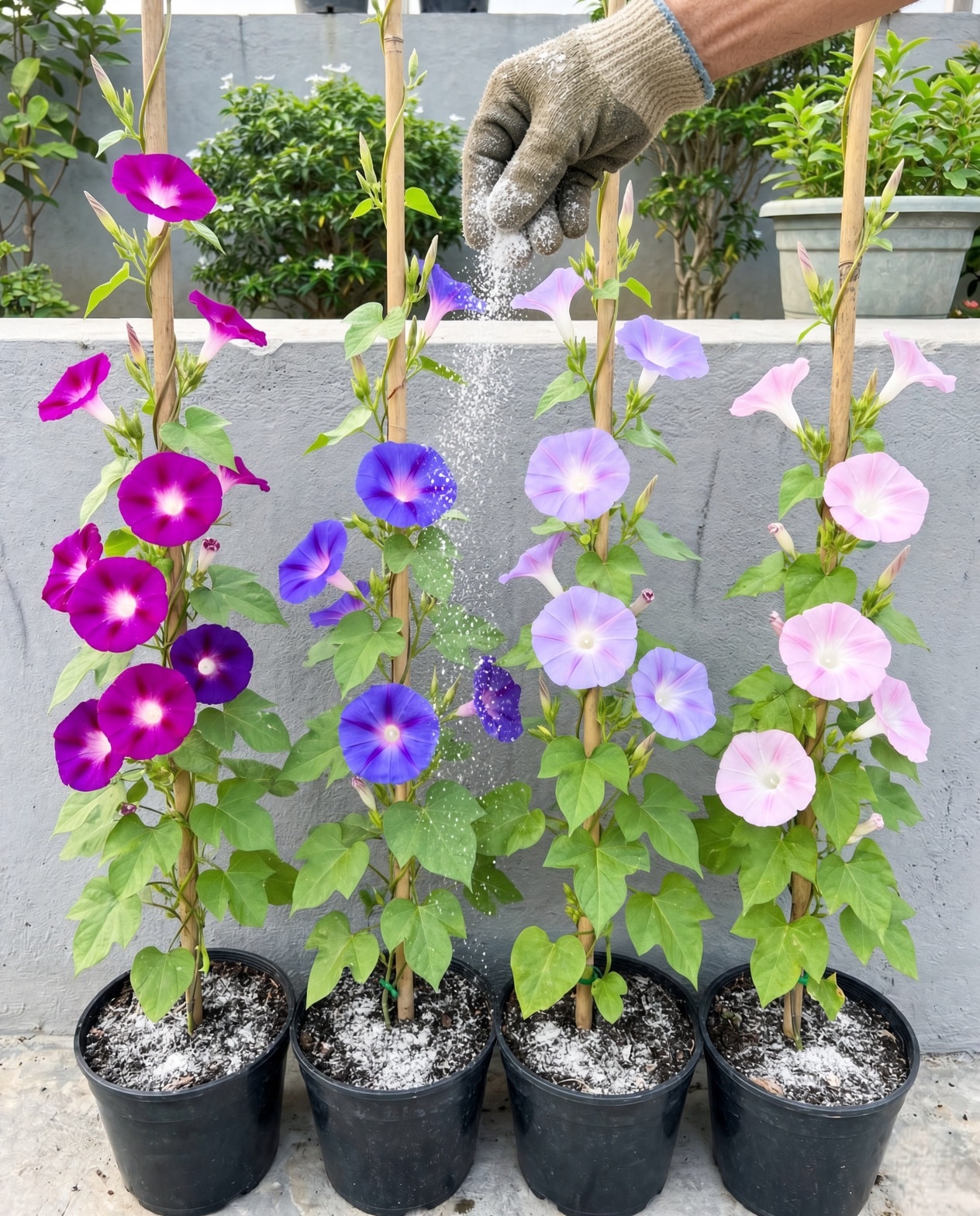
The images feature four potted morning glory vines climbing individual bamboo stakes. Each plant displays a different flower color, ranging from deep magenta and vibrant blue-purple to soft lavender and delicate pink. A gloved hand is sprinkling fine white powder over the growing area, while the second image shows taller, fuller vines covered with more flowers.
This gardening scene introduces an interesting question: Can white powder fertilizer help morning glories develop stronger vines, healthier foliage, and more abundant blooms?
The right fertilizer can support vigorous growth and flowering, but morning glories are not heavy feeders. Too much nitrogen can encourage excessive leafy growth while reducing flower production.
The key is choosing a suitable fertilizer, maintaining well-drained soil, providing sufficient sunlight, and supporting the vines as they climb.
This complete guide explains how to grow beautiful morning glories in containers, choose the best flowering plant fertilizer, improve potting soil, prevent common problems, and create a stunning vertical flower display.
1. What Is the White Powder Used Around Morning Glories?
The white powder shown in the images resembles a powdered or granular gardening amendment.
Several common garden products have a similar appearance, including:
- Water-soluble flowering plant fertilizer
- Fine granular plant fertilizer
- Agricultural gypsum
- Dolomitic garden lime
- Perlite particles
- Certain soil conditioners
These products have different purposes and should not be used interchangeably.
For gardeners who want to encourage flowering, a complete bloom fertilizer formulated for container-grown flowering plants is generally a more practical choice than applying unidentified powder.
A water-soluble fertilizer can be mixed with water according to the manufacturer’s instructions, while granular products must be applied according to their specific directions.
White color does not indicate that a fertilizer is suitable for morning glories.
2. Meet the Morning Glory: A Beautiful Climbing Flower
Morning glory is a common name for several flowering vines in the genus Ipomoea.
Many popular ornamental varieties belong to Ipomoea purpurea and Ipomoea tricolor.
These plants are valued for their rapid climbing growth and colorful funnel-shaped flowers.
Morning Glory Plant Profile
- Common name: Morning Glory
- Botanical genus: Ipomoea
- Plant type: Flowering climbing vine
- Growth habit: Twining and climbing
- Flower colors: Purple, pink, blue, lavender, magenta, and white
- Sunlight: Full sun
- Soil: Well-draining, moderately fertile soil
- Watering: Regular watering without waterlogging
- Fertilizer: Light feeding when needed
- Support: Bamboo stakes, trellises, fences, or garden netting
- Blooming season: Usually summer through fall, depending on climate
- Growing locations: Pots, patios, balconies, fences, and garden beds
Morning glories are often grown as annual flowering vines, although their life cycle varies by species and climate.
3. What the Images Show: Four Colorful Morning Glory Vines
The two images illustrate an attractive container-gardening arrangement.
Four Individual Black Nursery Pots
Each morning glory grows in its own container, making watering and plant maintenance easier.
Natural Bamboo Supports
Tall bamboo stakes guide the climbing vines upward.
Morning glory stems naturally twine around suitable supports as they grow.
Four Different Flower Colors
The display includes:
Deep Magenta Morning Glory: Rich pink-purple flowers with bright centers.
Blue-Purple Morning Glory: Vibrant blue-violet blooms that stand out against green foliage.
Lavender Morning Glory: Soft purple flowers with pale centers.
Light Pink Morning Glory: Delicate pastel pink flowers that create an elegant appearance.
White Powder Application
A gloved hand is scattering a white material over the central growing area.
For actual gardening, any fertilizer or soil amendment should be selected according to the soil’s needs and the product label.
Fuller Flowering Vines
The second image illustrates the desired result: taller vines, more leaves, additional buds, and colorful flowers along the bamboo supports.
In real growing conditions, this development takes time and depends on sunlight, temperature, water, soil, and plant maturity.
4. Best Fertilizer for Morning Glory Flowers
Morning glories generally bloom best with adequate sunlight and moderate soil fertility.
They rarely need heavy fertilizer applications.
Low-Nitrogen Bloom Fertilizer
A flowering plant fertilizer with relatively modest nitrogen and adequate phosphorus and potassium can be useful when soil nutrients are insufficient.
Examples of commercially available bloom-oriented nutrient ratios include 5-10-10 and 4-6-8.
However, a higher phosphorus number does not automatically mean more flowers. Additional phosphorus is unlikely to help when the soil already contains enough.
Balanced Flowering Plant Fertilizer
A balanced complete fertilizer may be suitable for container-grown morning glories, particularly in nutrient-poor potting mixes.
Use a diluted application when the label permits.
Slow-Release Flower Fertilizer
Controlled-release granules can provide nutrients gradually.
Choose a product appropriate for flowering annuals in containers.
Organic Flower Fertilizer
Commercial organic fertilizers may provide a slower nutrient release.
Use them according to their instructions and avoid excessive applications.
When Fertilizer Is Unnecessary
Morning glories growing vigorously in fertile soil may not need additional fertilizer.
Excessive feeding can produce lush foliage with relatively few flowers.
5. How to Apply White Powder Fertilizer to Morning Glories
If you are using a labeled granular fertilizer suitable for flowering container plants, correct application is important.
Step 1: Inspect the Plants
Look for healthy green leaves, active vine growth, and developing buds.
Step 2: Choose a Suitable Product
Select a fertilizer formulated for flowering plants.
Check the nutrient analysis and recommended application rate.
Step 3: Check the Soil
Avoid fertilizing plants in severely dry or waterlogged soil.
Step 4: Measure the Fertilizer
Use the quantity recommended on the product label for the container size.
Do not estimate the dose by handfuls.
Step 5: Apply to the Potting Soil
Distribute the product evenly over the soil surface, keeping it away from direct contact with the stems.
Step 6: Water as Directed
If the fertilizer requires watering after application, water gently and allow excess moisture to drain.
Step 7: Observe New Growth
Monitor the plants over the following weeks.
Look for healthy foliage, developing buds, and continued climbing growth.
Important: Water-soluble fertilizer powders should normally be dissolved and diluted as directed rather than sprinkled directly onto leaves or soil.
6. How Often Should You Fertilize Morning Glories?
Morning glories generally require less fertilizer than many other flowering container plants.
At Planting Time
A quality potting mix containing a modest starter fertilizer may provide sufficient early nutrition.
During Active Growth
Feed only when necessary, based on the potting mix, plant condition, and fertilizer instructions.
During Flowering
Avoid high-nitrogen feeding that encourages foliage at the expense of flowers.
Late Season
Reduce or stop fertilization as the growing season ends.
For container plants growing in nutrient-poor mixes, occasional light feeding may be useful. However, a rigid weekly fertilizer schedule is usually unnecessary.
7. How to Grow Morning Glories in Pots
Morning glories can grow beautifully in containers when their basic needs are met.
Choose a Suitable Container
Use a pot with drainage holes and enough room for root development.
For a single vigorous morning glory vine, a container approximately 12 inches wide or larger is a practical starting point.
Larger containers are beneficial for mature plants.
Select Premium Potting Soil
Use a quality outdoor container potting mix.
Install a Climbing Support
Place a bamboo stake or trellis into the pot.
Position in Full Sun
Choose a location receiving at least six hours of direct sunlight daily, preferably more.
Water Regularly
Keep the plant adequately hydrated without allowing the soil to remain saturated.
Feed Lightly
Apply fertilizer only when needed.
Guide the Vines
Gently direct young stems around the support.
8. Best Potting Soil for Morning Glory Vines
Morning glories prefer well-draining soil with moderate fertility.
A good container mix should retain enough moisture while allowing excess water to escape.
Recommended Potting Mix
A practical combination is:
- 70% premium outdoor container potting soil
- 20% perlite or pumice
- 10% finished compost
This blend provides organic matter, moisture retention, and drainage.
Why Premium Potting Soil Matters
High-quality container soil supports root development and helps maintain consistent moisture.
Why Perlite Is Useful
Perlite creates air spaces and reduces compaction.
Why Compost Helps
Finished compost contributes organic matter and some nutrients.
Avoid adding excessive compost or nitrogen-rich amendments, which can encourage unnecessary leafy growth.
9. How Much Sunlight Do Morning Glories Need?
Sunlight is one of the most important factors influencing morning glory flowering.
Full Sun
Morning glories generally perform best with six to eight or more hours of direct sunlight.
Partial Shade
Plants may survive, but flowering can be reduced.
Deep Shade
Growth may become weak and stretched, with few blooms.
Best Location
Choose a sunny patio, balcony, garden fence, or outdoor wall.
In extremely hot climates, some protection from harsh afternoon heat may reduce stress.
10. How to Water Potted Morning Glories
Container-grown morning glories may dry out more quickly than plants growing in garden soil.
Recommended Watering Method
- Check the upper inch of soil.
- Water when the surface begins to dry.
- Apply enough water to moisten the root zone.
- Allow excess water to drain.
- Avoid leaving pots standing in water.
During hot summer weather, container plants may need frequent watering.
Signs of Underwatering
- Wilting leaves
- Dry soil
- Reduced flower production
- Drooping stems
Signs of Overwatering
- Persistently wet soil
- Yellowing foliage
- Weak growth
- Root damage
The goal is consistent moisture without waterlogging.
11. How to Make Morning Glories Grow Taller
The tall bamboo supports in the images demonstrate a simple way to create a vertical flower display.
Morning glories naturally climb by wrapping their stems around supports.
Provide Tall Supports
Use bamboo stakes, trellises, or climbing netting.
Grow in Full Sun
Adequate sunlight supports vigorous vine growth.
Maintain Healthy Roots
Use containers with good drainage.
Water Consistently
Avoid prolonged drought stress.
Avoid Excessive Nitrogen
Too much nitrogen can produce excessive foliage without improving flowering.
Guide Young Vines
Gently wrap developing stems around the bamboo stakes in their natural twining direction.
Avoid tying stems tightly.
12. Best Trellises and Bamboo Stakes for Morning Glories
Morning glories can climb many types of garden structures.
Bamboo Garden Stakes
Natural bamboo provides a simple, attractive support.
Wooden Garden Trellises
Wooden trellises work well in decorative patio containers.
Metal Climbing Frames
Metal frames provide durable support for larger vines.
Garden Netting
Netting is useful for covering fences and vertical garden structures.
Decorative Garden Arches
Morning glories can create a colorful seasonal display over garden arches.
Wall-Mounted Trellises
These are useful for small patios and balcony gardens.
Ensure that any structure is securely anchored and can withstand wind and the weight of mature vines.
13. How to Encourage More Morning Glory Flowers
Morning glories are famous for producing colorful trumpet-shaped blooms.
To encourage flowering, focus on their growing conditions.
Give Them Full Sun
Strong light is essential for abundant flowering.
Avoid Excess Nitrogen
Nitrogen-heavy fertilizers can encourage foliage rather than flowers.
Maintain Consistent Moisture
Drought stress can interrupt growth and flowering.
Provide Adequate Root Space
Very small pots can restrict root development.
Avoid Unnecessary Pruning
Excessive pruning may remove developing flowering shoots.
Maintain Healthy Soil
Good drainage and moderate fertility support overall plant health.
Be Patient
Some varieties flower later in the growing season, especially when influenced by day length.
14. Why Morning Glories Have Leaves but No Flowers
This is one of the most common gardening questions.
Too Much Nitrogen
High-nitrogen fertilizer can encourage vigorous leafy growth.
Insufficient Sunlight
Shaded plants may produce fewer flowers.
Immature Plants
Young vines may need more time to mature.
Variety Differences
Different morning glory species and cultivars flower at different times.
Day-Length Sensitivity
Some morning glories are sensitive to day length and may bloom more heavily as days shorten.
Environmental Stress
Extreme temperatures, drought, and root problems may interfere with flowering.
Before adding more fertilizer, evaluate sunlight and growing conditions.
15. Why Morning Glory Flowers Close During the Day
Morning glory flowers often open in the morning and close later in the day.
This behavior is normal.
Many varieties produce individual flowers that last only a short period.
The vines continue producing additional buds throughout their flowering season.
How to Enjoy the Flowers Longer
Place containers where you can see them during the morning.
Maintain healthy plants so new buds continue developing.
Choose several flower colors for a more attractive display.
16. Growing Different Morning Glory Colors Together
The four-color arrangement shown in the images creates a beautiful vertical garden.
Magenta Morning Glory
Deep magenta flowers add bold color.
Blue Morning Glory
Blue-purple flowers provide a striking contrast with green leaves.
Lavender Morning Glory
Lavender blooms create a softer appearance.
Pink Morning Glory
Pale pink flowers add elegance and balance.
Design Tip
Grow each color in a separate container and arrange the pots side by side.
This makes it easier to manage individual plants while maintaining a coordinated display.
17. How to Grow Morning Glories From Seeds
Morning glories are commonly grown from seed.
Step 1: Choose Quality Seeds
Select the species and flower colors you prefer.
Step 2: Prepare the Seeds
Some morning glory seeds have hard coats.
Lightly nicking the seed coat or soaking seeds according to packet instructions can improve germination.
Step 3: Prepare Containers
Fill pots with well-draining seed-starting mix.
Step 4: Sow the Seeds
Plant seeds at the depth recommended on the seed packet, often approximately ¼ inch deep.
Step 5: Maintain Moisture
Keep the seed-starting mix evenly moist but not waterlogged.
Step 6: Provide Warmth
Warm temperatures generally encourage germination.
Step 7: Provide Light
Move seedlings into strong light after emergence.
Step 8: Install Supports
Provide climbing supports while the vines are young.
18. How Long Do Morning Glories Take to Bloom?
Morning glory flowering time depends on the species, variety, climate, and planting date.
Many varieties begin flowering approximately 60–120 days after sowing, although some may take longer.
Factors affecting blooming include:
- Sunlight
- Temperature
- Day length
- Soil fertility
- Water availability
- Variety
- Plant maturity
Some morning glories produce their most impressive flower displays later in summer or during fall.
19. Common Morning Glory Pests
Healthy morning glory vines can still experience pest problems.
Aphids
These small insects feed on tender shoots and leaves.
Spider Mites
Spider mites can cause fine leaf discoloration, particularly in hot, dry conditions.
Whiteflies
Whiteflies may gather on the undersides of leaves.
Caterpillars
Some caterpillars chew holes in foliage.
Slugs and Snails
Young seedlings may be damaged by slugs or snails.
Pest Management
Inspect plants regularly.
Remove pests manually when practical.
Use insecticidal soap or other appropriate garden pest-control products according to label instructions.
Avoid spraying open flowers when pollinators are active.
20. Common Morning Glory Diseases
Powdery Mildew
White fungal growth may appear on foliage.
Root Rot
Poor drainage and excessive watering can damage roots.
Leaf Spot
Various pathogens may cause spotted or discolored leaves.
Prevention
- Provide adequate spacing.
- Avoid overcrowding.
- Use well-draining potting soil.
- Water near the soil rather than unnecessarily wetting foliage.
- Remove badly affected plant material.
- Maintain appropriate sunlight and airflow.
21. How to Prevent Yellow Leaves on Morning Glories
Yellowing leaves can result from several causes.
Overwatering
Excess moisture may reduce root health.
Underwatering
Severe drought stress can damage foliage.
Nutrient Deficiency
Container-grown plants may eventually exhaust available nutrients.
Natural Aging
Older lower leaves may yellow as the plant matures.
Pest Damage
Sap-feeding insects can cause discoloration.
Root Restriction
Very small containers may limit healthy growth.
Check the growing conditions before applying fertilizer.
22. Can You Use Epsom Salt on Morning Glories?
Epsom salt supplies magnesium and sulfur.
It is not a complete fertilizer.
Morning glories do not automatically benefit from Epsom salt applications.
If the soil or growing medium already contains sufficient magnesium, additional magnesium is unlikely to improve flowering.
Excessive applications can disrupt nutrient balance.
Use magnesium supplements only when a deficiency is reasonably established.
23. Can You Use Bone Meal for Morning Glory Flowers?
Bone meal supplies phosphorus and calcium.
It may be useful in soil that genuinely lacks these nutrients.
However, adding phosphorus to already sufficient soil does not necessarily increase flower production.
For container gardening, a complete fertilizer used appropriately is often more convenient.
Avoid unnecessary phosphorus applications.
24. Best Flower Fertilizer Products for Container Gardens
When shopping for fertilizer for morning glories and other flowering annuals, consider the following product categories.
Water-Soluble Bloom Fertilizer
Convenient for measured, diluted feeding.
Slow-Release Flower Fertilizer
Provides nutrients over a longer period.
Organic Flowering Plant Fertilizer
Offers another option for supplying nutrients.
Balanced Container Plant Fertilizer
Suitable when the potting mix needs general nutrient supplementation.
Micronutrient Fertilizer
Useful when a specific deficiency has been identified.
Premium Potting Mix With Starter Fertilizer
Can provide nutrients during early establishment.
The best product depends on the plant’s condition, existing soil fertility, and container size.
25. How to Create a Beautiful Morning Glory Patio Display
The images offer inspiration for an affordable vertical flower garden.
Choose Four Flower Colors
Select magenta, blue, lavender, and pink morning glory varieties.
Use Matching Pots
Black, terracotta, or decorative ceramic containers can create a coordinated appearance.
Install Tall Bamboo Stakes
Place one sturdy support in each pot.
Arrange Pots in a Straight Line
This creates an organized vertical display.
Position Against a Neutral Wall
A gray or white wall makes the colorful flowers stand out.
Maintain Consistent Watering
Keep all four plants appropriately hydrated.
Guide the Vines Upward
Train stems gently around their supports.
Allow Natural Flowering
As the vines mature, the display becomes fuller and more colorful.
26. Morning Glory Care Through the Growing Season
Spring
Start seeds after frost danger has passed and the soil has warmed.
Prepare containers and install supports.
Early Summer
Encourage climbing growth and maintain consistent moisture.
Mid-Summer
Monitor flowering, watering needs, and pests.
Late Summer
Many varieties begin producing heavier flower displays.
Fall
Continue enjoying blooms until temperatures become unsuitable.
Collect seeds only where permitted and appropriate.
Morning glories can self-seed aggressively, and some species are invasive in certain regions. Check local guidance before planting or allowing seed production.
27. Common Morning Glory Growing Mistakes
Using Too Much Fertilizer
Excessive nitrogen can produce foliage at the expense of flowers.
Growing in Too Much Shade
Insufficient sunlight reduces flowering potential.
Using Containers Without Drainage
Waterlogged soil can damage roots.
Forgetting Climbing Supports
Vines need suitable structures for upright growth.
Allowing Severe Drought Stress
Container plants may dry out quickly in summer.
Using Excessively Small Pots
Restricted roots can limit growth.
Applying Unidentified Powder
Unknown garden chemicals can damage plants or create unnecessary risks.
Expecting Immediate Flowering
Morning glories need time to establish and mature.
28. Frequently Asked Questions About Morning Glory Fertilizer and Flowering
What is the best fertilizer for morning glories?
A lightly applied complete fertilizer suitable for flowering plants is a practical choice when additional nutrients are needed.
Can white powder fertilizer help morning glories bloom?
An appropriate fertilizer can support flowering if nutrients are limiting, but the powder must be identified and used correctly.
Is 10-10-10 fertilizer good for morning glories?
It can be suitable in some situations, but morning glories often require little supplemental feeding.
Should I use high-phosphorus bloom fertilizer?
Only when appropriate for the soil’s nutrient status. Excess phosphorus does not automatically produce more flowers.
How often should I fertilize potted morning glories?
Feed lightly only as needed, following the fertilizer label and considering the nutrients already present in the potting mix.
Why are my morning glories growing leaves but no flowers?
Common reasons include excessive nitrogen, insufficient sunlight, plant immaturity, and day-length sensitivity.
Do morning glories need full sun?
Yes. Most varieties flower best with at least six hours of direct sunlight.
Can morning glories grow in pots?
Yes. They grow well in appropriately sized containers with drainage and climbing supports.
How tall can morning glories grow?
Many ornamental varieties can climb approximately 6–15 feet or more under favorable conditions.
What soil is best for morning glories?
Well-draining, moderately fertile soil is ideal.
Can I grow four different morning glory colors together?
Yes. Growing different colors in separate containers creates an attractive coordinated display.
Why do morning glory flowers close in the afternoon?
Many varieties naturally open in the morning and close later in the day.
Do morning glories come back every year?
Some are perennial in frost-free climates, but many are grown as annuals.
Can I grow morning glories on bamboo stakes?
Yes. Bamboo stakes are suitable supports when securely installed.
Do morning glories need pruning?
Usually only limited pruning is necessary to control growth or remove damaged stems.
Are morning glory seeds poisonous?
Seeds of certain morning glory species contain toxic compounds and should not be eaten. Keep them away from children and pets.
How can I encourage more flower buds?
Provide full sun, appropriate watering, sufficient root space, and avoid excessive nitrogen fertilizer.
Can I use slow-release fertilizer?
Yes, when the product is suitable for flowering container plants and applied at the recommended rate.
What causes yellow leaves?
Overwatering, underwatering, nutrient problems, pests, and natural aging can all contribute.
Can morning glories grow on balconies?
Yes, provided they receive adequate sunlight, have sturdy supports, and are grown in suitable containers.
29. Simple Weekly Morning Glory Care Routine
Monday: Check soil moisture and water if needed.
Tuesday: Inspect leaves for pests and signs of stress.
Wednesday: Guide new vines around bamboo supports.
Thursday: Check for developing flower buds.
Friday: Remove damaged leaves and inspect drainage.
Saturday: Review sunlight exposure and container conditions.
Sunday: Enjoy the flowers and assess whether any changes are needed.
Fertilizer should be applied according to plant needs and product instructions, not automatically every week.
30. Final Thoughts: Growing Beautiful Morning Glories With White Powder Fertilizer
Morning glories are an excellent choice for gardeners who want colorful flowers, climbing greenery, and attractive vertical displays without requiring a large garden.
The four potted vines shown in the images demonstrate how bamboo stakes, matching containers, and contrasting flower colors can create an eye-catching patio arrangement.
The white powder application highlights the importance of choosing the right soil amendment or flowering plant fertilizer.
For reliable results, focus on full sunlight, premium well-draining potting soil, suitable bamboo trellises, consistent watering, and modest fertilizer applications when needed.
Remember that more fertilizer does not necessarily mean more flowers. Morning glories often bloom beautifully in moderately fertile soil without heavy feeding.
With the right care, these climbing vines can produce a spectacular display of magenta, blue, lavender, and pink trumpet-shaped flowers throughout their growing season.