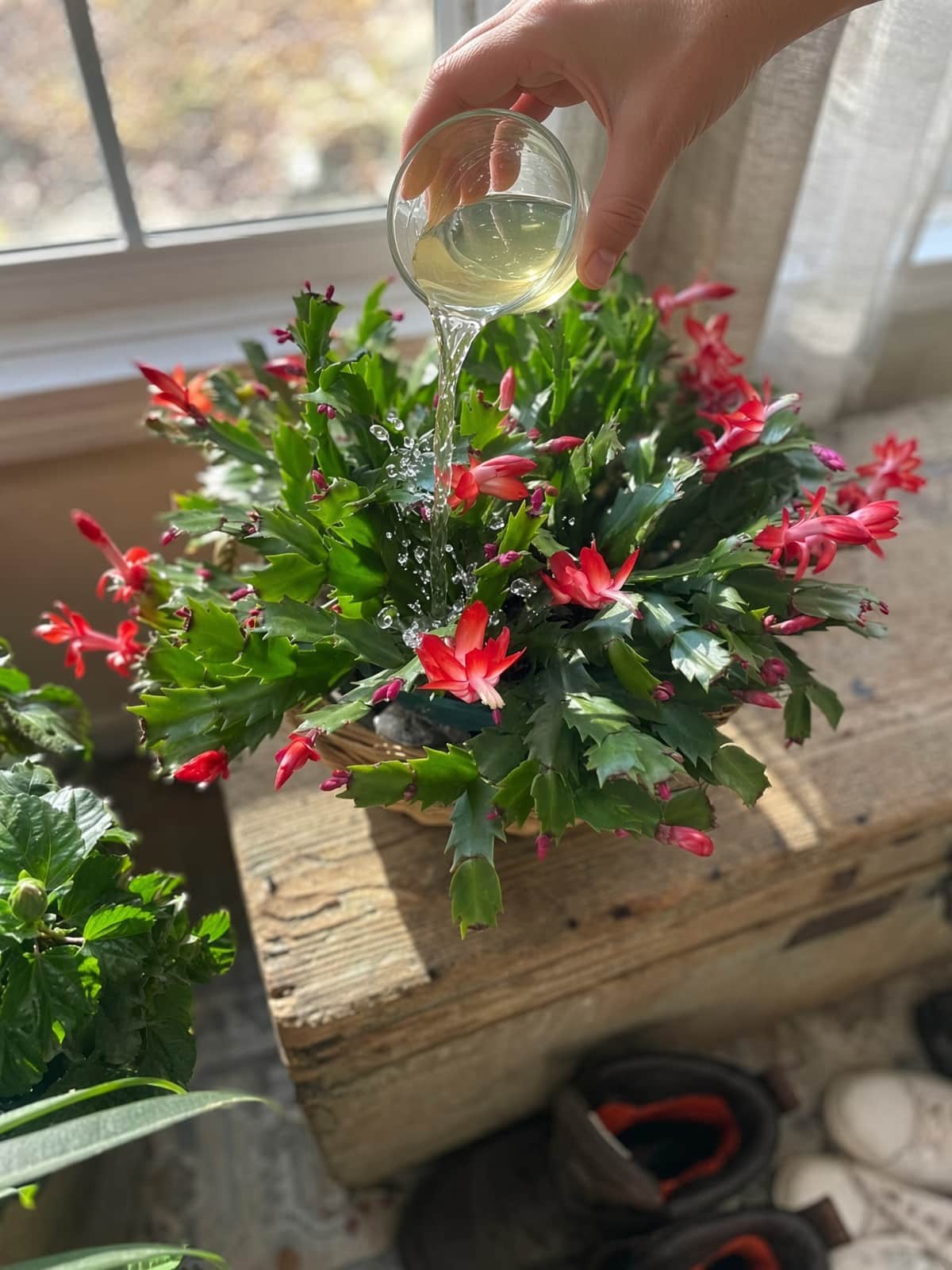
A Thanksgiving Cactus covered in vibrant red flowers can become one of the most beautiful houseplants in your home during the holiday season. But what happens when you pour garlic-infused water around its roots?
The image shows a lush Thanksgiving Cactus (Schlumbergera truncata) with glossy green segmented stems, numerous red flowers, and developing pinkish-red buds. A small glass of pale yellow liquid is being poured over the plant.
The liquid represents a popular homemade gardening treatment: garlic water.
Although garlic contains natural sulfur compounds, there is limited reliable evidence that homemade garlic water improves Thanksgiving Cactus flowering, stimulates root growth, or prevents root rot.
The good news is that you can encourage healthier growth and beautiful seasonal flowers with the right watering routine, premium cactus potting mix, balanced fertilizer, and appropriate lighting.
1. Why Thanksgiving Cactus Is So Popular
Thanksgiving Cactus is a tropical epiphytic cactus native to Brazil. Unlike desert cacti, it naturally grows in humid environments where its roots receive moisture and plenty of air.
Its most attractive features include:
- Flattened green stem segments with pointed edges
- Beautiful red, pink, white, orange, or purple flowers
- Long, arching branches suitable for decorative planters
- Flower buds that develop during the cooler, shorter days of autumn
- A naturally elegant appearance for Thanksgiving and Christmas decorations
The plant pictured is already producing an impressive number of red flowers and unopened buds.
Its healthy appearance suggests that suitable growing conditions are already supporting flowering.
2. What Does Garlic Water Do for Thanksgiving Cactus?
Garlic water is made by soaking crushed garlic in water and allowing some of its soluble compounds to enter the liquid.
Some gardeners use it as a homemade soil treatment.
Possible Properties of Garlic Water
Garlic contains compounds that have demonstrated antimicrobial activity in laboratory settings.
However, laboratory results do not establish that homemade garlic water can safely treat plant diseases or improve flowering in potted Thanksgiving Cactus.
Potential problems include:
- Root irritation from concentrated solutions
- Unpleasant odors
- Changes in the potting medium’s microbial activity
- Mold or decomposition from leftover garlic pieces
- Excess moisture if the plant is watered unnecessarily
Important: Garlic water is not a proven substitute for commercial houseplant fertilizer, and it does not supply a complete balance of essential plant nutrients.
For routine care, plain water is the safer choice.
3. How to Approach Garlic Water Without Damaging the Plant
If you are considering experimenting with garlic water, remember that there is no scientifically established safe concentration or recommended application schedule for Thanksgiving Cactus.
Avoid pouring concentrated garlic extracts directly onto roots or leaves.
Do not add garlic pieces to the potting soil, especially in containers that stay moist.
If you have already applied garlic water:
- Stop adding additional homemade treatments.
- Check that the pot has adequate drainage.
- Allow excess liquid to drain completely.
- Monitor the plant for yellowing, soft stems, or unusual odors.
- Resume normal watering only when the potting mix needs moisture.
There is no need to apply garlic water repeatedly to encourage flowering.
4. Best Fertilizer for Thanksgiving Cactus and Red Flowers
For healthy growth and seasonal flowering, a complete commercial houseplant fertilizer is more reliable than homemade garlic water.
Balanced Liquid Fertilizer
A balanced fertilizer, such as 10-10-10 or 20-20-20, supplies three major nutrients:
Nitrogen (N): Supports healthy green growth.
Phosphorus (P): Contributes to normal root development and plant metabolism.
Potassium (K): Supports important plant functions, including water regulation.
Choose a fertilizer containing essential micronutrients whenever possible.
When to Fertilize
Feed lightly during active growth, generally from spring through summer.
Follow the product’s dilution instructions and avoid applying fertilizer to very dry or severely stressed roots.
Reduce or pause feeding when the plant enters its autumn bud-forming period.
Fertilizer Comparison
| Fertilizer Type | Main Advantage | Best Use |
|---|---|---|
| Balanced liquid houseplant fertilizer | Convenient and easy to dilute | Regular growing-season feeding |
| Organic liquid fertilizer | Nutrients from organic sources | Soil-grown plants |
| Controlled-release fertilizer | Gradual nutrient supply | Established containers |
| High-phosphorus bloom fertilizer | Specialized nutrient ratio | Only when justified by plant needs |
| Homemade garlic water | Unproven fertilizer benefits | Not recommended as routine fertilizer |
A high-phosphorus fertilizer is not automatically better for flowering. Balanced nutrition and suitable growing conditions are usually more important.
5. Best Potting Mix for Thanksgiving Cactus Roots
One of the biggest secrets to maintaining a healthy Thanksgiving Cactus is choosing the right growing medium.
Unlike desert cacti, Thanksgiving Cactus prefers a mixture that retains moderate moisture while allowing excellent airflow around the roots.
Recommended Potting Mix
A practical homemade blend includes:
- 50% premium indoor potting mix
- 25% fine orchid bark
- 25% perlite or pumice
This combination provides a useful balance of moisture retention and drainage.
Why Orchid Bark Helps
Orchid bark creates air spaces around the roots and reduces soil compaction.
Why Perlite Matters
Perlite improves drainage and helps prevent the potting medium from becoming excessively dense.
Choosing the Right Pot
Use a container with drainage holes.
Terracotta pots can help the soil dry more quickly, while glazed ceramic pots generally retain moisture longer.
Choose a pot only slightly larger than the existing root system.
6. How to Water Thanksgiving Cactus Correctly
Thanksgiving Cactus needs more consistent moisture than many desert cacti, but soggy soil can quickly cause problems.
Follow these steps:
- Check the upper inch of potting mix with your finger.
- Water when the surface begins to feel dry.
- Apply room-temperature water evenly around the growing medium.
- Allow excess water to drain from the bottom.
- Empty the saucer so the pot does not sit in standing water.
During flowering, avoid allowing the entire root ball to become extremely dry.
Sudden changes in moisture can contribute to flower bud drop.
7. How to Encourage More Red Thanksgiving Cactus Flowers
The brilliant red flowers in the image are the main attraction.
To encourage a similar seasonal display, focus on environmental conditions rather than homemade liquids.
Provide Bright, Indirect Light
Place the plant near an east-facing window or another location with bright, filtered sunlight.
Avoid prolonged exposure to intense afternoon sun.
Encourage Cool Autumn Conditions
Thanksgiving Cactus often forms flower buds when temperatures become cooler and nights grow longer.
Autumn temperatures around 55–65°F (13–18°C), combined with appropriate light conditions, can encourage bud formation.
Protect the plant from freezing temperatures.
Maintain Consistent Darkness
Long, uninterrupted nights help promote flowering.
Avoid exposing the plant to bright artificial lighting throughout the night during bud formation.
Avoid Moving the Plant Repeatedly
Once flower buds appear, keep the plant in a relatively stable environment.
Sudden temperature changes, dry soil, and major changes in lighting can contribute to bud drop.
Use Grow Lights Carefully
A full-spectrum LED grow light can support growth in rooms with limited natural light.
However, it should not interfere with the long nighttime darkness needed for seasonal bud development.
8. Common Thanksgiving Cactus Problems
| Problem | Possible Cause | Recommended Solution |
|---|---|---|
| Flower buds falling off | Sudden environmental changes | Maintain stable conditions |
| Soft, yellowing segments | Overwatering or root damage | Inspect roots and drainage |
| Wrinkled stems | Dehydration or damaged roots | Check soil and root health |
| No flowers | Insufficient darkness or unsuitable temperatures | Adjust autumn conditions |
| Brown or reddish segments | Excess sunlight or environmental stress | Provide filtered light |
| White cottony insects | Mealybugs | Isolate and use labeled treatment |
| Slow growth | Low light or poor root conditions | Improve light and potting mix |
If root rot is suspected, remove the plant from its pot and inspect the roots.
Healthy roots are generally firm, while rotting roots may be dark, soft, or unpleasant-smelling.
Remove damaged roots with clean tools and repot in fresh, well-draining medium.
9. Best Gardening Products for Healthy Holiday Cactus
Choosing appropriate gardening products can make long-term care easier.
Premium Cactus and Orchid Potting Mix
Look for an airy potting medium suitable for tropical epiphytic cacti.
Balanced Indoor Plant Fertilizer
A complete liquid fertilizer provides a convenient way to support seasonal growth.
Decorative Ceramic Planters
Choose high-quality planters with drainage holes or removable nursery pots.
Full-Spectrum LED Grow Lights
Grow lights can provide supplemental illumination during darker months.
Moisture Meters
A moisture meter may help with monitoring, although checking the soil directly remains important.
Indoor Plant Pest Control
Insecticidal soap or other labeled houseplant treatments may be useful for identified pests.
Always follow product directions.
10. Luxury Holiday Decorating With Red Thanksgiving Cactus
A flowering Thanksgiving Cactus can become a sophisticated seasonal centerpiece.
The plant’s cascading branches and vivid red flowers pair beautifully with natural wood, elegant ceramic pots, and warm holiday lighting.
Elegant Thanksgiving Table Display
Place a compact flowering cactus in a cream-colored ceramic planter surrounded by natural autumn decorations.
Luxury Christmas Window Arrangement
Pair a red-flowering Thanksgiving Cactus with gold accents, neutral textiles, and warm white decorative lights.
Modern Living Room Styling
Display a mature plant on a wooden plant stand near a bright window.
Premium Indoor Plant Collection
Combine Thanksgiving Cactus with Orchids, Peace Lilies, and other tropical houseplants in separate containers for a layered botanical display.
Keep plants away from heating vents, cold drafts, and hot decorative lights.
Frequently Asked Questions
Is garlic water good for Thanksgiving Cactus?
There is insufficient reliable evidence that homemade garlic water improves growth, prevents root rot, or increases flowering in Thanksgiving Cactus.
Can garlic water make Thanksgiving Cactus bloom faster?
No proven evidence supports this claim. Flowering is primarily influenced by light, temperature, plant maturity, and overall health.
What is the best fertilizer for Thanksgiving Cactus?
A balanced, complete liquid houseplant fertilizer applied during active growth is generally a good option.
How often should I water Thanksgiving Cactus?
Water when the upper portion of the potting mix begins to dry. Frequency depends on temperature, pot size, humidity, and growing medium.
Why are my Thanksgiving Cactus buds falling off?
Common causes include sudden temperature changes, inconsistent watering, low humidity, and abrupt changes in light.
Can I use regular cactus soil?
Some commercial cactus mixes dry too quickly for tropical holiday cacti. Adding orchid bark and a moisture-retentive indoor potting mix can create a more suitable medium.
Should I spray fertilizer on Thanksgiving Cactus flowers?
Avoid spraying fertilizer directly onto open flowers. Root-zone feeding with a properly diluted product is generally preferable.
Can Thanksgiving Cactus bloom again?
Yes. With suitable seasonal conditions, a healthy Thanksgiving Cactus can flower annually and may occasionally produce additional blooms.
Final Thoughts
The red-flowering Thanksgiving Cactus shown in the image demonstrates how beautiful this tropical plant can become when its growing conditions are suitable.
Although garlic water is a popular homemade gardening idea, it should not be considered a proven flowering treatment or replacement for balanced fertilizer.
For dependable results, focus on premium well-draining potting soil, careful watering, appropriate liquid houseplant fertilizer, bright indirect light, and cool autumn nights.
With consistent care, your Thanksgiving Cactus can develop healthy green segments, strong roots, and an impressive display of colorful holiday flowers year after year.