Snake Plants are among the most elegant and low-maintenance houseplants for modern homes. Their tall, upright leaves, striking green patterns, and golden-yellow edges make them especially attractive in contemporary interiors.
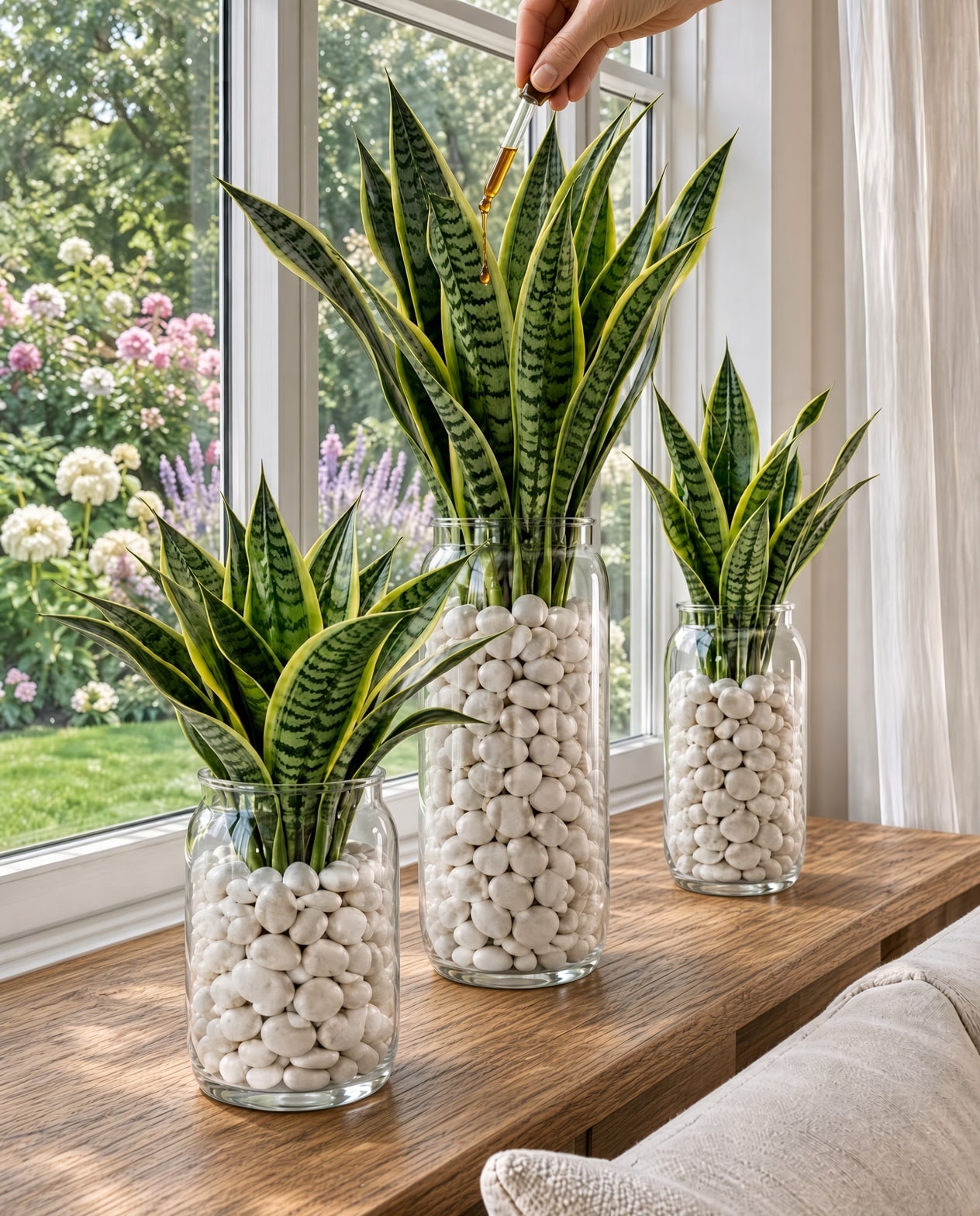
The image features three beautiful variegated Snake Plants (Dracaena trifasciata) arranged in clear glass vases filled with smooth white decorative stones. A dropper containing golden liquid is positioned above the tallest plant, suggesting a liquid plant treatment.
This stylish arrangement raises an important question: Can golden liquid fertilizer help Snake Plants grow taller and healthier when displayed in glass vases?
The answer depends on the product, how it is applied, and whether the roots receive adequate water, oxygen, and nutrients.
1. What Is the Golden Liquid Used on Snake Plants?
The golden liquid shown in the image resembles a concentrated liquid fertilizer or plant nutrient solution.
However, its exact ingredients cannot be determined from its color alone.
Commercial liquid houseplant fertilizers, hydroponic nutrients, and certain plant supplements may have a yellow or amber appearance.
Does Golden Liquid Make Snake Plants Grow Faster?
A suitable fertilizer can support healthy new leaf growth when nutrients are limited.
However, fertilizer cannot instantly lengthen existing mature leaves.
New leaves develop gradually from the plant’s growing points, and their eventual height depends on the variety, light exposure, root health, and overall growing conditions.
Important: Never place an unidentified liquid directly onto Snake Plant leaves or roots. Use only products labeled for the intended growing method.
2. Best Liquid Fertilizer for Snake Plants
Snake Plants are light feeders and generally require less fertilizer than many tropical foliage plants.
Choosing the right product is especially important when growing them in containers with decorative stones.
Balanced Liquid Houseplant Fertilizer
A complete fertilizer provides essential nutrients such as nitrogen, phosphorus, and potassium.
Common formulations include:
- 10-10-10 balanced liquid fertilizer
- 20-20-20 water-soluble fertilizer
- Complete indoor foliage plant fertilizer
These can be suitable for soil-grown Snake Plants when diluted and applied according to the label.
Hydroponic Plant Nutrients
If a Snake Plant is growing in water without soil, a complete fertilizer formulated for hydroponic cultivation is more appropriate.
Hydroponic nutrients are designed to provide essential minerals in a water-based growing environment.
Slow-Release Fertilizer
Slow-release fertilizer granules can work well in conventional potting soil but are generally not the best choice for decorative water-filled glass vases.
Fertilizer Comparison
| Fertilizer Type | Best Application | Main Advantage |
|---|---|---|
| Balanced liquid fertilizer | Soil-grown Snake Plants | Complete nutrition |
| Hydroponic nutrient solution | Water-grown plants | Water-compatible nutrients |
| Succulent fertilizer | Soil-grown plants | Convenient low-feeding formulation |
| Slow-release granules | Potting soil | Gradual feeding |
| Unidentified golden liquid | Not recommended | Unknown safety |
Best choice: Use a complete hydroponic nutrient solution for established water-grown Snake Plants, or a balanced houseplant fertilizer for plants growing in soil.
3. Can Snake Plants Grow in Glass Vases With White Stones?
Yes, Snake Plants can sometimes be maintained in water-based displays, particularly when rooted divisions or cuttings are used.
However, growing them successfully in glass vases requires more attention than growing them in well-draining potting soil.
The white stones in the image provide decorative support but do not replace the functions of soil.
Benefits of Glass Vase Displays
- Elegant, minimalist appearance
- Easy visibility of the water level
- Attractive decorative stone arrangements
- Suitable for modern interior styling
- Convenient observation of root development
Potential Challenges
- Root rot from poor oxygen availability
- Algae growth in transparent containers
- Mineral buildup
- Unstable plants
- Nutrient deficiencies
- Difficulty maintaining appropriate water levels
A glass vase filled with stones should not be treated as a traditional soil planter.
4. How to Grow Snake Plants in Water and Decorative Stones
For a display similar to the image, begin with a healthy rooted Snake Plant division or an established water-rooted cutting.
Step 1: Choose a Suitable Glass Vase
Select a sturdy glass container wide enough to support the plant.
Tall varieties need a stable base to prevent tipping.
Step 2: Prepare the White Decorative Stones
Use smooth, clean, aquarium-safe stones.
Rinse thoroughly before placing them in the vase.
Step 3: Prepare the Plant
For an established division, gently remove soil and rinse the roots.
Avoid damaging the rhizome or root system.
Step 4: Position the Snake Plant
Place the plant upright and arrange stones around the roots to provide support.
Keep the leaf bases and crown above the waterline.
Step 5: Add Clean Water
Add enough water to reach the lower roots without submerging the crown or rhizome.
Step 6: Provide Bright Indirect Light
Position the vase near a bright window, away from prolonged intense sunlight.
Step 7: Maintain the Water
Inspect the roots regularly and replace the water when it becomes cloudy or develops an odor.
Step 8: Introduce Suitable Nutrients
Once the plant is established, use a very dilute, complete hydroponic nutrient solution according to the product’s instructions.
Note: Snake Plants adapted to soil may struggle when transferred directly to water. A well-draining soil mix remains the easier long-term option for most growers.
5. How to Use Golden Liquid Fertilizer Safely
The dropper in the image suggests a concentrated liquid treatment.
If the product is a verified plant fertilizer, it should be prepared correctly before application.
Recommended Method
- Identify the product and read its label.
- Confirm whether it is suitable for hydroponic or soil cultivation.
- Measure the recommended amount.
- Dilute it in clean water as instructed.
- Apply the prepared nutrient solution to the root environment.
- Avoid pouring concentrate directly onto the leaves.
- Monitor the plant for signs of nutrient stress.
Never assume that a few drops of concentrated fertilizer are harmless.
Too much fertilizer can damage roots and increase dissolved salt levels in the water.
6. How to Encourage Taller Snake Plant Leaves
The central Snake Plant in the image has tall, architectural leaves with attractive yellow margins.
Several care factors contribute to this appearance.
Bright Indirect Sunlight
Snake Plants tolerate lower light levels, but they generally grow more vigorously in brighter conditions.
Healthy Roots
Strong roots help the plant absorb water and nutrients.
Suitable Temperatures
Temperatures around 65–85°F (18–29°C) are generally favorable.
Moderate Fertilization
A complete fertilizer can support growth when nutrients are deficient.
Adequate Growing Space
Crowded roots may eventually restrict new growth.
Patience
Snake Plants are naturally slow-growing, especially indoors.
New leaves may take weeks or months to reach their mature height.
7. Best Potting Mix for Snake Plants
Although glass vase displays are attractive, conventional potting soil offers a reliable growing environment.
Snake Plants prefer a loose, well-draining mixture that allows air to reach their roots.
Recommended Potting Mix
- 50% premium cactus and succulent potting mix
- 25% perlite or pumice
- 15% pine bark
- 10% coarse horticultural grit
This combination encourages drainage while reducing prolonged moisture retention.
Why Perlite Matters
Perlite improves aeration and helps prevent compaction.
Why Pumice Is Useful
Pumice creates durable air spaces in the root zone.
Why Premium Succulent Soil Helps
A quality succulent mix provides a convenient base for growing Snake Plants indoors.
8. Glass Vase vs. Ceramic Planter: Which Is Better?
| Feature | Glass Vase With Stones | Ceramic Pot With Soil |
|---|---|---|
| Appearance | Modern and transparent | Classic and elegant |
| Root visibility | High | Limited |
| Water management | Requires close monitoring | Easier with drainage |
| Fertilizer | Hydroponic nutrients | Houseplant or succulent fertilizer |
| Root oxygen | Depends on water management | Supported by airy soil |
| Long-term care | More demanding | Generally easier |
| Decorative appeal | Excellent | Excellent |
For beginners, a ceramic planter with drainage and quality succulent soil is usually the more dependable choice.
9. Common Snake Plant Problems and Solutions
Yellow Leaves
Possible causes include excess moisture, root damage, or insufficient light.
Solution: Inspect the roots, reduce excess moisture, and improve growing conditions.
Soft or Mushy Leaves
This may indicate rot.
Solution: Remove affected tissue, inspect the rhizome, and correct the growing conditions.
Brown Leaf Tips
Potential causes include physical damage, inconsistent watering, or fertilizer salt accumulation.
Solution: Review water quality and nutrient concentration.
Slow Growth
Snake Plants naturally grow slowly, particularly in low-light conditions.
Solution: Provide brighter indirect light and appropriate temperatures.
No New Shoots
The plant may be immature, growing slowly, or lacking sufficient resources.
Solution: Maintain healthy roots and consistent care.
Algae in Glass Vases
Light entering transparent containers can encourage algae growth.
Solution: Clean the vase and stones regularly and avoid unnecessary direct sunlight.
10. Best Indoor Gardening Products for Snake Plants
Choosing quality gardening supplies can improve both plant health and presentation.
Premium Succulent Potting Mix
Useful for healthy root development in conventional containers.
Complete Hydroponic Fertilizer
Suitable for water-based growing systems when used correctly.
Full-Spectrum LED Grow Lights
Helpful in rooms with insufficient natural light.
Decorative White River Stones
Create a clean, elegant appearance in glass vase displays.
Clear Glass Plant Vases
Allow roots and decorative stones to become part of the display.
Ceramic Indoor Planters
Provide a sophisticated alternative to transparent containers.
Digital Light Meters
Help gardeners assess indoor light conditions.
Plant Propagation Containers
Useful for rooting Snake Plant cuttings before transferring them to permanent displays.
11. Luxury Indoor Decor Ideas With Snake Plants
The image demonstrates how simple greenery can become a premium-looking interior design feature.
Three-Vase Window Display
Arrange three clear glass vases in different heights along a wooden console table.
Use matching white decorative stones to create visual consistency.
Minimalist Living Room Styling
Pair variegated Snake Plants with natural oak furniture, ivory textiles, and neutral walls.
Modern Entryway Arrangement
Place a tall Snake Plant in a premium ceramic or glass planter beside a console table.
Luxury Office Decor
Use compact Snake Plant varieties in contemporary containers to soften a workspace.
Scandinavian Interior Styling
Combine pale wood, clear glass, smooth white stones, and architectural green foliage.
Contemporary Botanical Centerpiece
Display several Snake Plant varieties with contrasting leaf heights and patterns.
Designer tip: Matching containers with different plant heights create a balanced, high-end appearance without overcrowding the space.
12. Frequently Asked Questions
Can Snake Plants grow permanently in water?
Some Snake Plants can survive and grow in water-based systems, but long-term success requires healthy roots, adequate oxygen, clean water, and suitable nutrients.
Can golden liquid fertilizer make Snake Plants grow taller?
A suitable fertilizer may support healthy new growth if nutrients are limited, but it cannot instantly lengthen mature leaves.
What fertilizer is best for Snake Plants in glass vases?
A complete hydroponic nutrient solution is generally more appropriate than ordinary soil fertilizer.
Can I put fertilizer directly on Snake Plant leaves?
Fertilizer is generally best applied to the root environment unless the product specifically supports foliar application.
Are white stones good for Snake Plants?
Clean decorative stones can provide support and improve appearance, but they do not supply complete nutrition.
How often should I change the water?
Inspect the water frequently and replace it when cloudy, contaminated, or showing signs of algae. Many growers refresh it approximately every one to two weeks, depending on conditions.
Why are my Snake Plant leaves not growing taller?
Low light, root problems, temperature, plant variety, and natural growth rate can all influence leaf height.
Do Snake Plants need direct sunlight?
No. Bright indirect sunlight is usually ideal, although established plants may tolerate some gentle direct sun.
Can I grow Snake Plants in a vase without soil?
Yes, with appropriate water management and nutrients, but it is generally more demanding than growing them in well-draining soil.
What is the best planter for a Snake Plant?
A stable planter with drainage holes and a suitable potting mix is an excellent choice for long-term growth.
Final Thoughts
Snake Plants are beautiful architectural houseplants that can enhance almost any interior.
The combination of clear glass vases, smooth white stones, and upright variegated foliage creates a luxurious display that works especially well near bright windows.
Although the golden liquid shown in the image resembles a plant nutrient treatment, its composition cannot be confirmed visually.
The most reliable approach is to choose a suitable fertilizer, maintain healthy roots, provide bright indirect light, and use the correct growing method.
With consistent care, Snake Plants can develop strong new leaves while adding timeless elegance to modern living spaces.