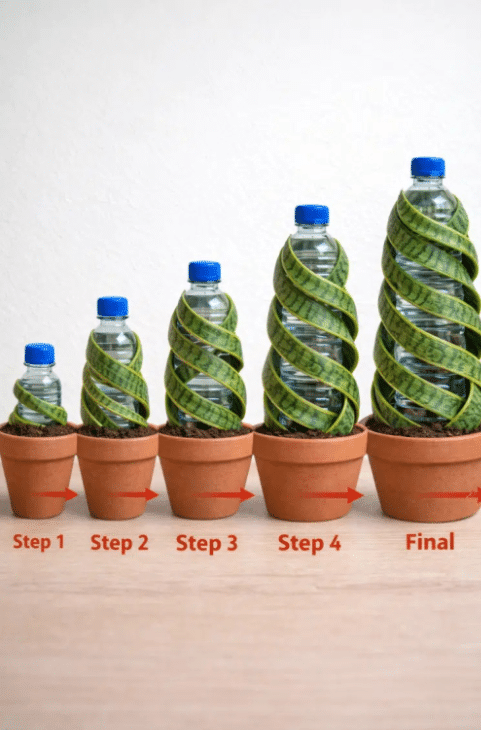
Snake plants are already one of the most stylish houseplants you can keep indoors, but when their leaves are trained into a spiral form, they stop looking like ordinary greenery and start looking like living decor. A regular snake plant brings height, structure, and calm into a room. A spiral snake plant adds movement, artistry, and a more custom, high-end feel. That is exactly why this kind of image and video gets so much attention.
In this setup, the idea is very clear. The leaves are wrapped gradually around plastic bottles of increasing size. Each stage shows the plant being guided little by little until the final result looks like a smooth vertical spiral. It is simple, visual, and easy to understand, which is why so many people become curious about trying it at home. The method feels practical because it uses an object almost everyone already has. It also feels less harsh than bending leaves by hand without support.
But smart plant owners know the real secret is not the bottle alone. The bottle is only a shaping tool. The true reason this works well is because the plant is healthy enough to tolerate shaping, the leaves are guided slowly instead of forced, and the whole process respects how snake plants actually grow. If the leaves are weak, damaged, dehydrated, or already stressed, the spiral will not look elegant. It will look forced or may even harm the plant.
That is why experienced growers ask better questions before they start. Is the plant mature enough? Are the leaves long and flexible enough to wrap? Is the crown stable? Is the root system healthy? Is the plant in good light so the leaves stay strong while training? Is the shaping being done gradually, not all at once? These questions matter much more than the bottle size itself.
A beautifully shaped spiral snake plant is not only a plant project. It becomes part of the room’s design. It gives a small pot a sculptural presence and makes a common plant feel rare, intentional, and more decorative. That is why this method matters. It turns living foliage into a styled design feature.
Why Snake Plants Work So Well for Spiral Training
Snake plants are one of the best plants for decorative shaping because their leaves are naturally upright, firm, and architectural. They already have a strong form before any training begins. That makes them much easier to style than soft thin-leaved plants that collapse or bend badly.
They are a good choice for spiral shaping because they offer:
- strong upright leaves
- clean patterned surfaces
- a modern structured look
- slower, steadier growth
- good decorative value even in small pots
That is why people love using them in homes that want:
- minimalist decor
- modern styling
- sculptural natural accents
- premium-looking plant corners
Even before the spiral is finished, the plant already feels like a good design object.
What the Bottle Method Is Actually Doing
The bottle method works by giving the leaves something smooth and stable to follow. Instead of trying to twist the leaves into a spiral shape freehand, the bottle acts like a guide. The plant owner wraps the leaves around the curved surface, then gradually increases the size of the shaping form as the design develops.
The step-by-step idea usually looks like this:
- start with a small bottle and a small young plant
- wrap the leaves gently around the bottle
- keep the plant stable in the pot
- move to larger bottles as the spiral expands
- continue adjusting slowly until the final shape is held well
The bottle does not create the spiral by itself. It simply makes the training more controlled.
Why Gradual Shaping Matters So Much
This is the most important part of the whole process. Snake plant leaves can look strong, but they are not meant to be bent sharply in one moment. If they are forced too fast, you may end up with:
- cracks
- crease marks
- pressure scars
- unnatural bends
- permanently damaged leaves
A spiral shape only looks premium when the curves feel smooth and deliberate. That usually comes from slow shaping, not speed. A good result is built over time.
Why Plant Health Comes Before Decoration
Many people get excited about the final look and forget that the shaping process only works on a healthy plant. Before training begins, the snake plant should ideally have:
- firm leaves
- no soft base
- healthy root support
- no major dehydration
- no active rot or severe stress
If the plant is weak, the spiral becomes harder to achieve and the risk of damage becomes much higher. The best decorative results usually come from healthy, well-rooted plants rather than rescue plants.
Why Small Terracotta Pots Fit This Method So Well
The terracotta pots in the image are another important detail. Terracotta often works well with snake plants because it supports a drier, cleaner root environment compared with containers that trap moisture longer. It also looks timeless and natural, which suits the sculptural training method.
A terracotta pot helps by:
- visually supporting the plant’s natural look
- giving some extra stability
- reducing the overly decorative feel that might compete with the spiral
- often helping moisture dry more predictably
That is one reason the full setup feels elegant. The pot does not distract from the plant.
Why Good Roots Are Still the Real Foundation
No decorative training method can replace root health. The reason a spiral snake plant looks strong is because the roots are supporting the leaves properly. If the roots become stressed, the leaves may soften, yellow, or lose the clean structure that makes the whole design work.
Healthy roots help the plant:
- hold firm leaf posture
- tolerate training better
- maintain stronger color and pattern
- push healthier future growth
- recover from minor stress more easily
This is why overwatering remains one of the biggest risks, even with a decorative shaping project.
Why Overwatering Can Ruin the Spiral Look
A snake plant that stays too wet does not just risk rot. It also loses visual quality. The leaves may become weaker near the base, and once that happens the whole spiral design looks less controlled and less premium.
Too much moisture can lead to:
- soft lower leaf tissue
- yellowing
- root stress
- collapse around the crown
- a less firm sculptural look
That is why the most attractive trained snake plants usually come from restrained watering, not constant attention.
Why Bright Indirect Light Helps the Final Shape
Snake plants tolerate lower light, but a shaped decorative specimen usually looks better in bright indirect light. Better light helps the leaves stay stronger and makes the patterns look clearer. That improves the final design.
Good light helps:
- keep the leaf color richer
- maintain firm structure
- reduce dull weak-looking growth
- support the plant while it adapts to shaping
A spiral snake plant displayed in supportive light almost always looks more refined than one kept in a dim area.
Why This Method Feels So Appealing to Homeowners
Part of the appeal is that the method feels accessible. It does not depend on expensive tools or complicated equipment. A simple bottle, a healthy plant, and patience are enough to start. That makes the project feel:
- practical
- affordable
- creative
- satisfying
- easy to imagine doing at home
It also gives the homeowner a deeper connection to the plant. Instead of only watering it, they are actively shaping it into something decorative.
When This Style Looks Best in the Home
A spiral-trained snake plant works especially well in places where its form can be appreciated clearly. Because it becomes a sculptural piece, it is usually best displayed:
- on side tables
- on plant stands
- in entry corners
- on shelves with open space around it
- in minimalist rooms with simple furniture
It looks strongest where the surrounding decor is not too crowded. The more visual breathing room it has, the more premium it feels.
Common Mistakes People Make With This Method
The bottle method looks simple, but people can still get it wrong. Common mistakes include:
- starting with a weak plant
- trying to force the spiral too quickly
- using a bottle that is too large too soon
- ignoring root health
- keeping the soil too wet during training
- placing the plant in poor light
- expecting instant perfect results
The best spiral snake plants usually come from steady small adjustments and healthy growing conditions, not fast dramatic bending.
Table: What to Check Before Training a Snake Plant Around a Bottle
| Factor | What to Check | Why It Matters |
|---|---|---|
| Leaf strength | Are the leaves firm and mature enough? | Strong leaves shape more cleanly |
| Root health | Is the plant stable in the pot? | Healthy roots support the whole form |
| Pot drainage | Does excess water leave the pot easily? | Wet roots weaken the plant |
| Light | Is the plant in bright indirect light? | Better light keeps the leaves stronger |
| Training speed | Are changes gradual? | Fast bending increases damage risk |
| Bottle size | Is the bottle appropriate for the current stage? | Good sizing keeps the spiral smoother |
Frequently Asked Questions
Can any snake plant be trained with this bottle method?
Not every one. It works best with healthy plants that have long enough, flexible enough leaves to wrap gradually around a shaping form.
How long does it take to create a good spiral?
Usually longer than people expect. A smooth result comes from patience and gradual adjustment, not one quick shaping session.
Will the leaves stay in shape after training?
They may hold the trained form for quite a while if the shaping was done well, but results depend on the plant, the variety, and how long the support was used.
Can the bottle damage the leaves?
It can if the leaves are forced too tightly or wrapped too fast. The method should guide the plant gently, not squeeze it.
Is this better than wire training?
For many people, the bottle method feels simpler and smoother because the curved surface helps the spiral look more even.